Whether in our vehicle portfolio, production or supply chain, we work to reduce greenhouse gas emissions and use resources more efficiently. In this way, we aim to contribute step by step to the global decarbonization and transformation of the transport sector.
Climate Protection at Daimler Truck

¹ For information on the calculation methodology, please refer to the Annual Report 2025.
² The figures refer to financial year 2025 and are based on the Daimler Truck portfolio at that time, including Mitsubishi Fuso.
³ For information on the calculation methodology, please refer to the Annual Report 2025.
⁴ The range was determined internally under specific test conditions, after preconditioning with a 4x2 tractor unit with a 40 tons total towing weight at 20°C outside temperature in long-haul operation and may deviate from the values determined in accordance with Regulation (EU) 2017/2400.
Our Trucks and Buses: Climate Protection Through Alternative Powertrains
Around 20% of greenhouse gas emissions in Europe are generated by the transport of goods and people. The transport industry is therefore subject to climate regulations worldwide. The targets in the EU are particularly ambitious: By 2030, CO₂ emissions from new trucks and buses are to be reduced by an average of 45% compared with 2019 levels.
We take this responsibility seriously and actively shape the transformation. We strive for our new trucks and buses to be CO₂e-free in driving operation worldwide by 2050.
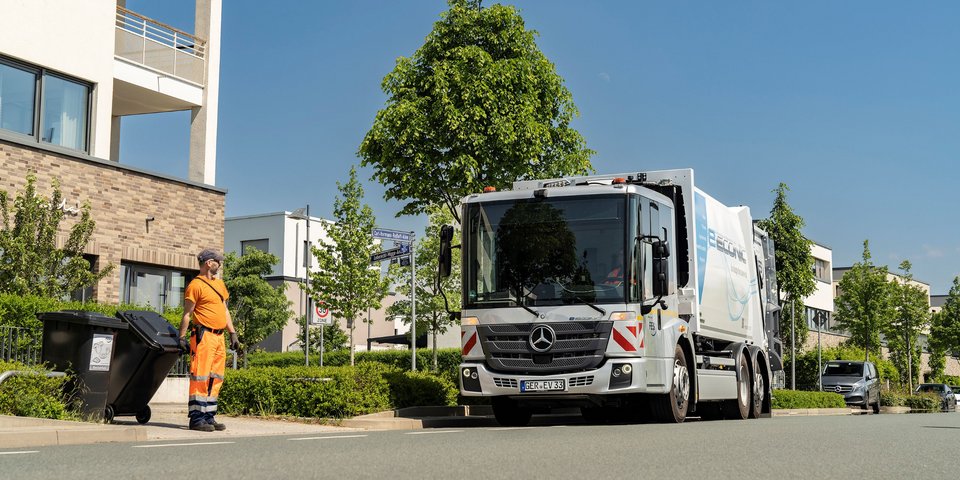
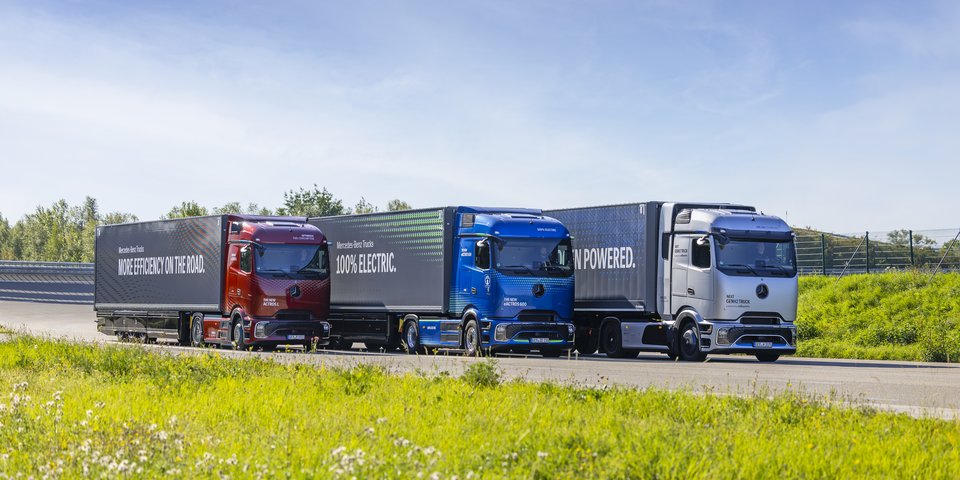
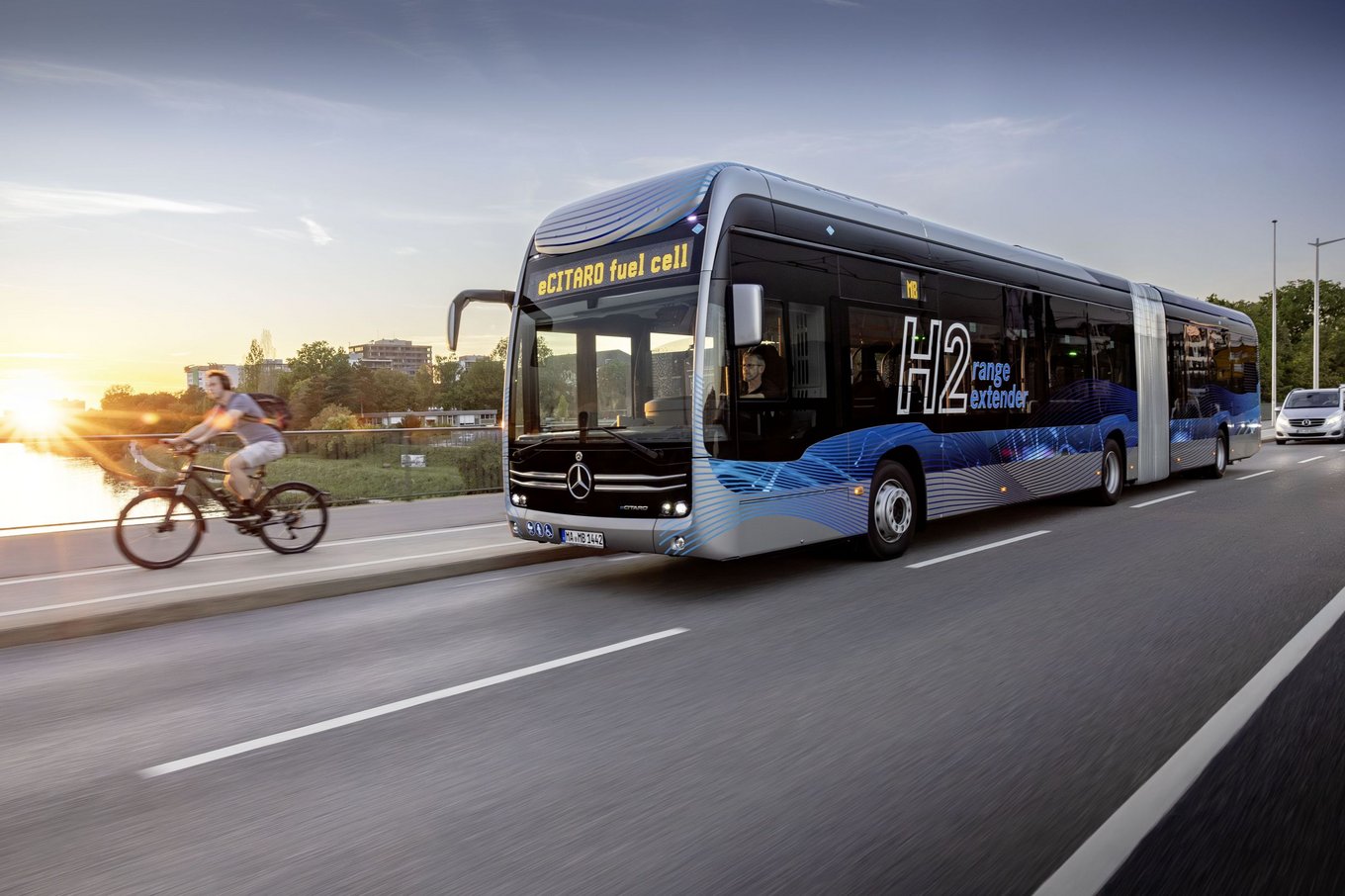
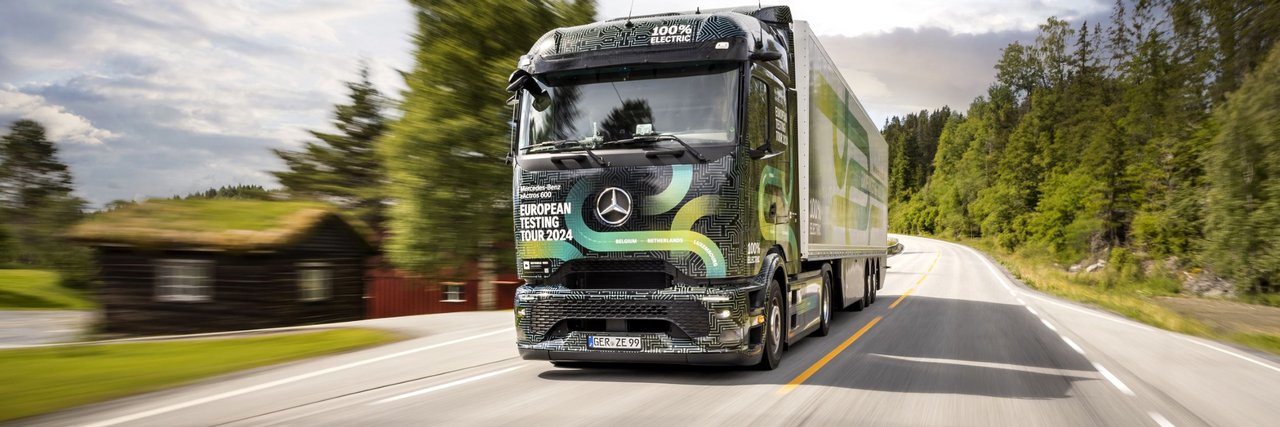
To reach this goal, we rely on two powertrain technologies – battery-electric and hydrogen-powered. Today, we already have nine battery-electric truck and bus models in series production which are CO₂e-free in driving operation. We have also made significant progress in hydrogen: our first fuel-cell truck prototypes, the Mercedes-Benz GenH2 Truck, are already being intensively tested on public roads in Germany and across Europe.
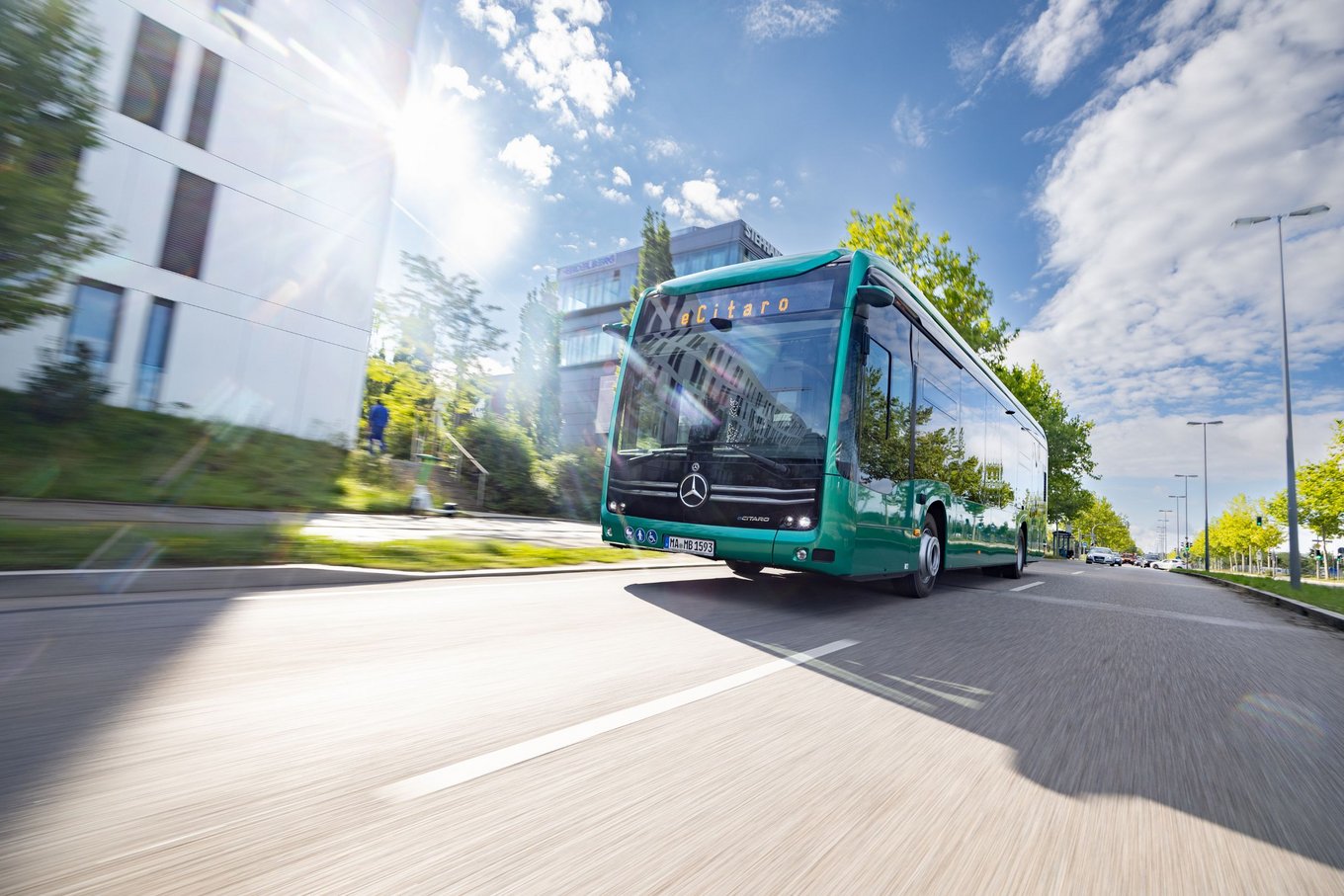
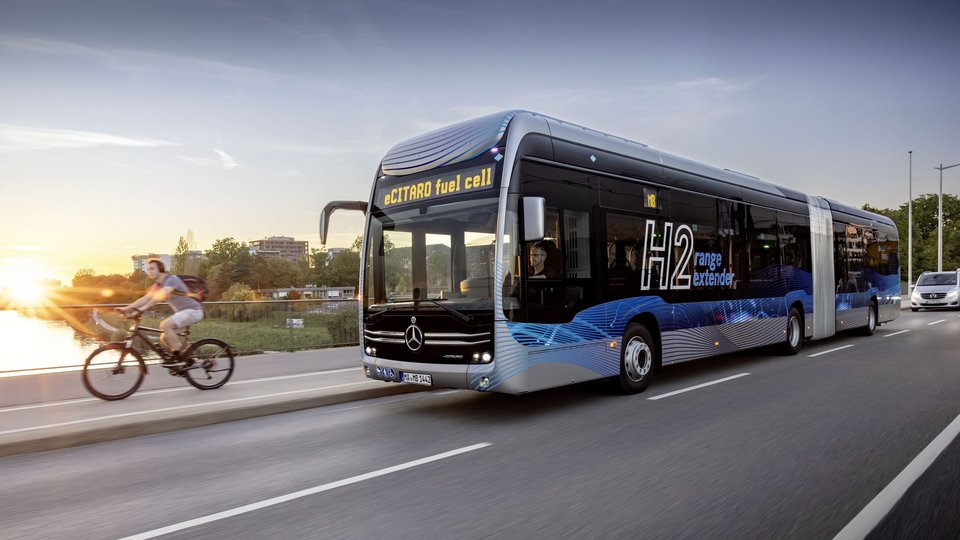
Our segments are also pursuing specific targets for the transformation of their vehicle portfolios. Mercedes-Benz Trucks aims to increase the number of vehicles sold in Europe that are CO₂e-free in driving operation to up to 25,000 by 2030. Daimler Buses plans to offer models in all product segments by 2030 that are CO₂e-free in driving operation. In the European city bus segment, the company aims to bring only corresponding new vehicles onto the road from 2030 onwards.
In addition, we continuously work on efficiency improvements that can help further reduce the fuel consumption of conventionally powered trucks.
-
Shaping the Infrastructure
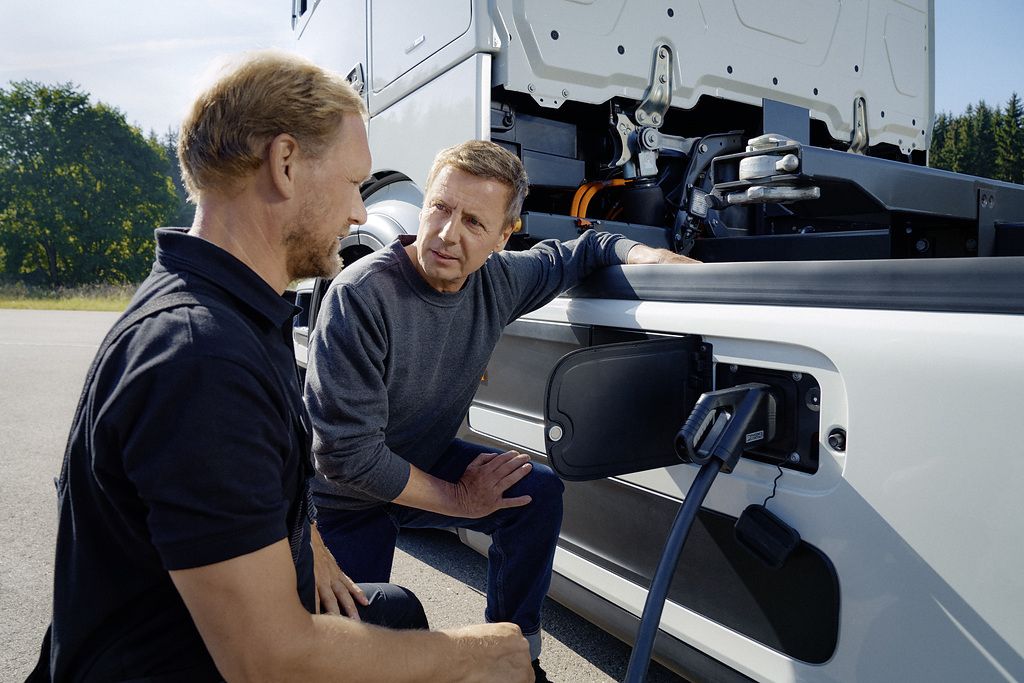
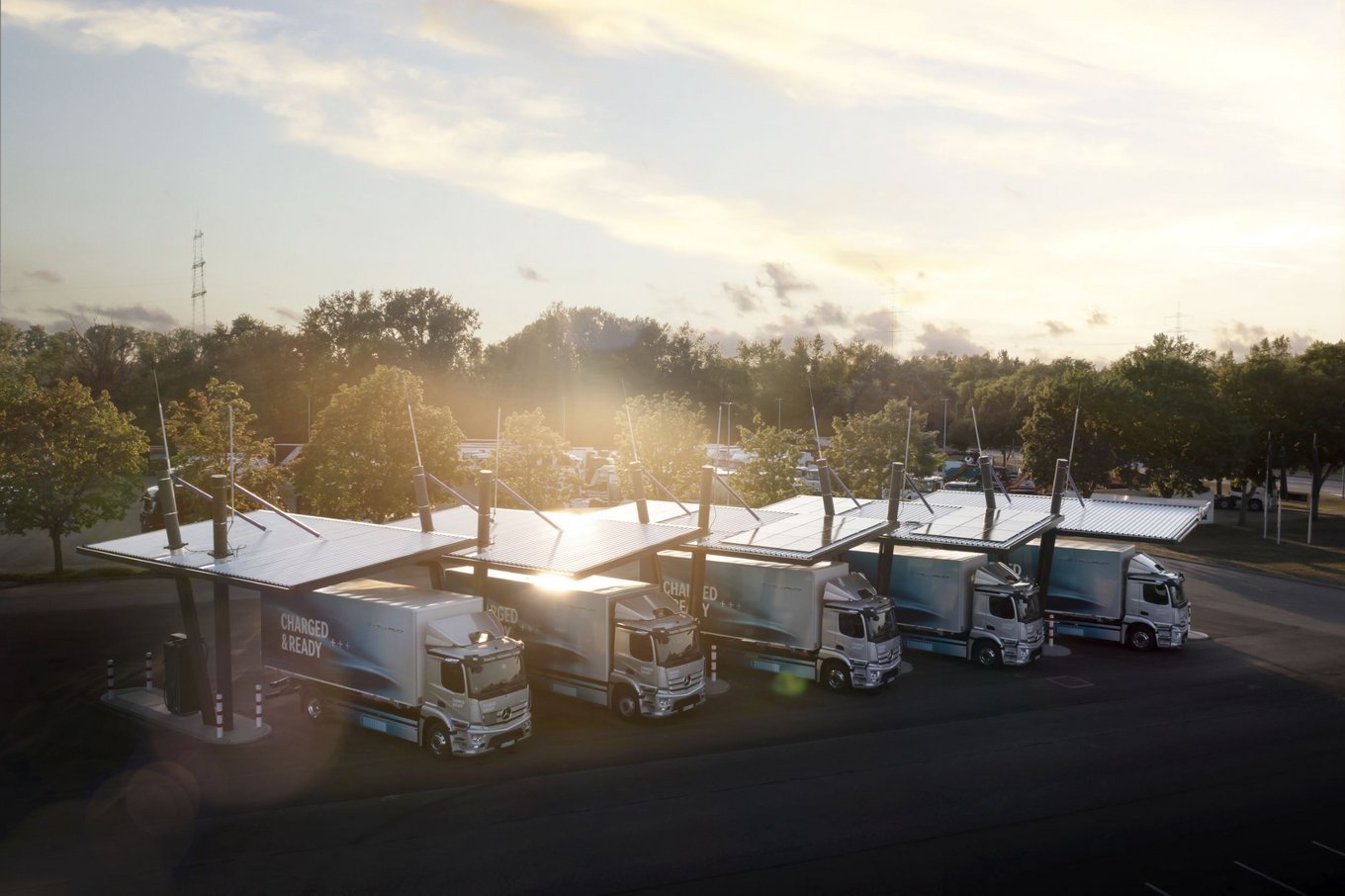
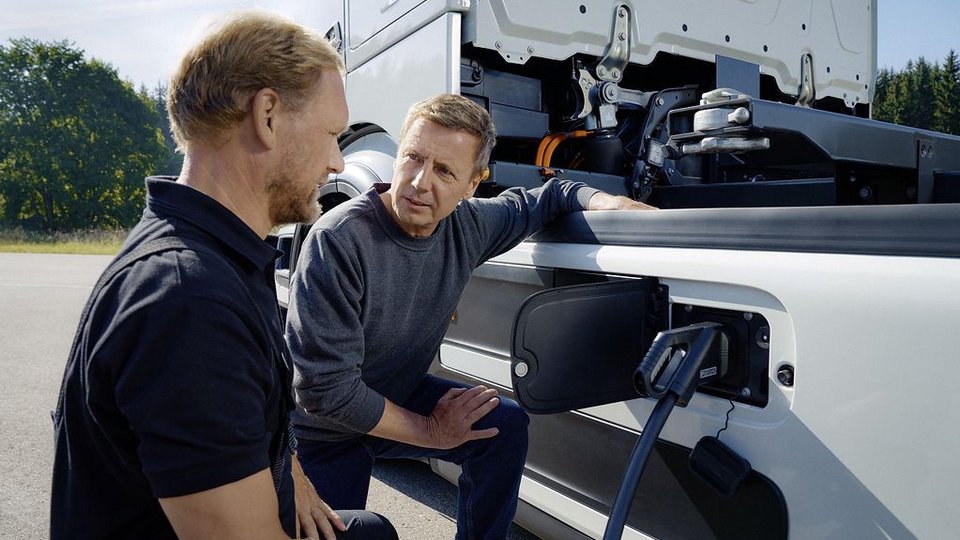
For our vehicles to operate CO₂e-free during driving operation in daily use, more than innovative technologies are needed. Equally important is a high-performance charging infrastructure. Both are indispensable for a successful mobility transition.
We believe that transforming passenger and freight transport can only be achieved through a joint effort by governments, vehicle manufacturers, technology providers, and energy companies. That is why we not only bring vehicles that can operate CO₂e-free in driving operation to the market but also accelerate the development of the necessary charging and refueling infrastructure. In doing so, we aim to continuously increase the adoption of these vehicles in the market while simultaneously reducing the number of conventional vehicles.
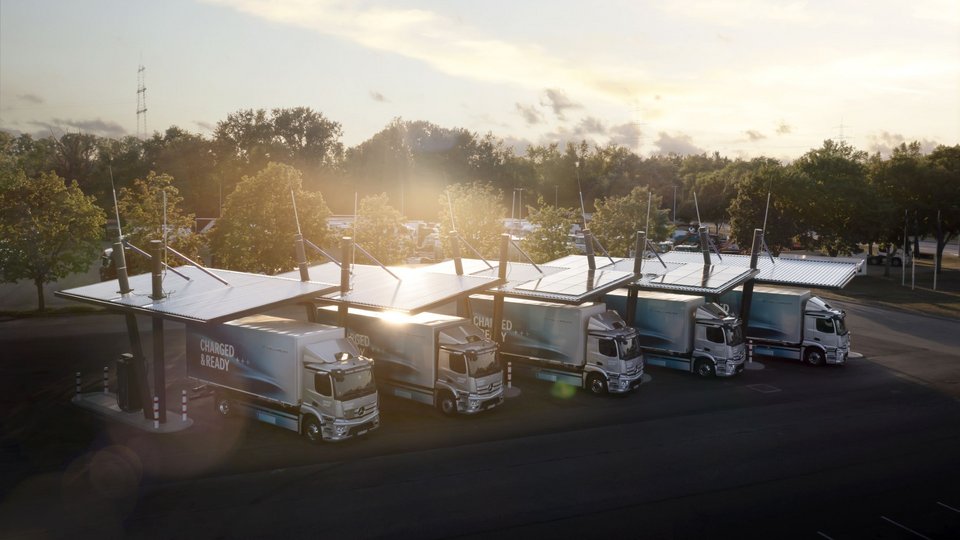
We collaborate with partners through joint ventures such as Milence in Europe, Greenlane in the USA, and H2 MOBILITY, thereby contributing to the expansion of charging and refueling infrastructure – for both battery-electric and hydrogen-powered vehicles.
-
Life Cycle Assessments (LCA) at Daimler Truck
Daimler Truck has introduced a TÜV-certified guideline for Life Cycle Assessments (LCA) according to DIN ISO 14040/14044. This establishes a uniform global standard for conducting life cycle analyses of our vehicles – an important step toward greater transparency, efficiency, and comparability.
An LCA assesses the environmental impacts of a vehicle throughout its life cycle – from raw material extraction and production to vehicle use, recycling and reuse. This makes the CO₂e footprint visible across all phases.
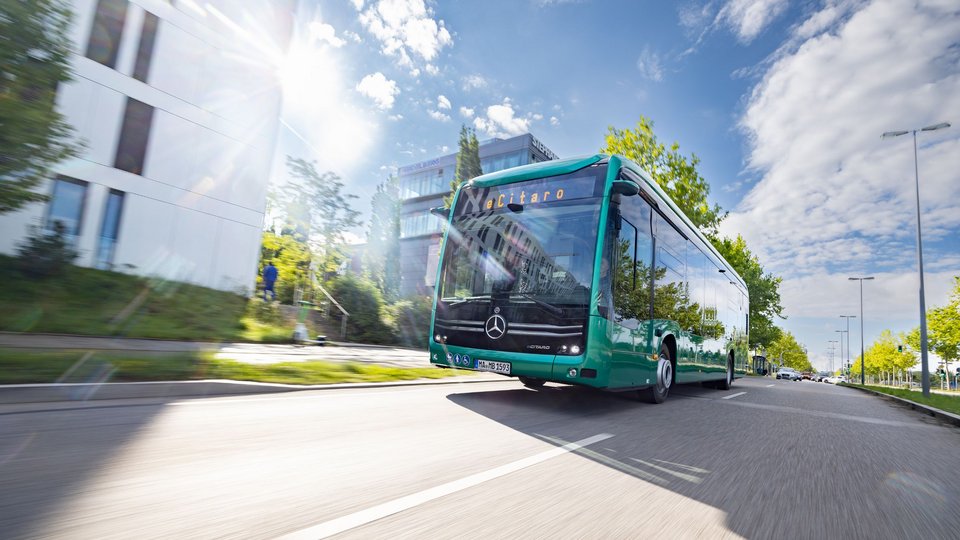
To date, Life Cycle Assessment (LCA) results for our trucks are primarily shared during new product launches. For our bus brands, however, the results are published in standardized Environmental Product Declarations (EPDs) and are available to customers and other interested parties via the official EPD database. LCAs are already available for numerous models in the Daimler Truck portfolio, including the Mercedes-Benz Actros and the battery-electric variant Mercedes-Benz eActros 600, the Freightliner Cascadia and the battery-electric Freightliner eCascadia, as well as for the Mercedes-Benz eCitaro and eCitaro fuel cell. Further models will be added continuously.



Our Approach Across the Global Production Network
To further strengthen climate and environmental protection in our production, we launched the “Green Production 2030” initiative.
Step by step, we aim to further decarbonize our production. In the 2025 reporting year, we reduced our CO₂e emissions at global production sites (Scope 1 and 2) by 43% compared with 2021 and achieved our 2030 reduction target of 42% ahead of schedule. Nevertheless, we continue working to further reduce CO₂e emissions in production.
-
Switching to Renewable Energy
To achieve our target, we are systematically transforming our energy supply: where possible, we purchase green electricity or electricity from renewable sources and expand on-site energy generation at our production sites. By 2030, at least 55% of the energy we use is to come from renewable sources.
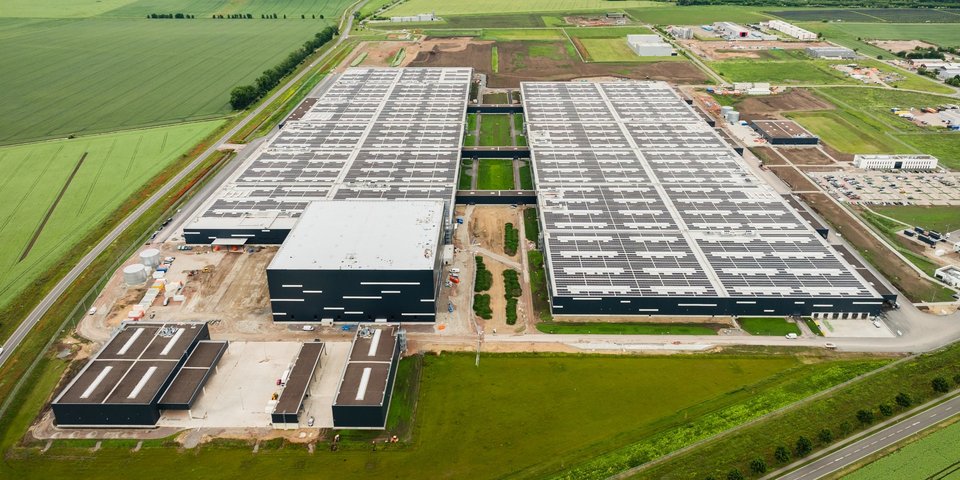
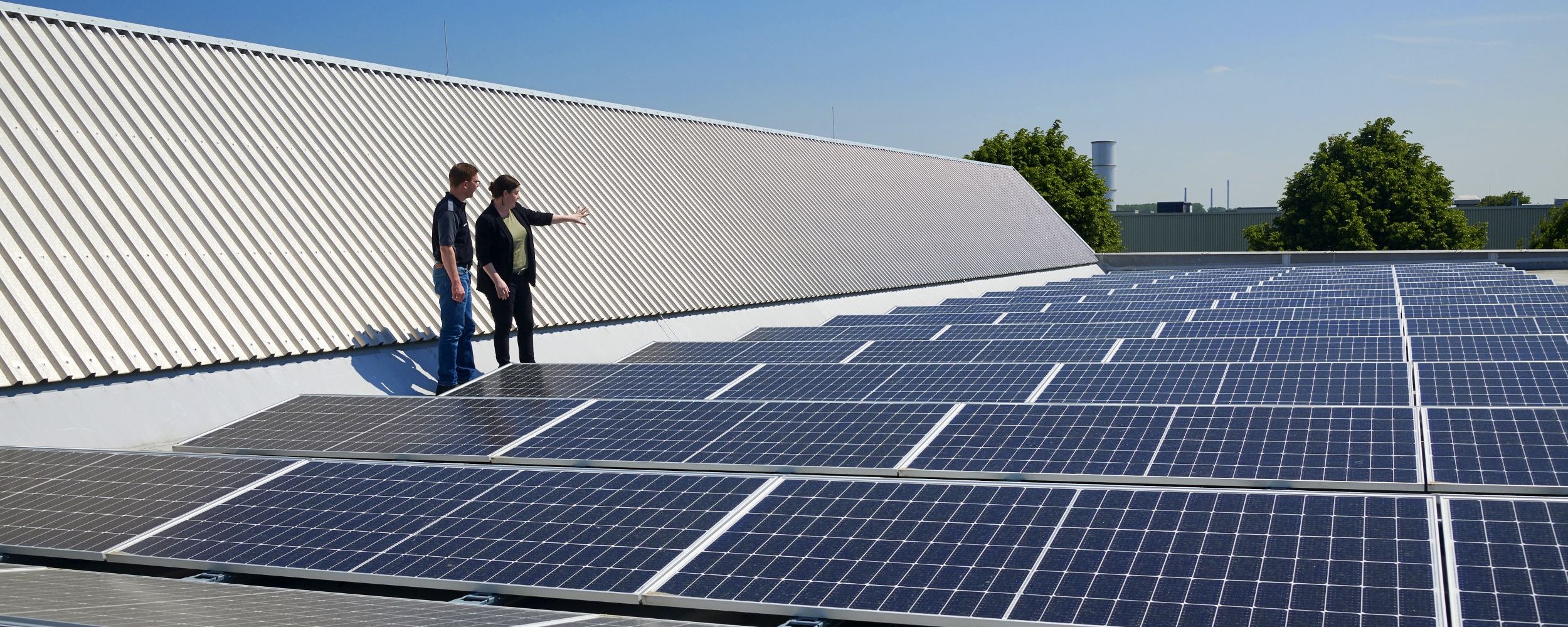
In addition to purchasing green electricity, we are advancing on-site renewable energy generation. Globally, we have already installed a solar capacity of approximately 64.6 MWp at our production sites. This helps us continuously increase the use of renewable energy at our production sites. The deployment of photovoltaic systems at our sites is being expanded continuously.
Since 2022, we have been sourcing electricity from wind, solar, and hydro power at our production sites in Europe and India. In the USA, Brazil, and South Africa, part of the energy supply is already covered by renewables. We continue to expand this: by 2030, the remaining sites worldwide will follow.
-
Less Energy, More Efficiency
We are also systematically reducing our energy consumption: by 2030, the measures are intended to result in a permanent reduction in energy consumption in our production operations of 549 GWh per year compared with the reference scenario.⁵ This corresponds to the annual electricity consumption of approximately 150,000 average households.
⁵ The reduction target is based on the average energy consumption of the years 2013/2014 and takes expected production developments into account.
-
Compensation as a Transitional Solution
Where emissions cannot yet be avoided, we rely on compensation – through verified climate protection projects certified according to the Gold Standard. At our European production sites and other selected locations, we already offset all remaining CO₂e emissions.⁶
⁶ For further information on the compensation approach, please refer to the Annual Report 2025.
The Supply Chain Matters Too
Not only our own CO2e emissions are in focus: we also address CO2e emissions across our supply chain. Our measures focus on the parts and materials we procure, as well as the transport routes to our production sites. We strive together with our direct suppliers for CO₂e-neutral products and services globally by 2050.
-
Our Materials: Selected with Responsibility
Based on lifecycle assessments, we analyzed the material composition of our products to identify the main contributors to greenhouse gas emissions in the supply chain. Particularly relevant are the production processes for raw materials such as steel, aluminum, and plastics.
Going forward, we aim to place greater emphasis on the CO₂e footprint of materials in new projects and procurement decisions. To actively promote the sourcing of such sustainable production materials, we systematically incorporate relevant metrics, such as CO₂e emissions, into our procurement processes. Increasing the share of recycled materials can also play an important role.
-
Electrifying Inbound Logistics
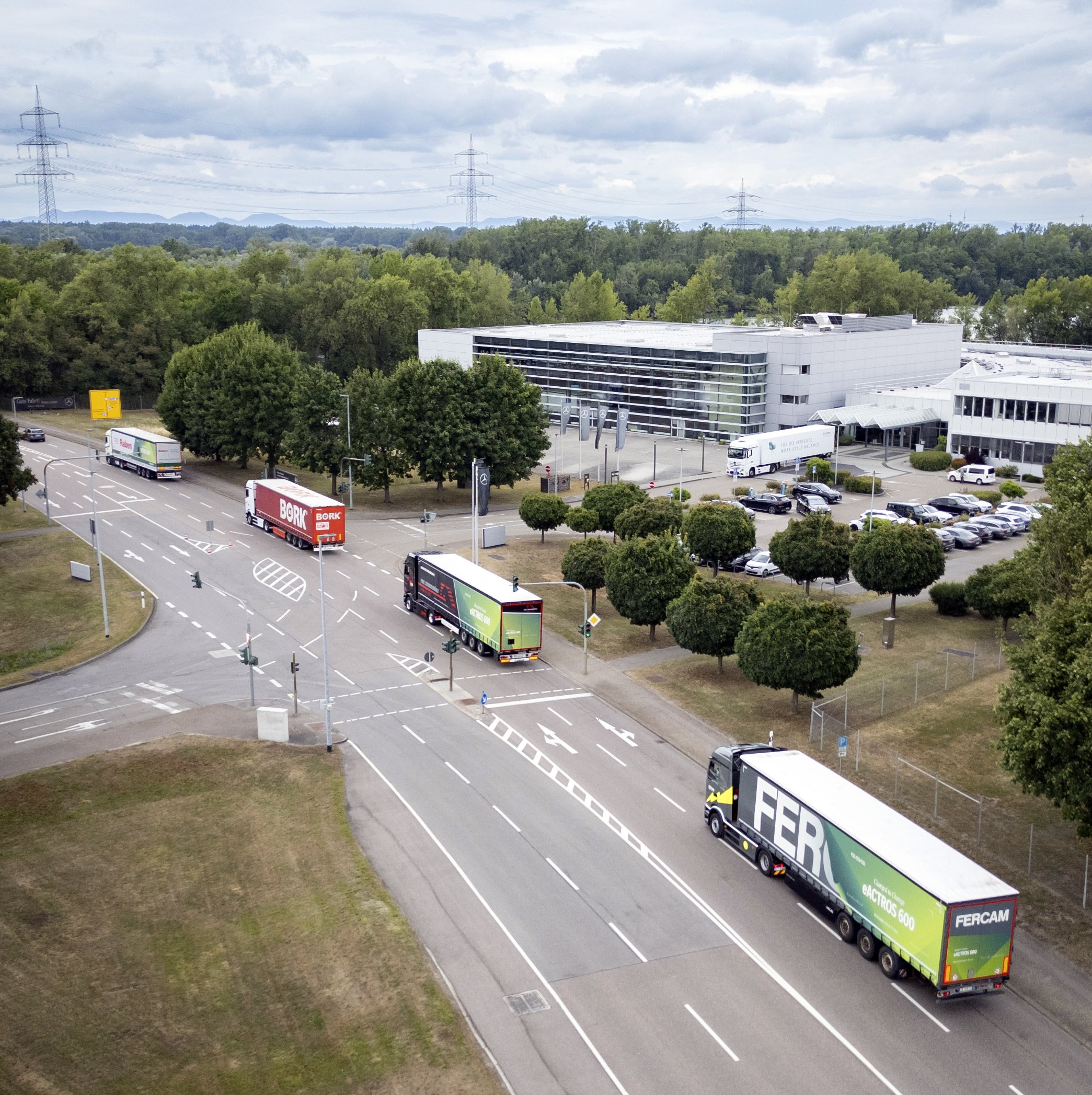
As part of our climate protection measures, we also focus on the transport routes to our plants – increasingly relying on electric trucks.
In the coming years, we plan to further electrify inbound logistics to our largest assembly plant in Woerth – together with our logistics service providers and carriers. We are building the necessary charging infrastructure directly on-site, where it will be used by both our partners and company-owned vehicles. We also intend to expand this concept to other plants.

Our Ambitions at a Glance
Overall Ambitions:
- We strive for our new trucks and buses to be CO₂e-free in driving operation worldwide by 2050.
- We aim to achieve CO₂e-neutral operations across our global production network by 2050.
- Together with our direct suppliers, we strive for CO₂e-neutral products and services globally by 2050.
Interim Targets:
- We aim to reduce CO2e emissions (Scope 1 and 2) at the Daimler Truck production sites by 42% by 2030 compared to 2021.
- All our production sites worldwide are expected to use electricity from renewable sources by 2030 at the latest.
- By 2030, the measures are intended to result in a permanent reduction in energy consumption in our production operations of 549 GWh per year compared with the reference scenario.⁷
⁷ The reduction target is based on the average energy consumption of the years 2013/2014 and takes expected production developments into account.