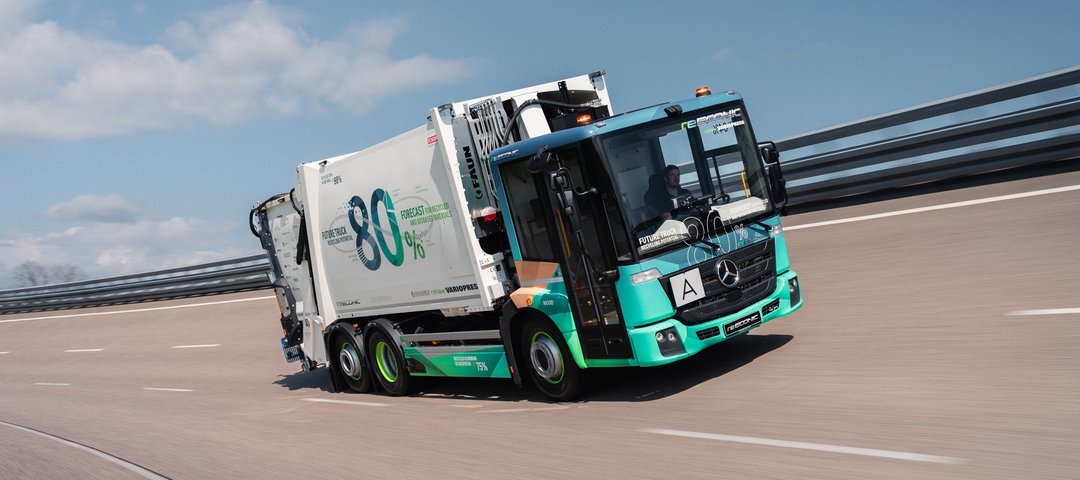
Mercedes-Benz reECONIC

From Waste Collection Vehicle to Innovation Lab - The team behind the reECONIC: Bringing circular economy into the vehicle

29.04.2026 | Sustainability

What happens when a team dares to rethink the familiar? The reECONIC is more than a vehicle—it’s a visible proof of how circular economy and thus sustainability can become reality in commercial vehicle engineering. Driven by curiosity, conviction, and a willingness to try something new.

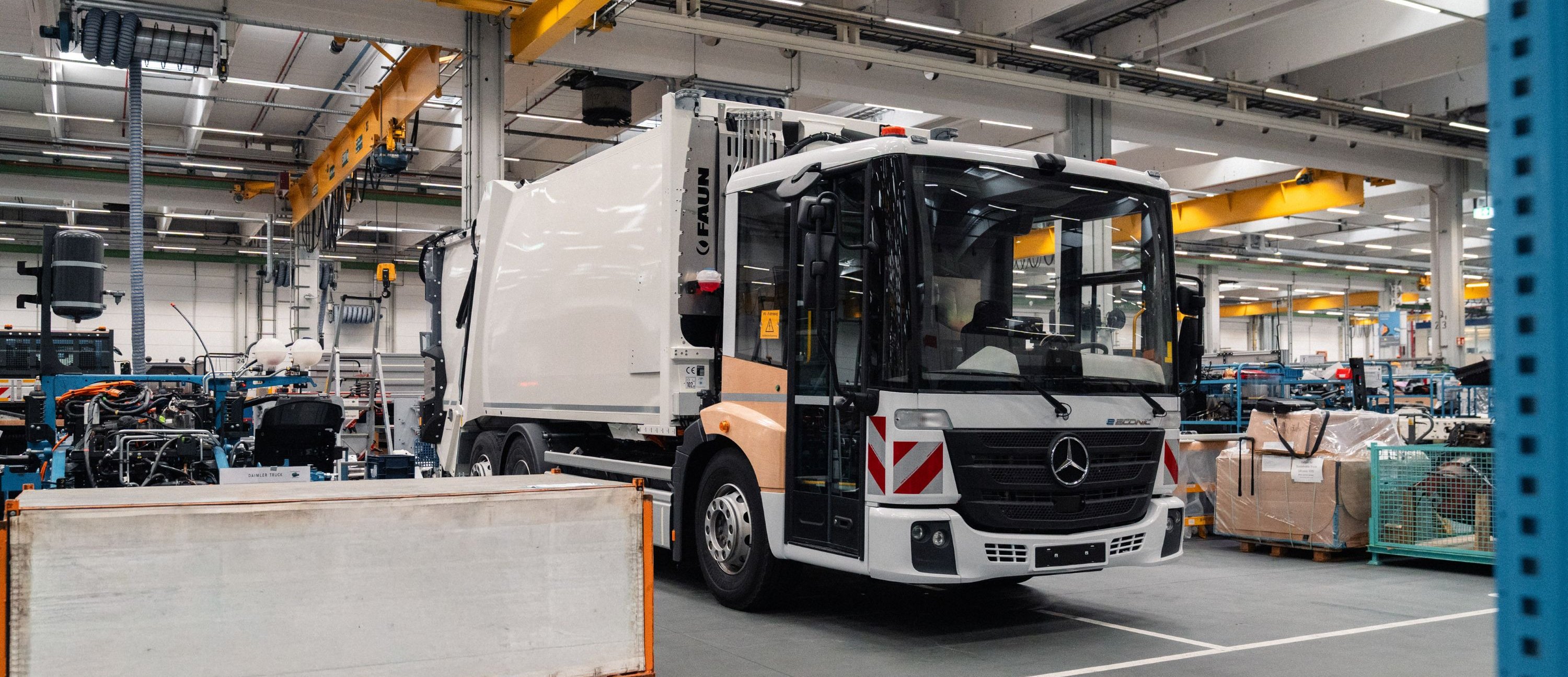
It smells like a workshop. Of metal, wood, adhesive. Amid wiring harnesses, trim parts, and a driver’s cab unlike anything seen before, stands a vehicle that, for us, is more than just a prototype. The reECONIC demonstrates how we at Daimler Truck are thinking about - and implementing - circular economy principles in commercial vehicle engineering in concrete terms.

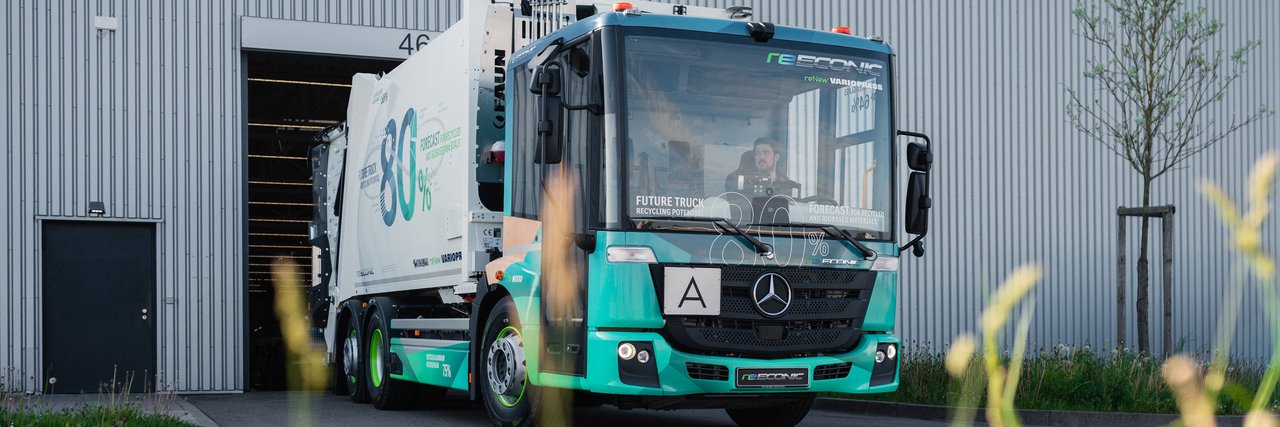
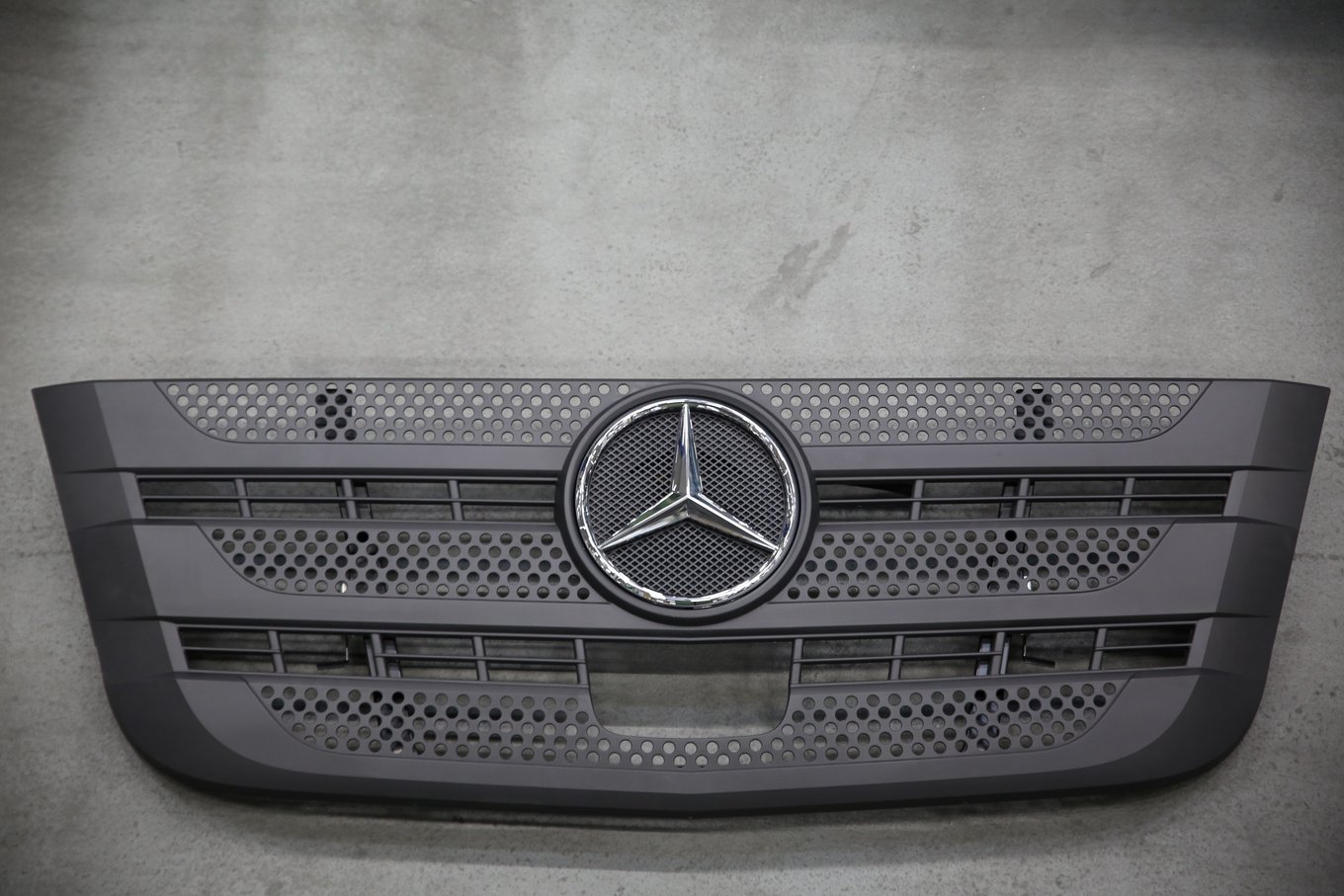
Because this vehicle is not only battery-electric. It is largely made from recycled, natural, or bio-based materials: steel, aluminum, plastics, glass, wood. Materials with a history, now intended for a new future. Above all, however, the reECONIC tells the story of a team that had the courage to turn sustainability from ambition into practice.

A vehicle as a statement

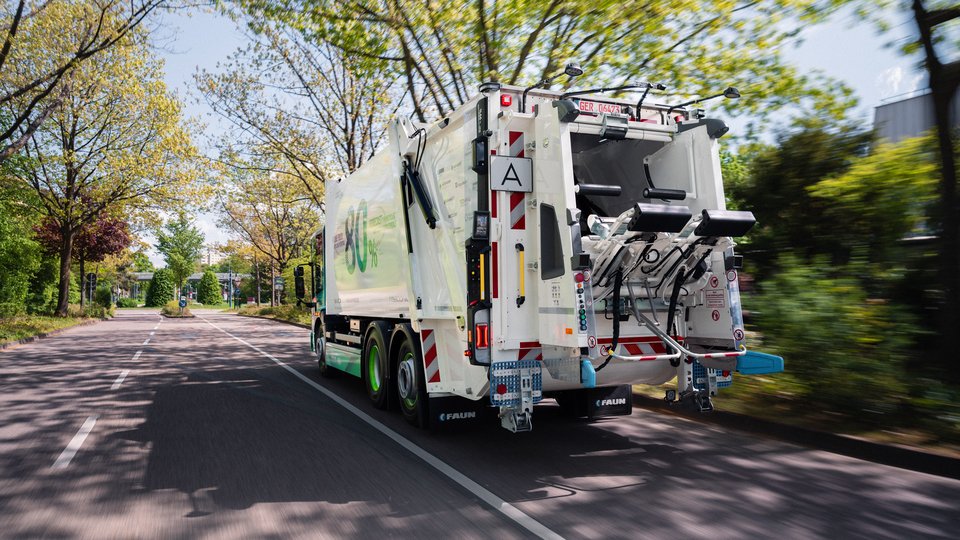
The fact that we chose a waste collection vehicle as the carrier of this idea is no coincidence. The reECONIC collects waste that is recycled - and itself consists of materials that have already been part of a cycle. In this way, circular economy is not just explained, but made visible.

Our ambition was clear from the outset: we did not just want to show what is theoretically possible. We wanted to build a roadworthy, approved vehicle - one that can be tested in real-life operations and generate genuine insights for us, for our partners, and for the development of future vehicles.

That this resulted in a roadworthy, approved, battery-electric vehicle is no coincidence. It is the result of months of work, countless discussions—and a team willing to leave familiar paths behind.

The starting point: curiosity and courage


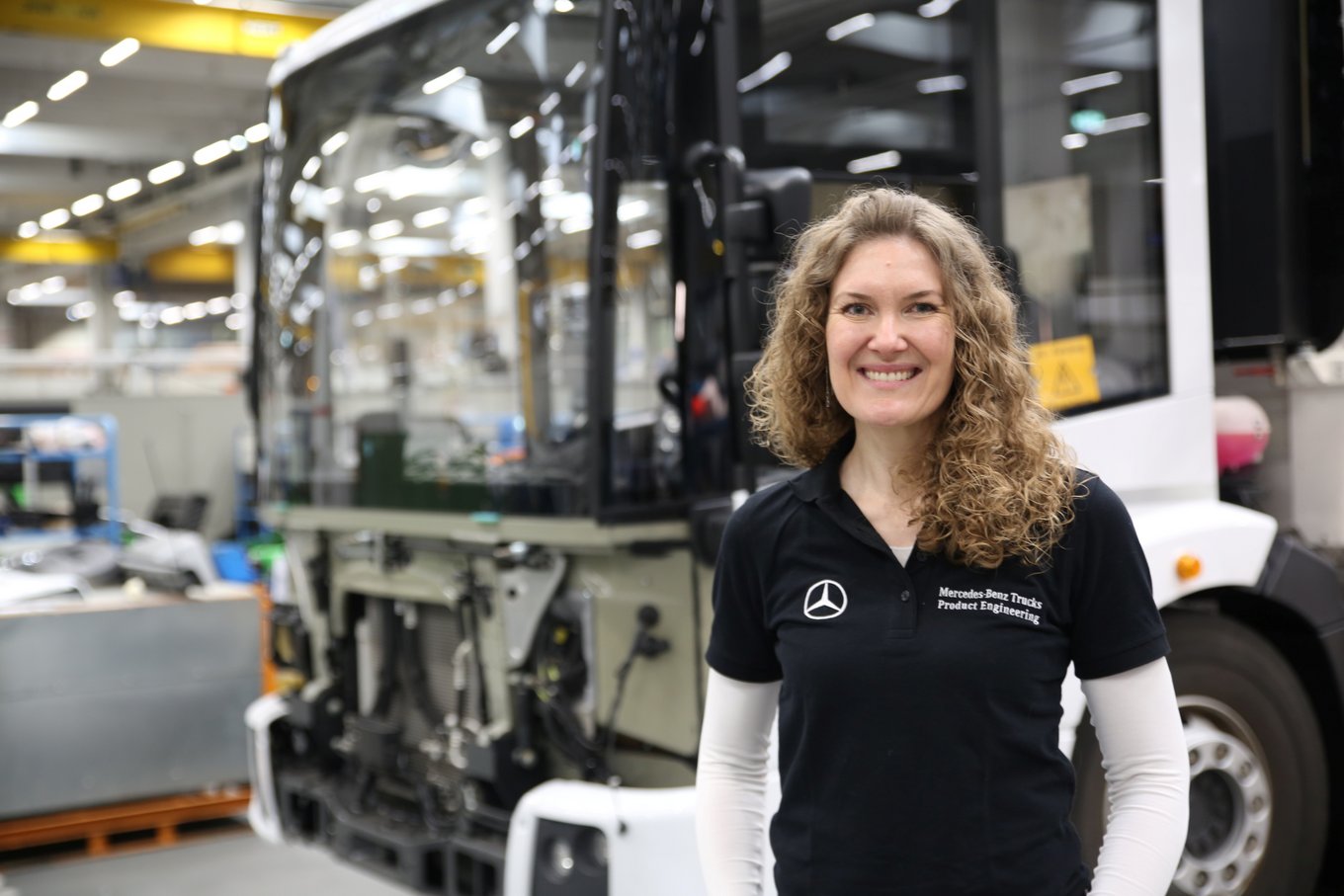
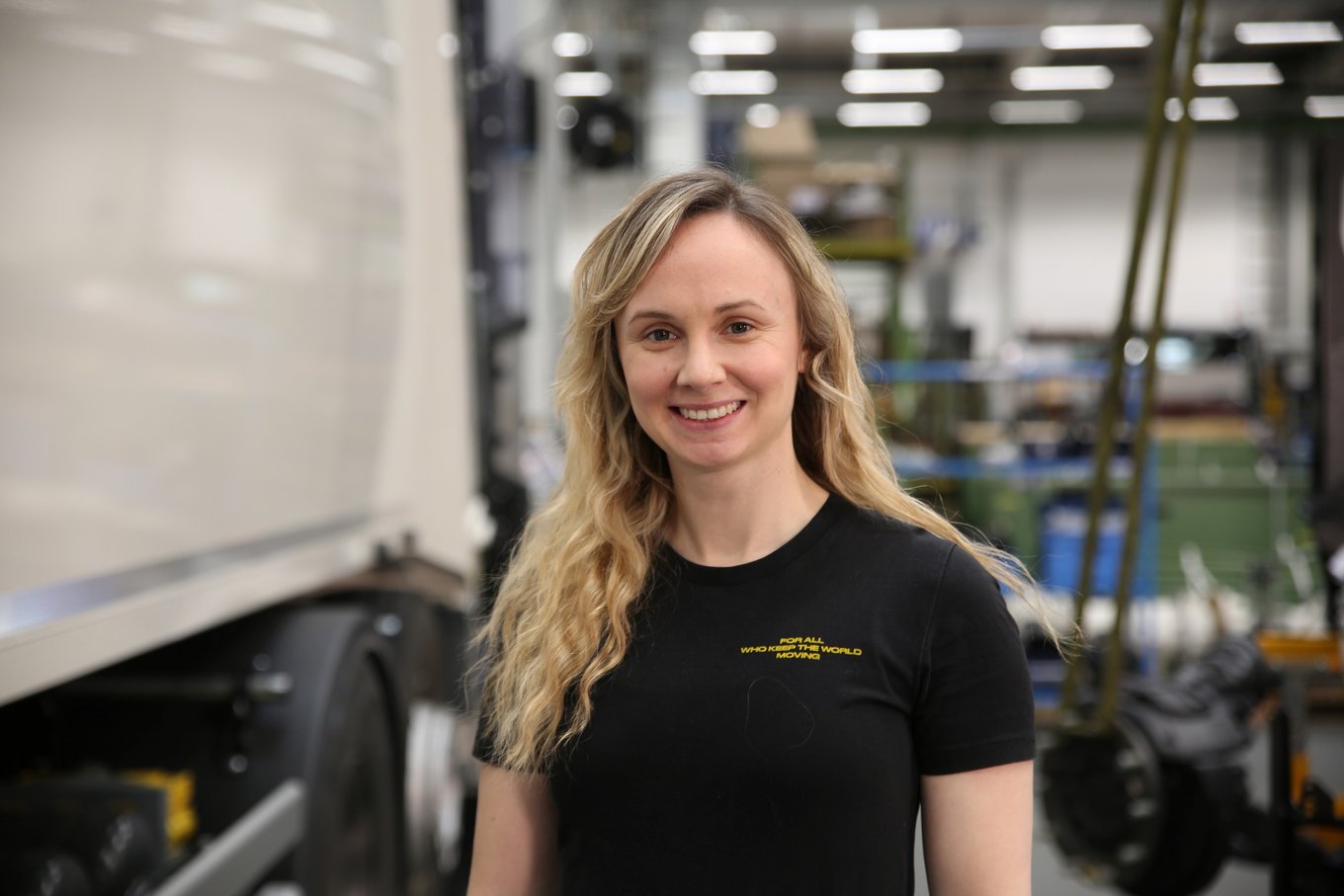
When Katja Olsen joined Advanced Engineering at Mercedes-Benz Trucks in early 2024, she was tasked with building a new team: Sustainability and Circular Economy. Her focus: the materials that will shape the vehicles of the future - steel, aluminum, plastics, glass, batteries - and the question of how to make them more sustainable.


A project like the reECONIC was not initially part of traditional advanced engineering. A roadworthy demonstrator for a trade show? Unusual. But that is precisely what made it appealing. “We didn’t just want to show theoretically what is possible,” says Olsen. “We wanted to touch it, see it, install it - and learn from it.”

The decisive impulse came at a trade show. A comparable project from the passenger car sector showed what was possible. The question from colleagues was obvious: why not in the truck segment?

The answer was deliberately bold. Not just a theoretical concept or a study - but a real vehicle. “We said: we are building a demonstrator that shows how circular economy can work in reality.”

Many materials, one vehicle

What sounds simple quickly turned into a challenge. Circular economy does not concern a single component, but the entire vehicle. Especially with plastics, the variety quickly becomes complex. New materials, new suppliers, new processes. Not everything works at the first attempt; some solutions only succeed after several iterations.

“You learn an incredible amount,” says the electrical engineer. “But you also have to keep asking questions. What alternative is being used here? What properties does it have? Where are the limits?” At the same time, the project grows - through vehicle assembly, collaboration with FAUN, and the ambition to ultimately put something roadworthy on the road.

Project responsibility instead of production routine


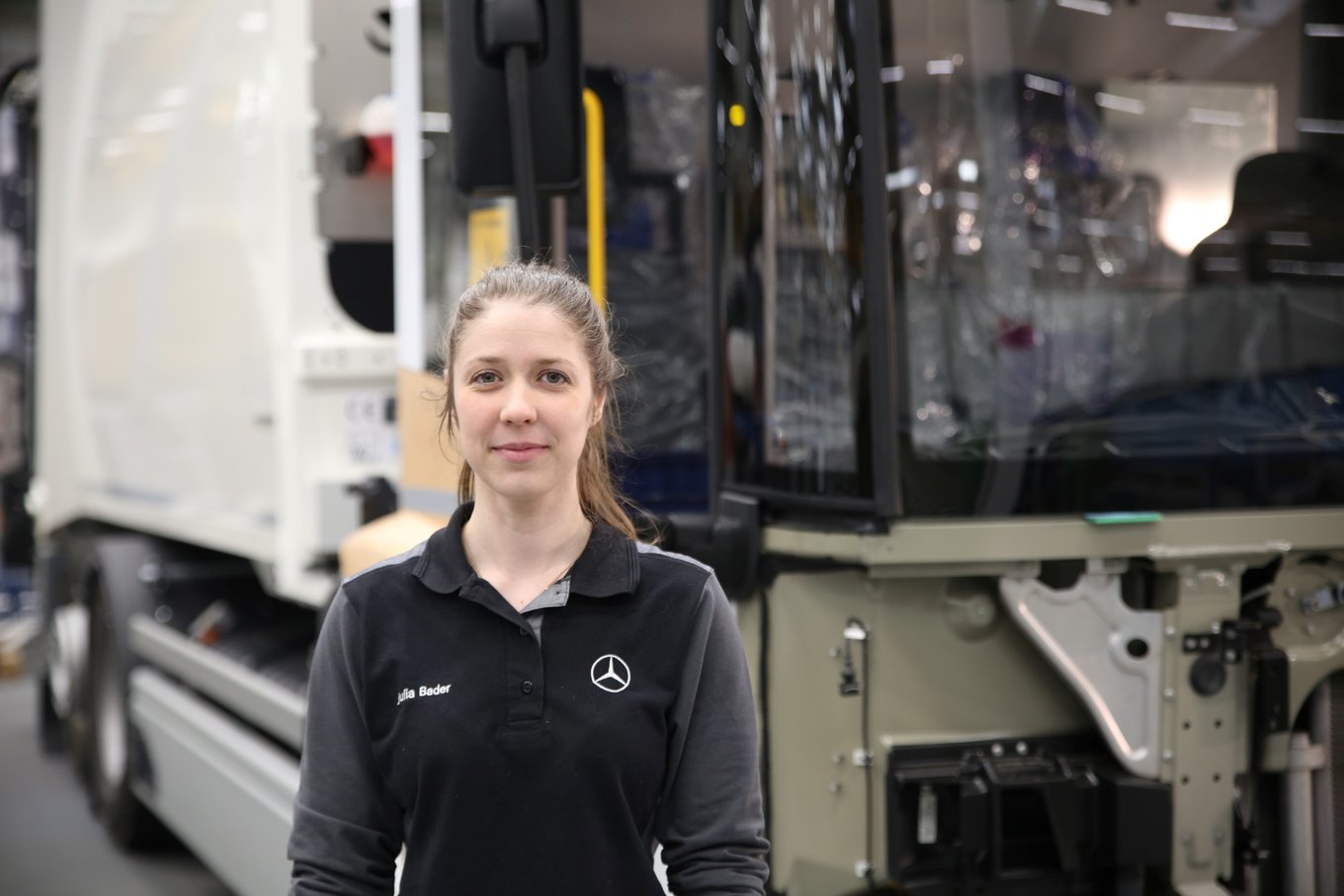
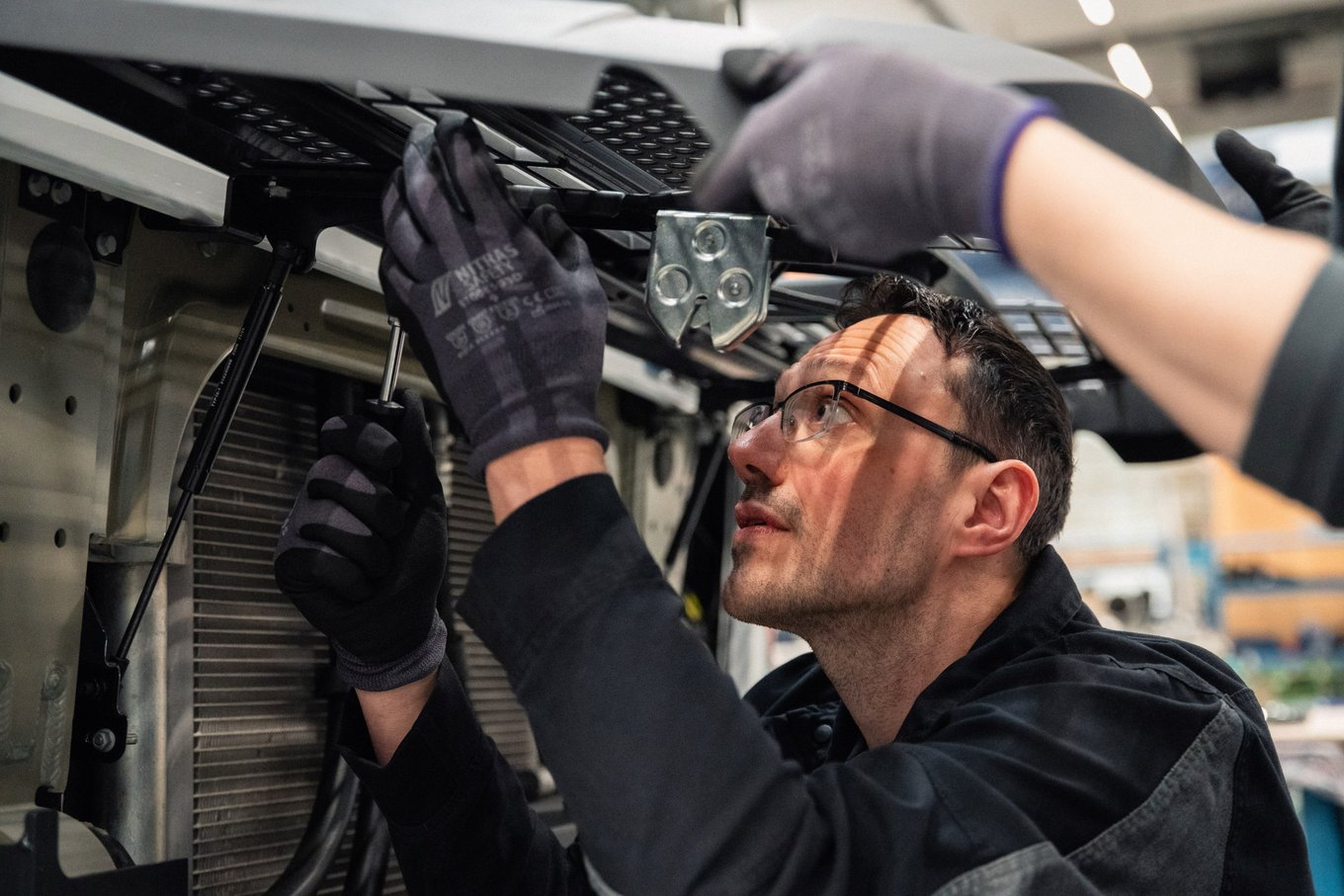
For Julia Bader, the move into the project was a leap into the deep end. Normally, she works in production, on the line. In the reECONIC project, she takes on coordination in the workshop area, particularly for the driver’s cab. Suddenly, it is no longer just about assembling, but about thinking, adapting, improvising.

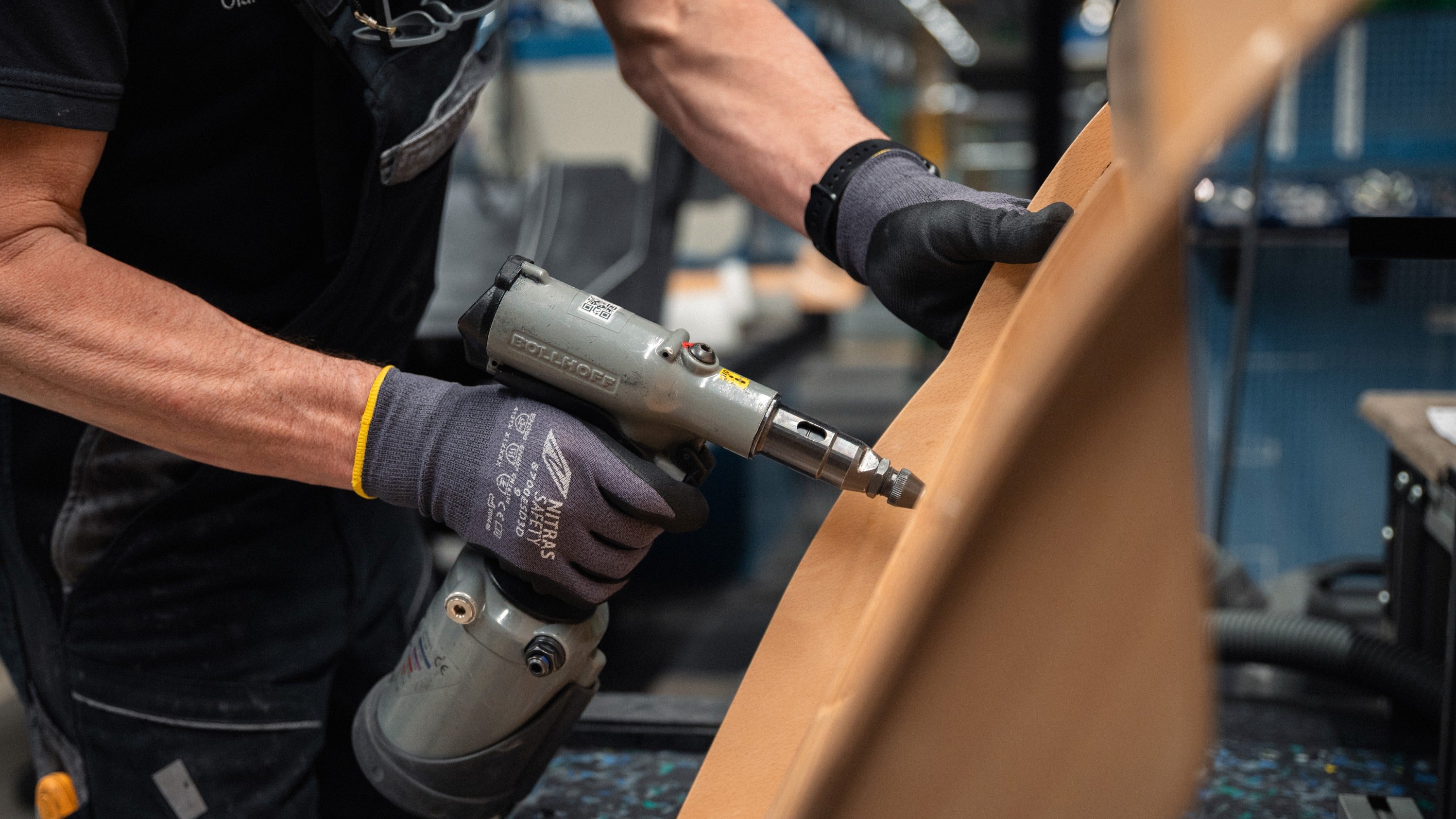
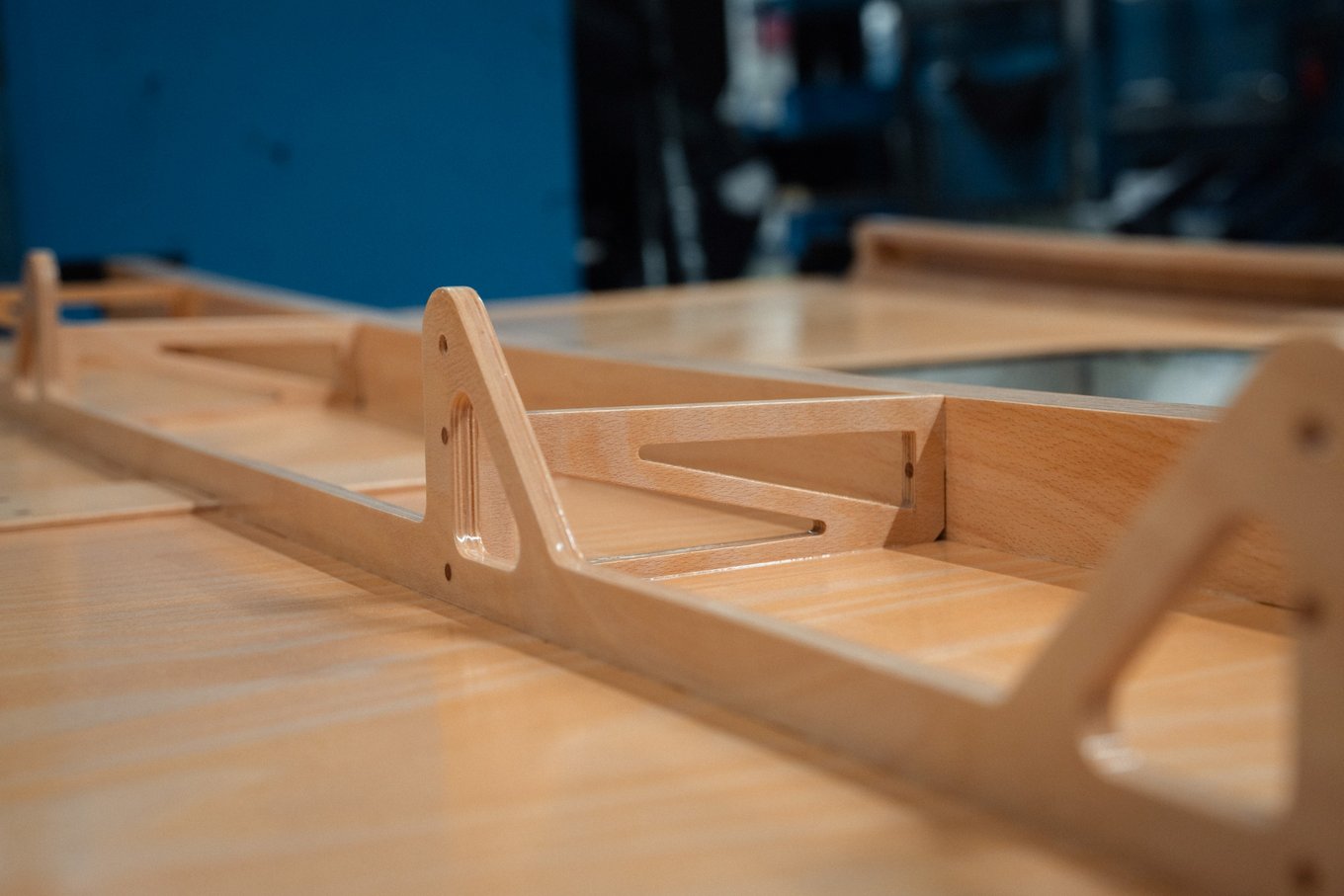
There are moments when nothing fits. Wooden components intended to be glued suddenly show gaps. Natural fiber parts break under stress. Decisions must be made under time pressure. “There were ups and downs,” says Bader. “But that’s exactly what made it exciting - solving problems, finding solutions. And in the end, seeing that it works.”


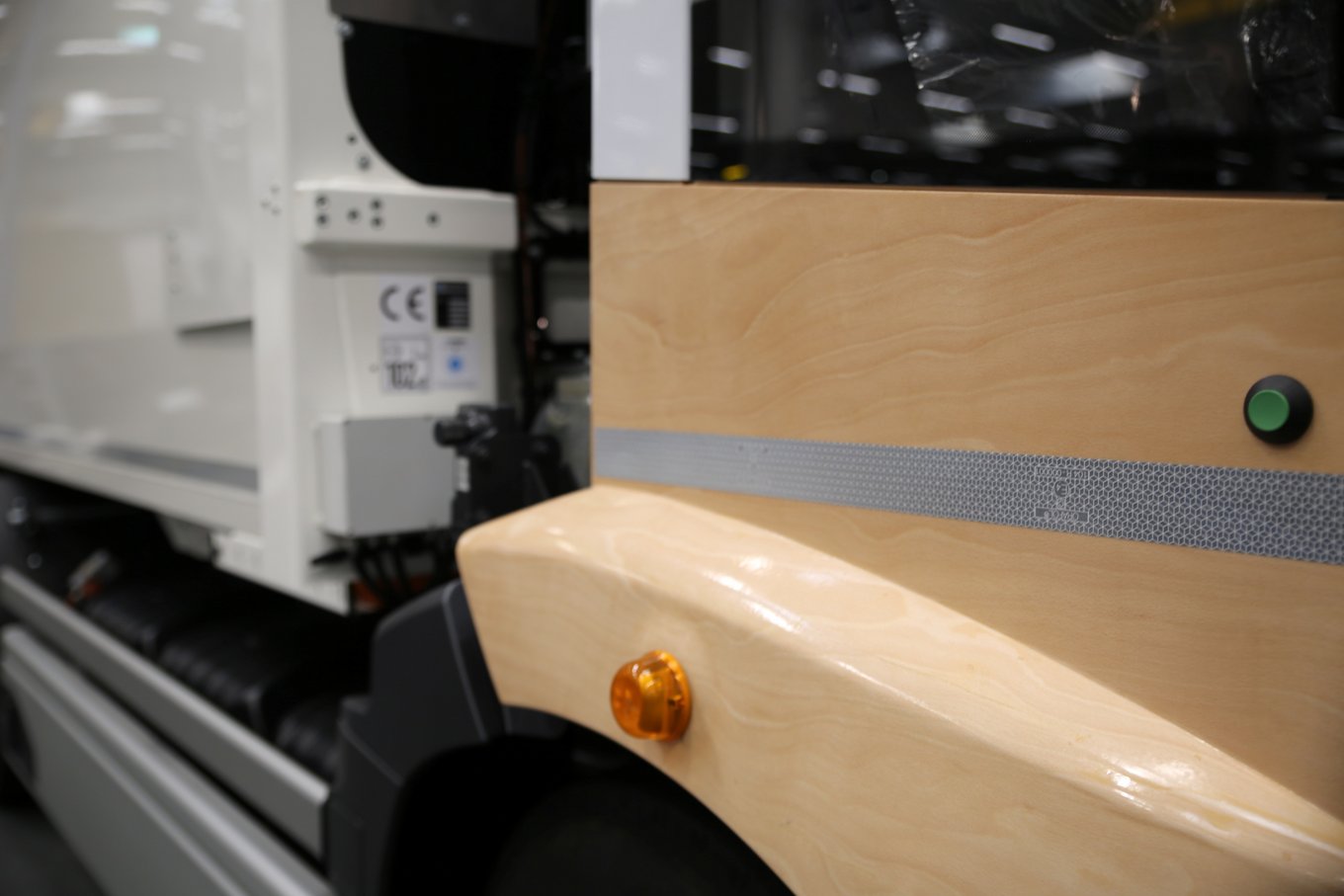
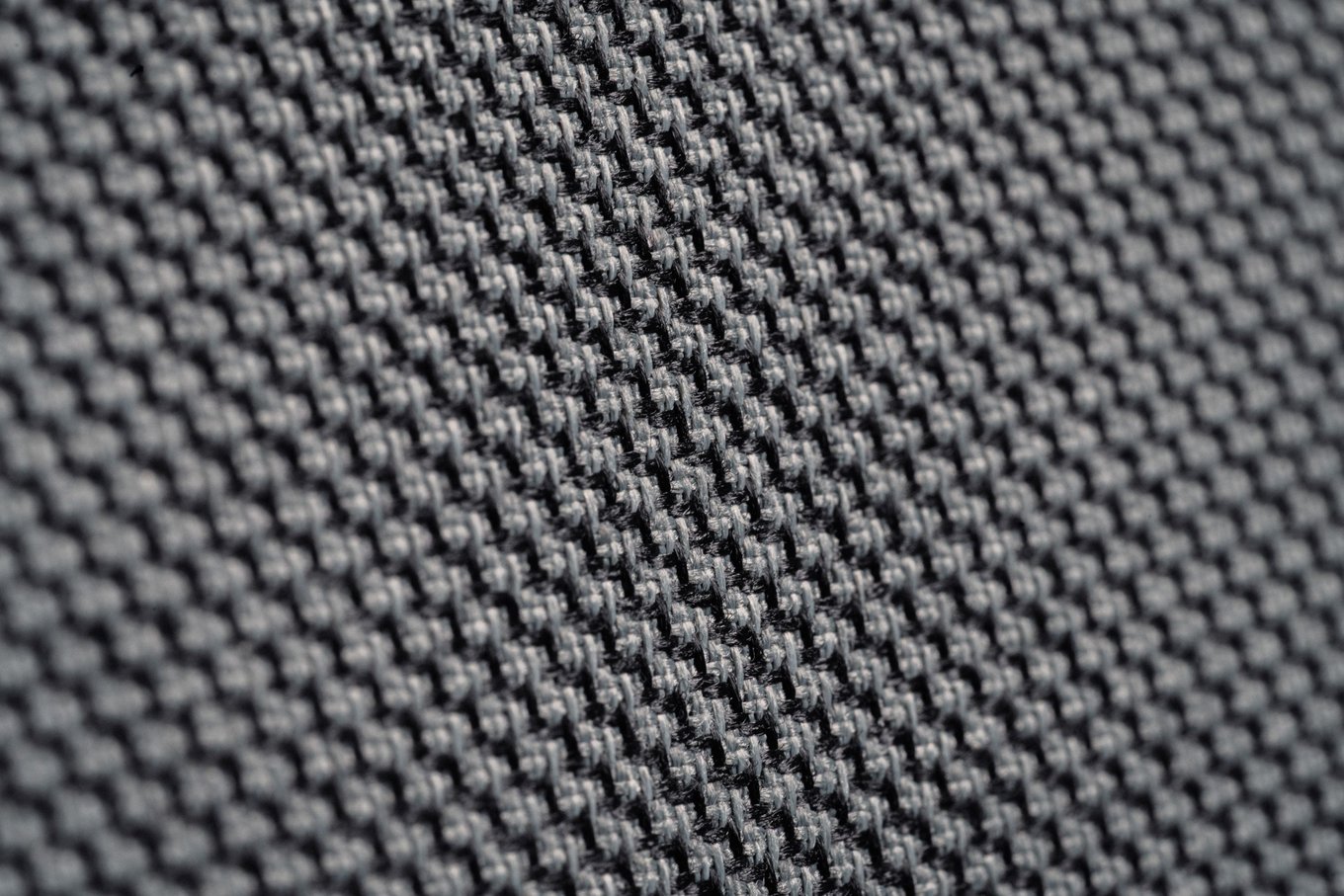
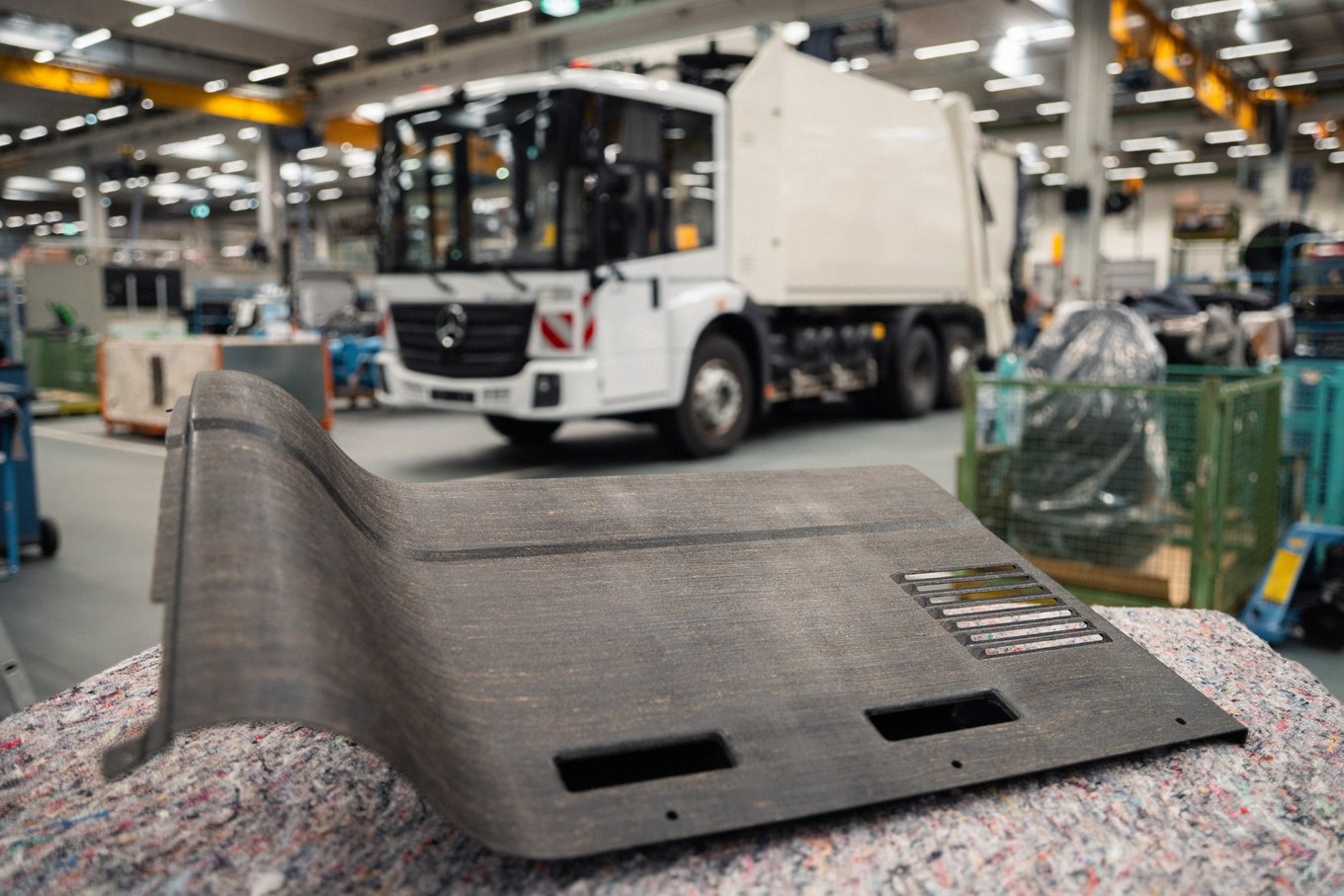
What surprised her most: the materials. Wind turbine rotor blades in the fender. Fishing nets in the seat cover. Sunflower husks in the dashboard. “I would never have imagined something like this could work in vehicle engineering,” she says. “And that’s exactly what makes this project so special.”

Skepticism — and how it was overcome

Valentin Reiß, who is involved in the project as a backup in the driver’s cab team, was initially skeptical as well. Recycled materials in a commercial vehicle? What about weight, stress resistance, durability? But those doubts fade as the vehicle takes shape. “In the end, there is a vehicle standing there. It drives,” he says. “That says more than any discussion.”

Reiß also observes how colleagues outside the project react: cautious, curious, critical. Does it have a future? The answer is pragmatic: you have to try it. That is precisely what advanced engineering is about.

When sustainability becomes close to series production

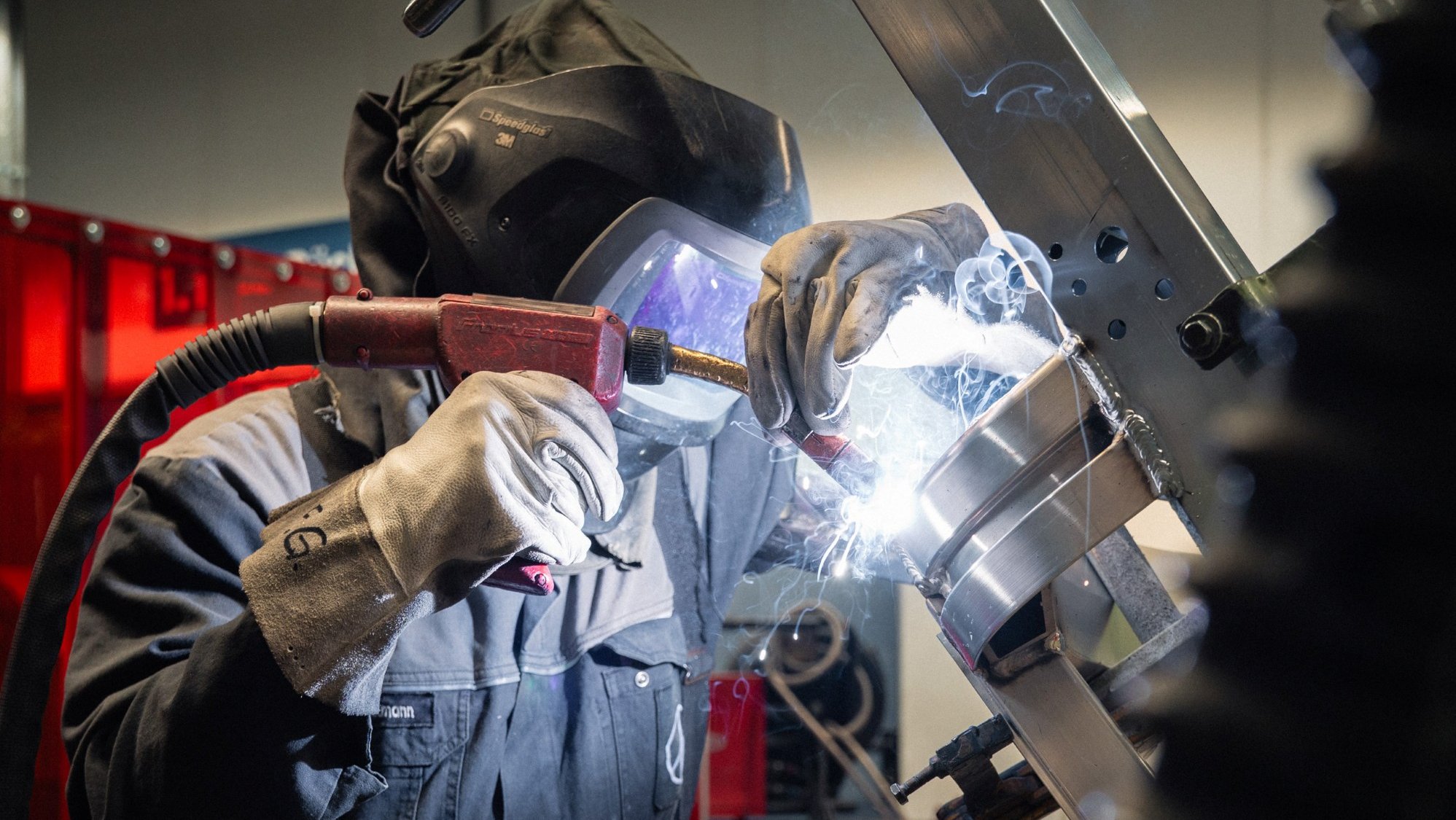
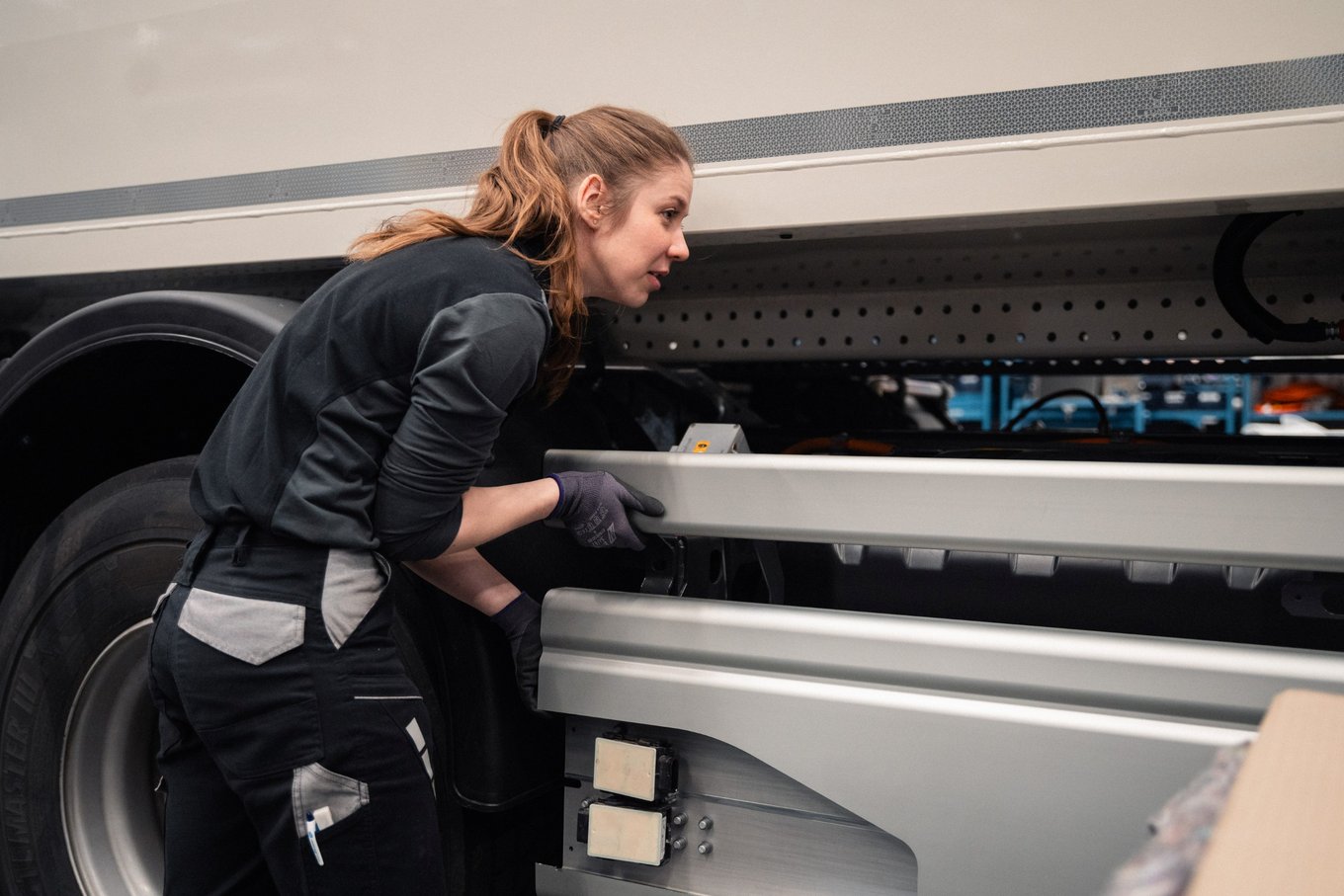
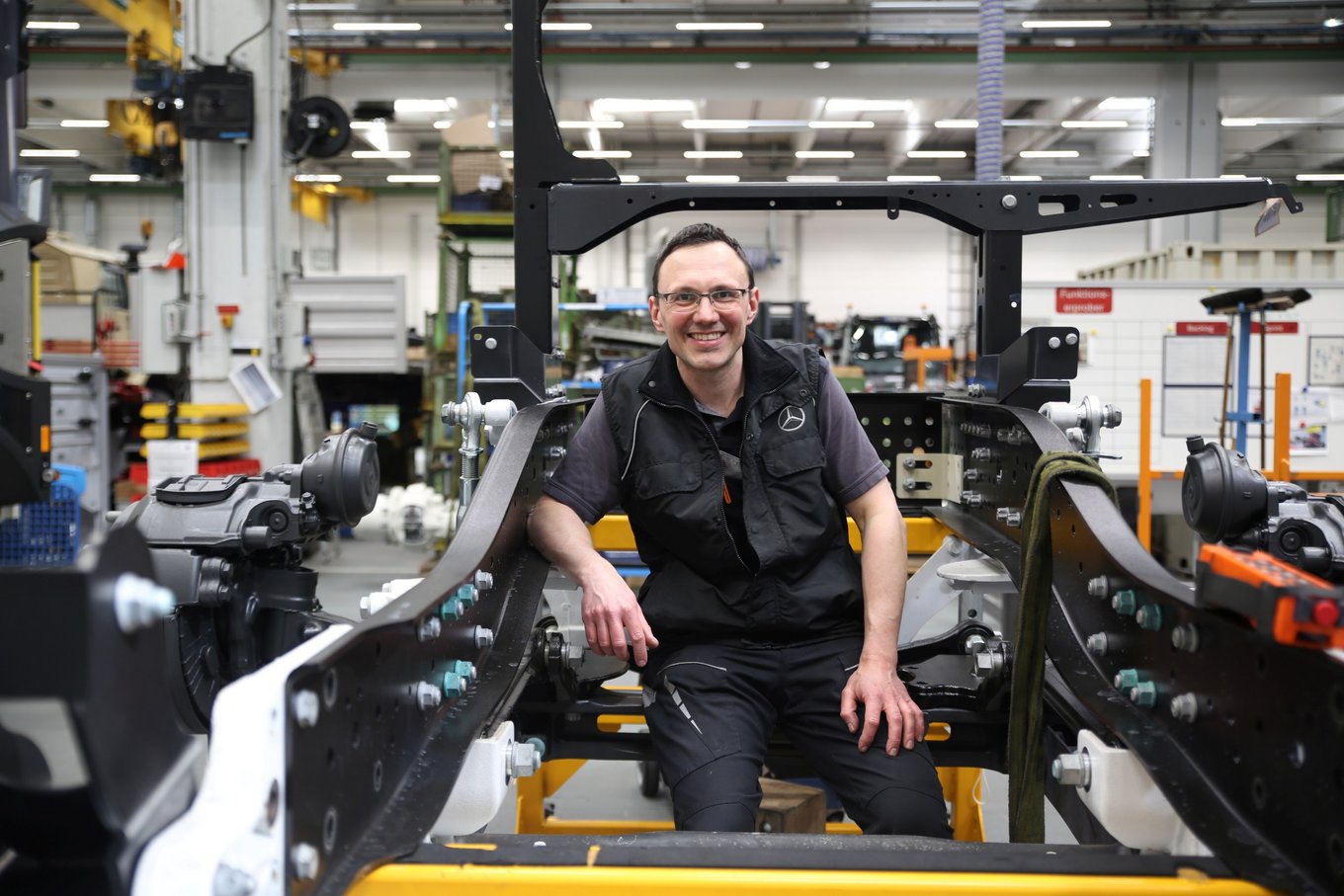
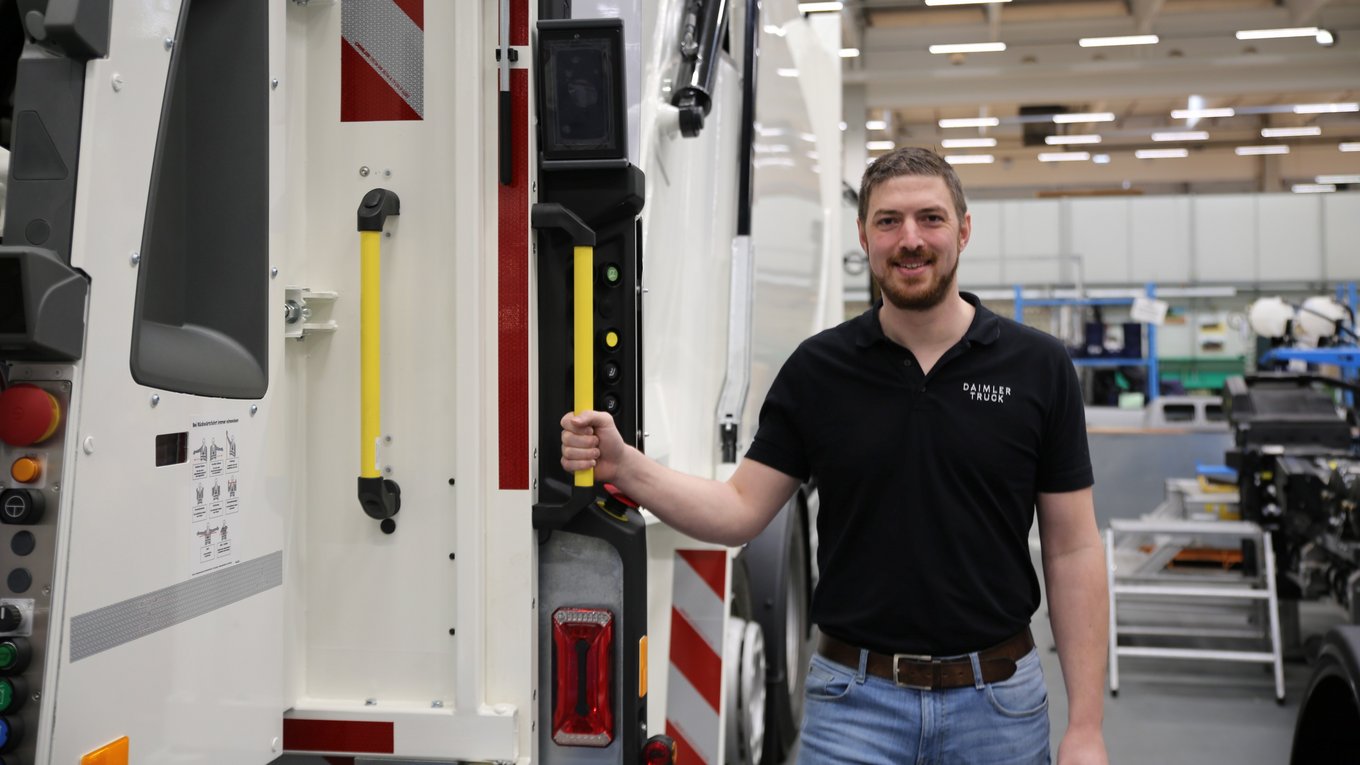
While experimentation is ongoing in the cab, things run surprisingly smoothly in the chassis area. Stefan Hubach, prototype builder, replaces longitudinal members made from recycled steel, aluminum components, and a front axle. His conclusion: no difference compared to series production. Processing, fit, quality - everything as usual.


“That was a real eye-opener for me,” says Hubach. “Why aren’t we already using this?” For him, the reECONIC shows that sustainability does not always mean compromise or additional effort - but often simply a different decision.

Textiles in real-world testing

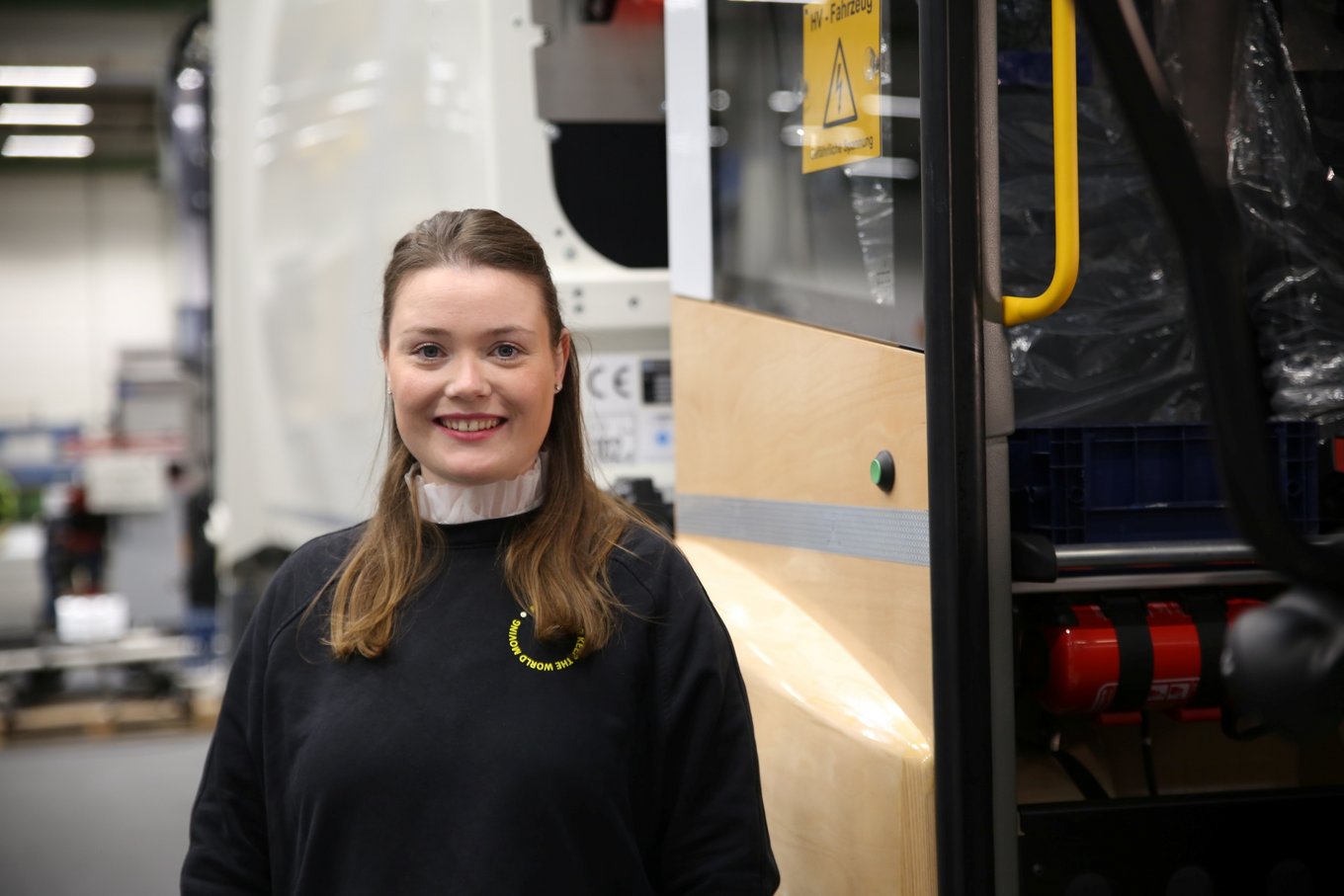
Felicitas Zysset, trainee in the Sustainability and Circular Economy team, is responsible in the project for textiles and plastics - and for the first time brings them consistently into concrete components.

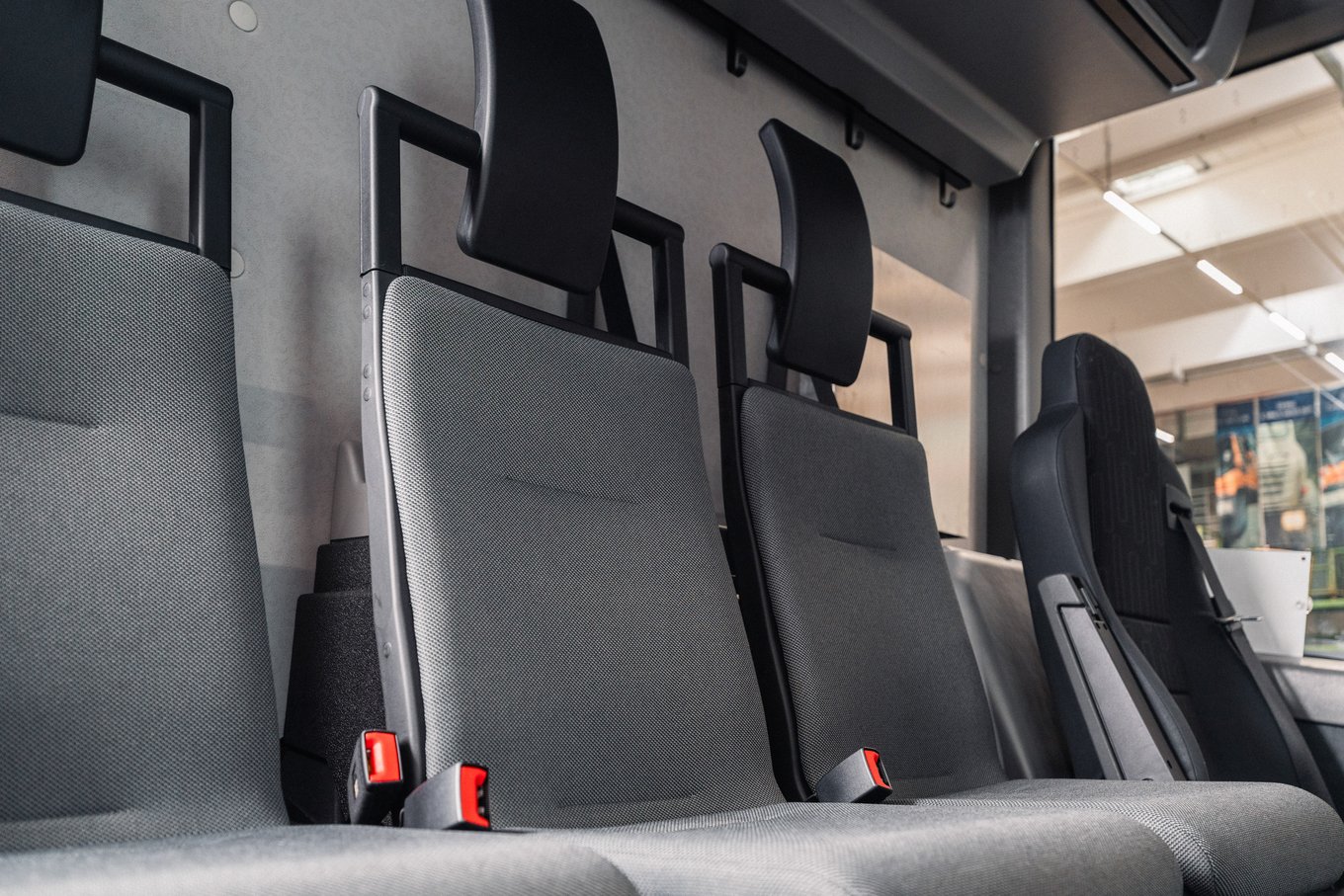
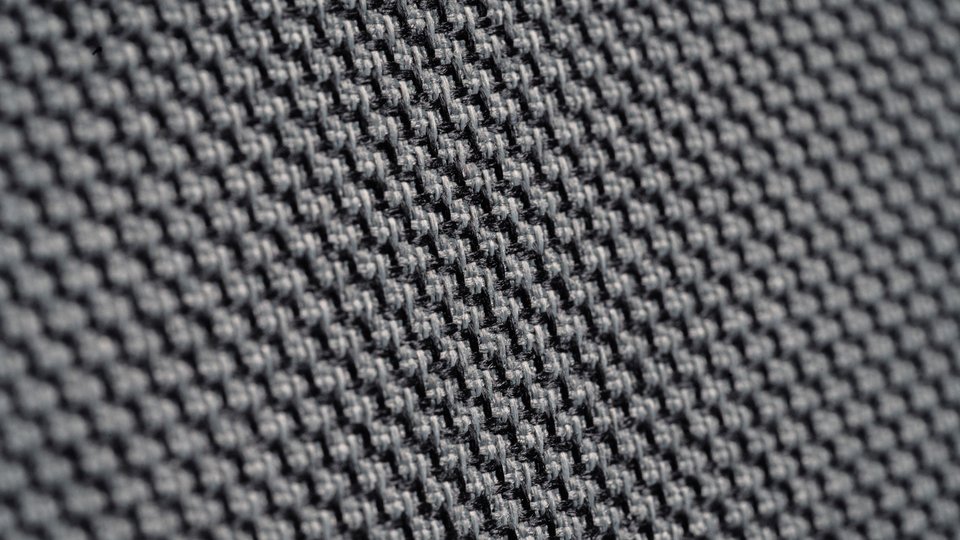
“The key step was moving from theory to implementation,” says the textile engineer. This becomes particularly visible in the seats: “The upholstery fabric is 99 percent recycled material - including old fishing nets.”


For Zysset, the reECONIC is above all a practical proof: “You can clearly see what is possible when you truly try things out.”

The depth behind plastics

However, such decisions must be well-founded. David Bücheler, expert in plastics and innovation management, knows the pitfalls: odors, surfaces, emissions - especially in the interior, requirements are high. Recyclates are not automatically suitable.

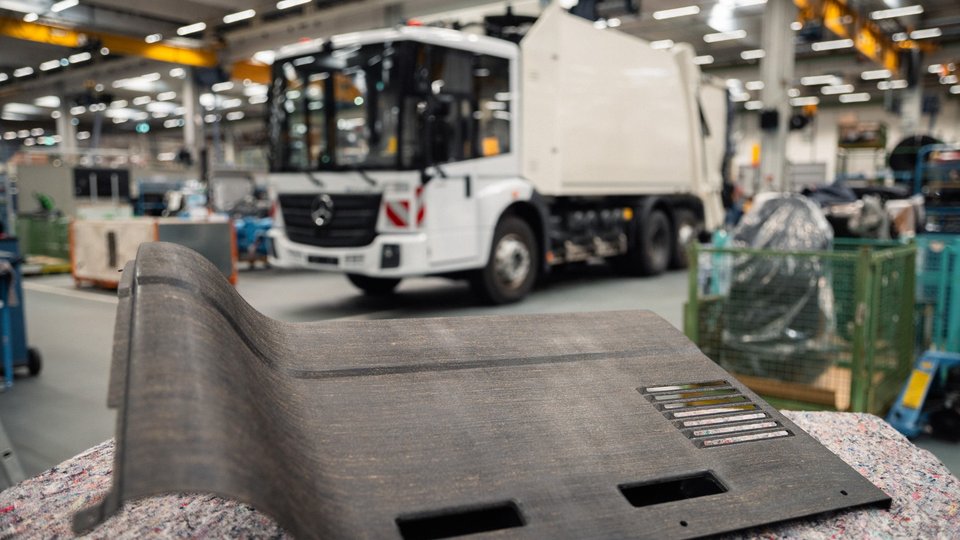
But Bücheler sees enormous potential. For example, in a component in the cab floor that was previously non-recyclable and is now made from residues of passenger car recycling - with a recycled content of over 95 percent. Or in bio-based materials, which are now not only more sustainable but also more cost-effective than conventional plastics.

“The vehicle is proof,” says Bücheler. “Not everything - but a great deal of it - would already be ready for series production today.”

The battery as a system issue

A central element of the reECONIC is hidden - yet crucial to the question of how sustainable a battery-electric vehicle is over its entire lifecycle: the battery.
 

Kristina Pfeifer is responsible for this topic. She knows that components cannot simply be replaced here. “We couldn’t just swap out the battery,” she says. “It has to meet specific requirements and would need to be completely re-certified if major changes were made.”

Instead, the PhD chemist takes a holistic view of the battery - from material sourcing and usage to repair, second-life, and recycling concepts.

“Our battery is highly modular and can be easily disassembled,” Pfeifer explains. “With minimal use of adhesives and fillers, we have good conditions for future recycling processes.”

At the same time, current limitations become clear. “Battery recycling is expensive and energy-intensive. For it to work at scale, you need high volumes and the right infrastructure.”

Nevertheless, Pfeifer sees this as a key lever for the future - including alternative technologies such as sodium-ion batteries, which were discussed in the project but could not be implemented due to time and certification constraints. “Especially for waste collection vehicles, this could be a very promising option in the future.”

The long-term perspective

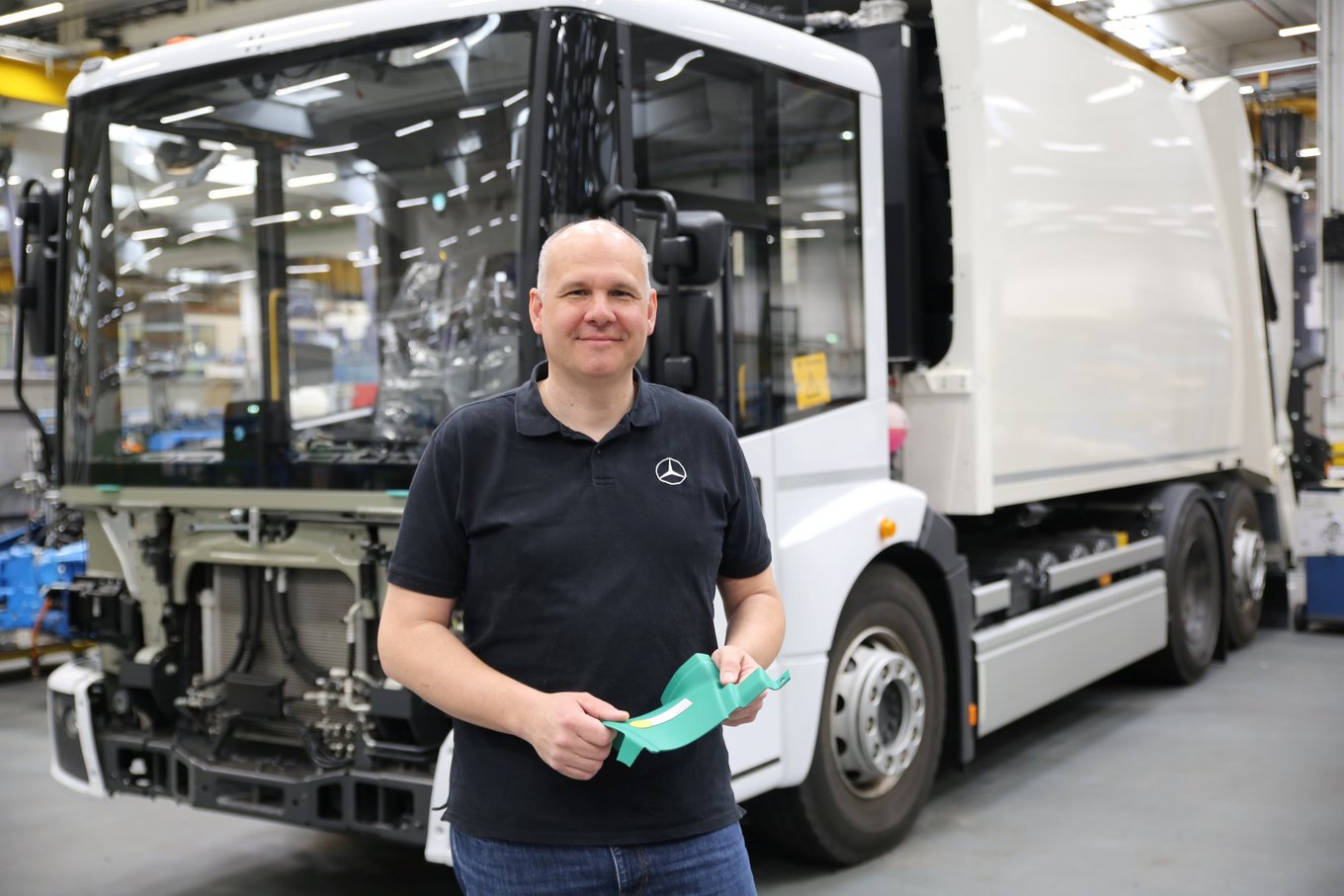
That the reECONIC is not a coincidence is also evident in the story of Ulrich Isecke, advanced engineer and materials-driven initiator of the project. He has been working on alternative materials since 2014 - lignin-based plastics, ocean plastic, natural fibers. Many of these ideas initially met with skepticism. For a time, he even carried the nickname “Eco Ulli.”


But the idealism remained - also driven by a sense of responsibility, as an engineer and as a father. “We are the ones who can make a difference,” says Isecke. For him, the reECONIC is the opportunity to bring individual ideas together and make them visible across the entire vehicle - not only technically, but also emotionally.

The invisible work

That everything ultimately works, is approved, and is presented at a trade show is also thanks to Andreas Höfert: budget, procurement, logistics, homologation, coordination with TÜV and partners, trade show appearances. Much of this remains invisible—until something is missing.


For Höfert, sustainability is not a question of individual components, but of the system. “It’s not about replacing virgin materials,” he says. “It’s about keeping materials in the loop.” For him, the reECONIC is a catalyst for new ways of thinking - internally and externally.

More than a show vehicle

What remains after the trade show appearance? A vehicle that is tested in real-world operations. Above all, however, insights: which materials are ready for series use? Where are new standards, partnerships, and scaling needed?

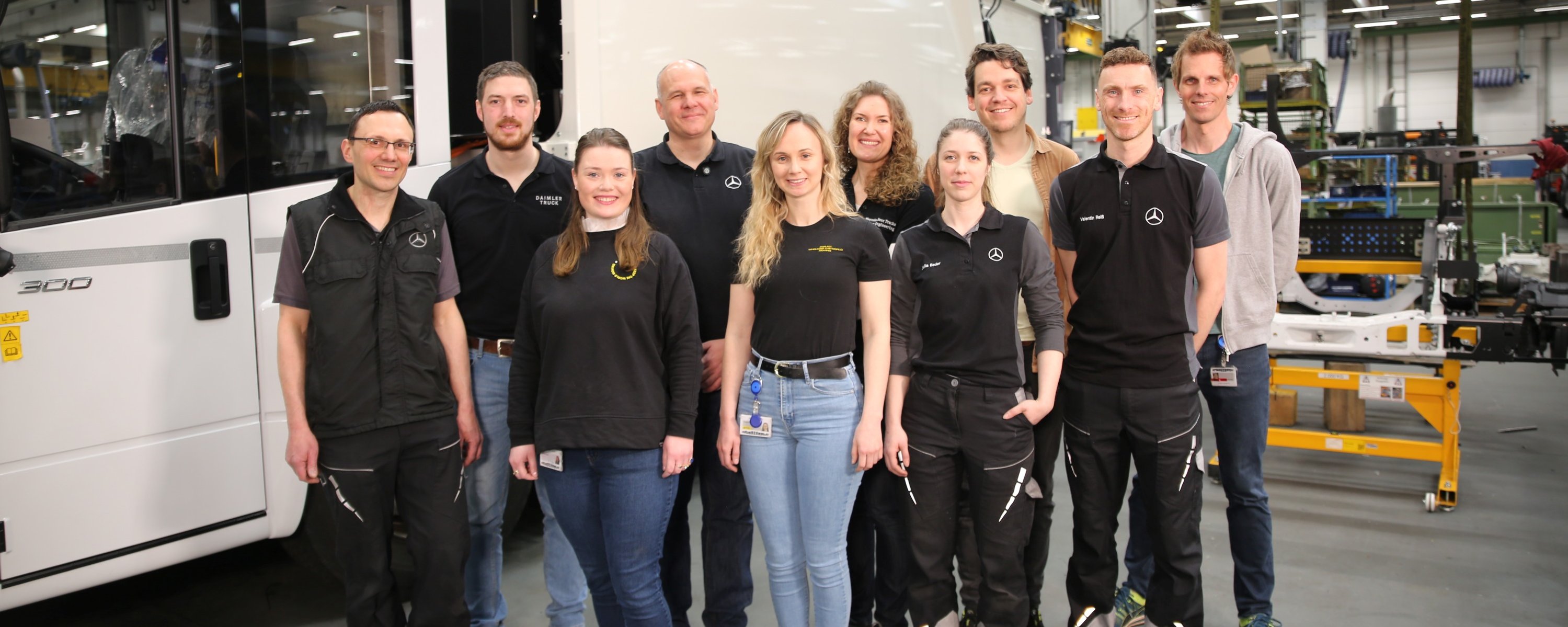
The reECONIC is not a finished product. It is an invitation - to developers, decision-makers, partners. And proof of what is possible when people collaborate across departmental and disciplinary boundaries.

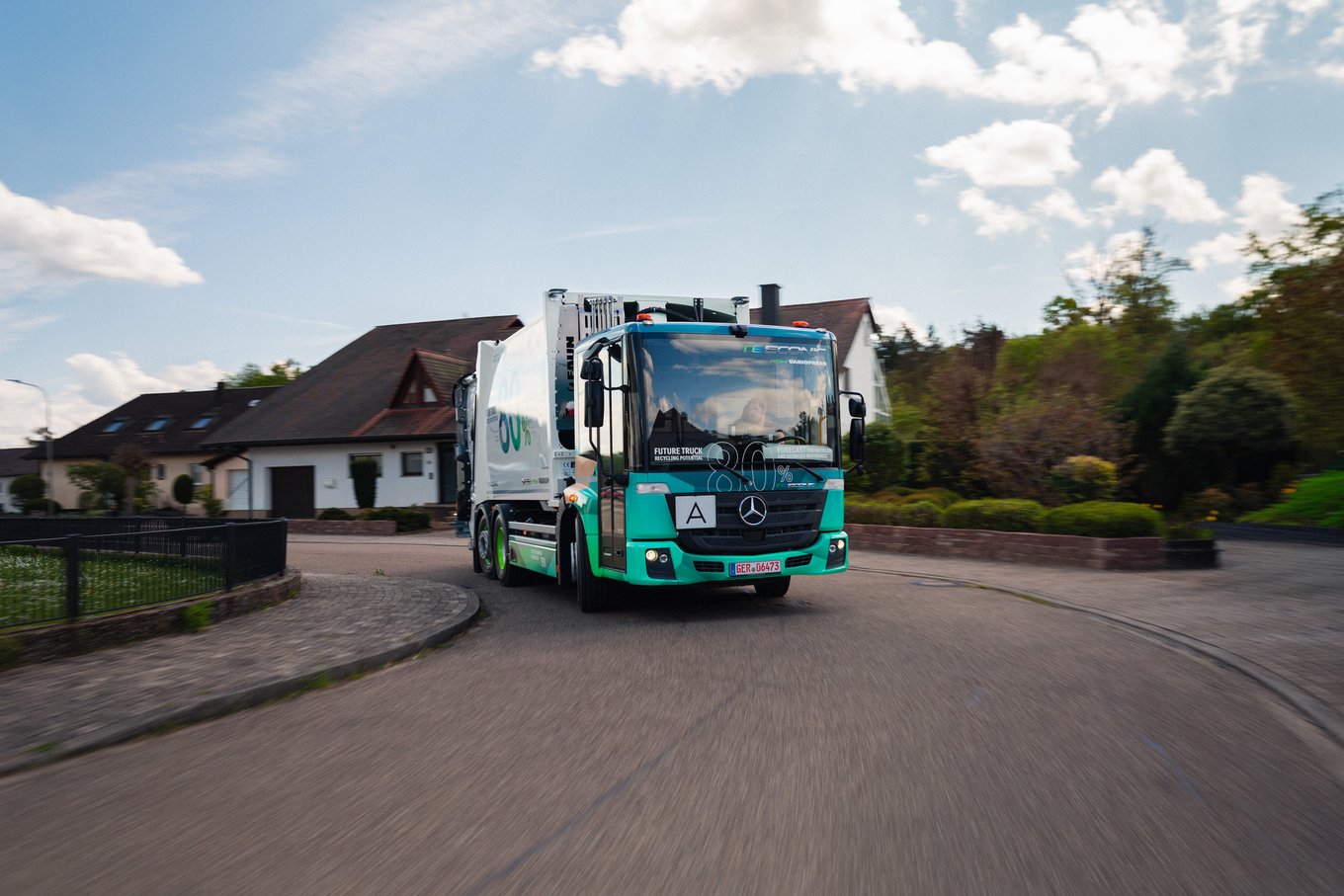
In the workshop, the vehicle now stands ready. Quiet, electric, unconventional. A waste collection vehicle that shows what circular economy in commercial vehicle engineering can look like - when it is taken seriously. And when a team has the courage to simply try it.

reECONIC at a Glance

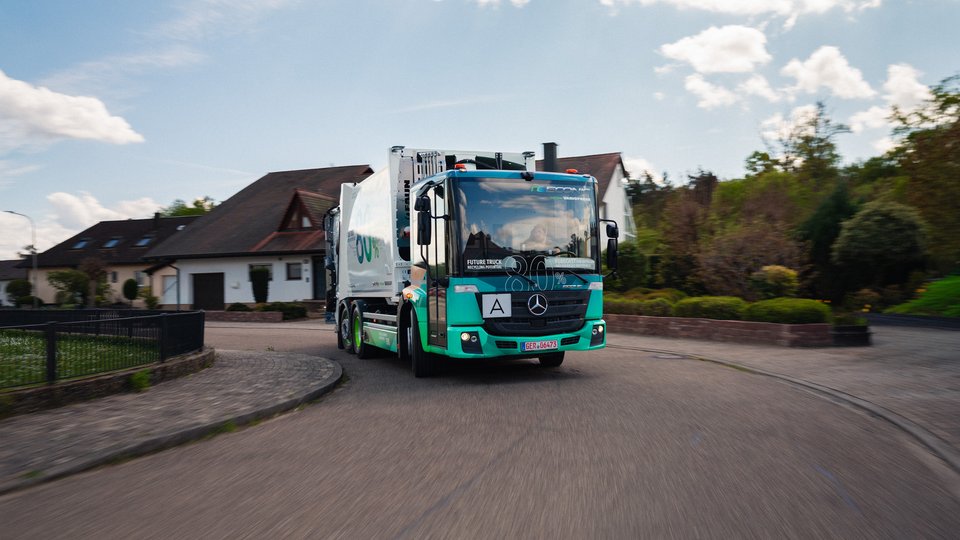
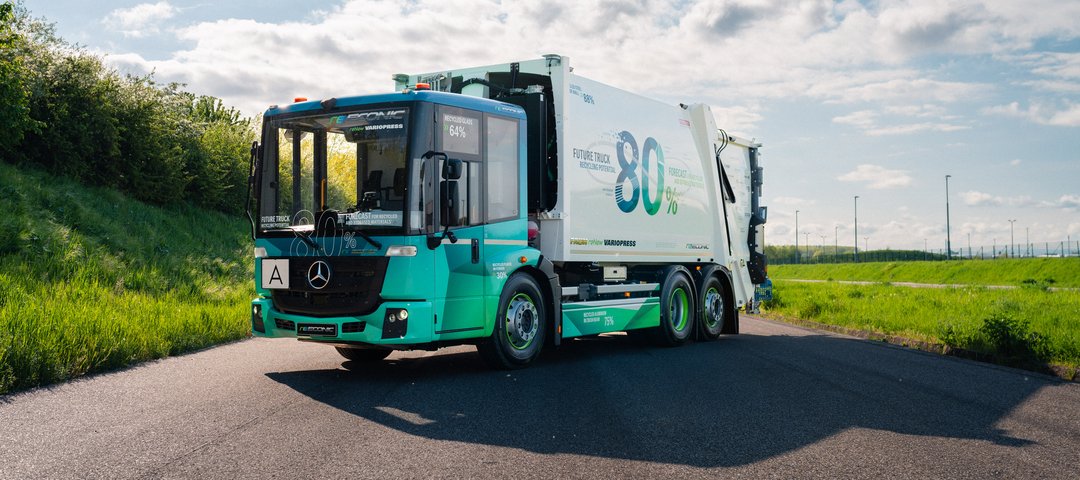
Vehicle: Battery-electric waste collection vehicle based on the Mercedes‑Benz eEconic

Objective: Demonstrator for a holistic circular economy approach in commercial vehicle manufacturing

Partners: Mercedes‑Benz Trucks, FAUN Umwelttechnik, TSR Group
(33 project partners in total)

Material Concept

  • Recycled and CO₂e‑reduced steel and aluminium
  • Recycled glass and plastics
  • Natural and bio-based materials
    (including fishing nets, wood, lignin-based plastics and polylactic acid–based plastics)

    Sustainability Potential

  • Theoretically up to 80% of the main materials can be substituted
  • Up to 41% fewer CO₂ equivalents in vehicle production
  • Methodology certified by TÜV SÜD

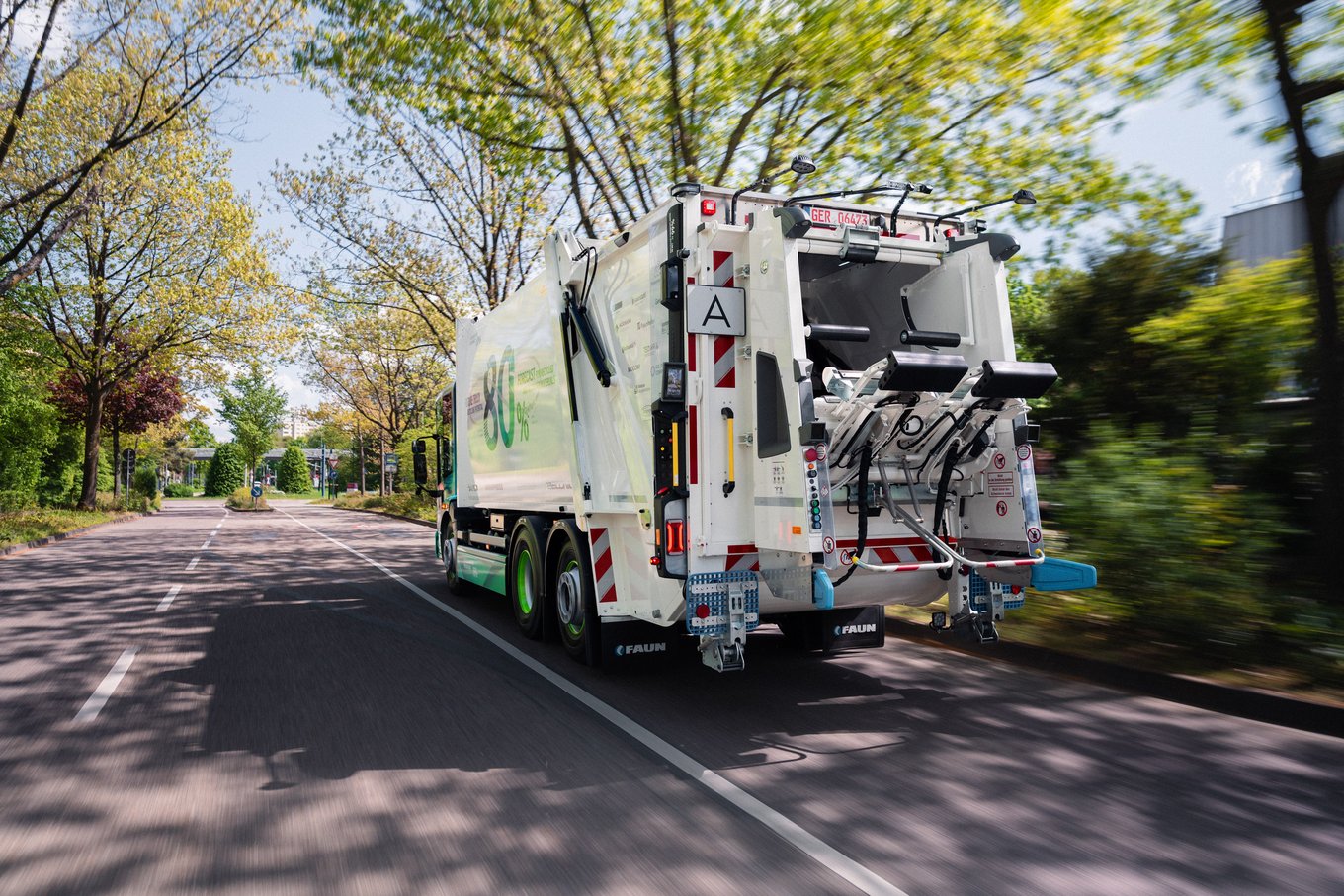
    Body: FAUN reNew VARIOPRESS body with a high recycled content
    (e.g. fenders made of up to 92% recycled plastic)

    Status

  • World premiere: IFAT Munich
  • Real-world trials with REMONDIS planned from 2026

Sustainability at Daimler Truck

Sustainability is an integral part of our core business and our business activities. We want to decarbonize transportation and passenger transportation and drive the industry-wide transformation. In this way, we act and assume responsibility for the benefit of the environment as well as people and society – on the basis of responsible corporate governance. 

To achieve this, we focus on three areas of sustainability: Planet, People and Performance 

  • Planet: We are committed to the Paris Climate Agreement. We want to make sustainable transportation and passenger transport a success and thus contribute to climate and environmental protection. 
  • People: We take responsibility towards society and our employees. Where we can make a contribution to change something for the better, we do it. 
  • Performance: We envisage that business performance, unlocking profit potentials and sustainability initiatives go hand in hand, so that our responsibility for people and the planet are integrated into our core business. 
     

Please find more information on sustainabilty at Daimler Truck here: Sustainability | Daimler Truck