
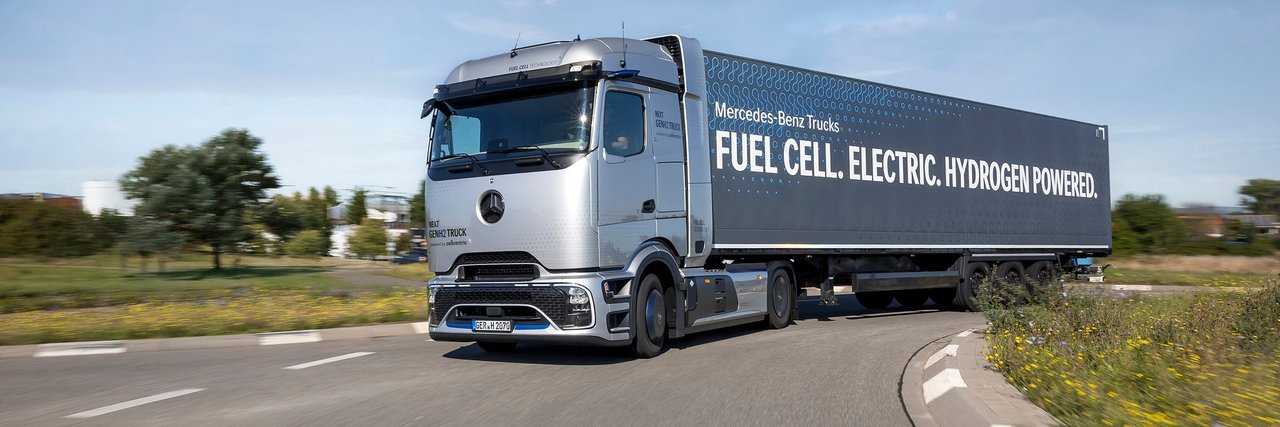
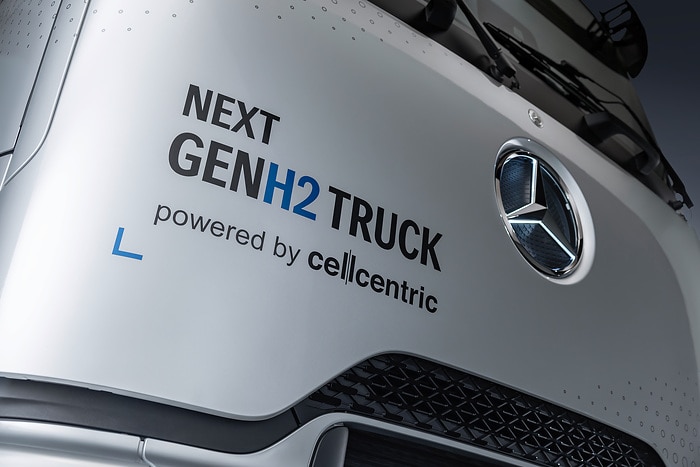
Daimler Truck presents Mercedes-Benz NextGenH2 Truck with small-series production planned from end of 2026
Download
Daimler Truck presents Mercedes-Benz NextGenH2 Truck with small-series production planned from end of 2026
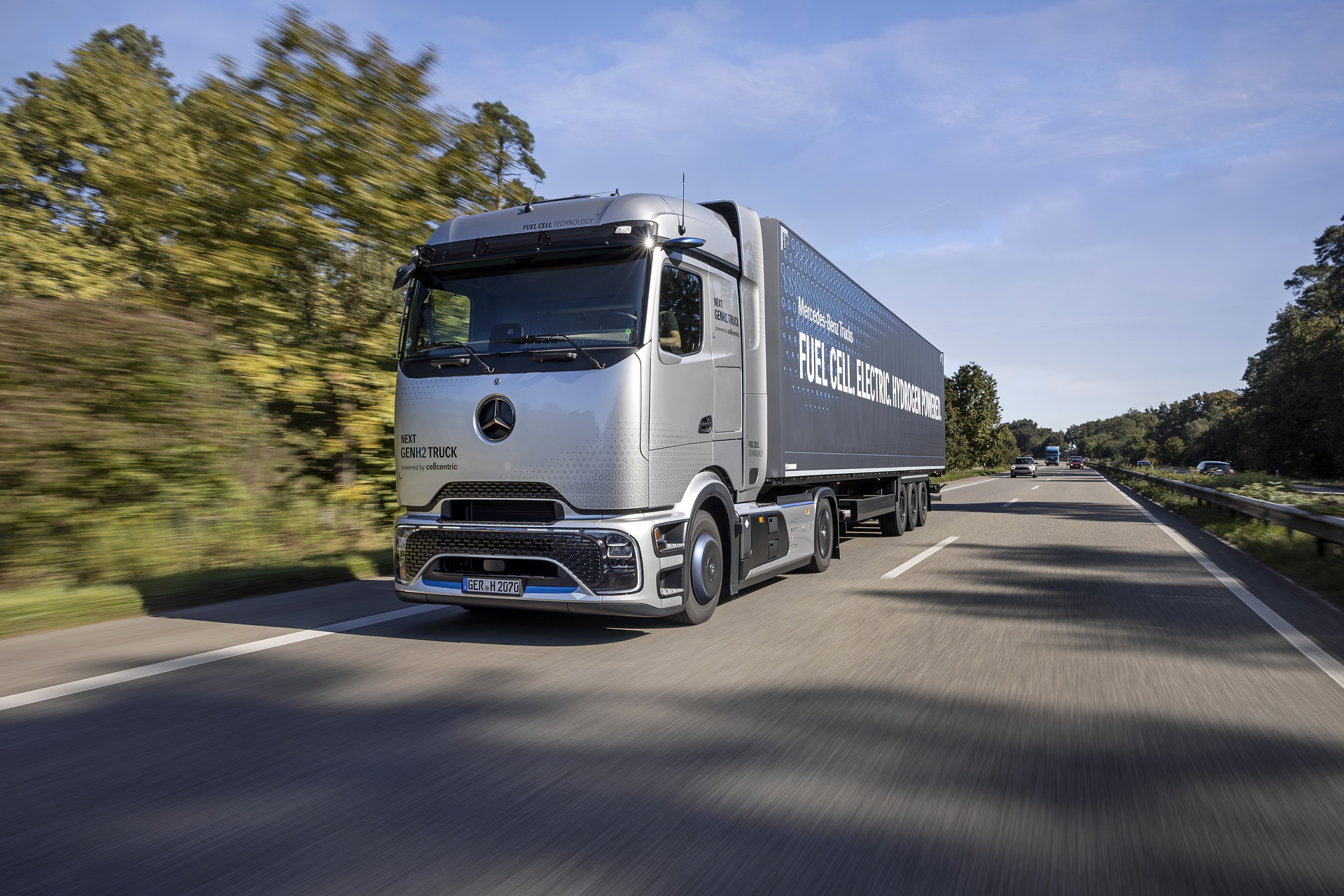
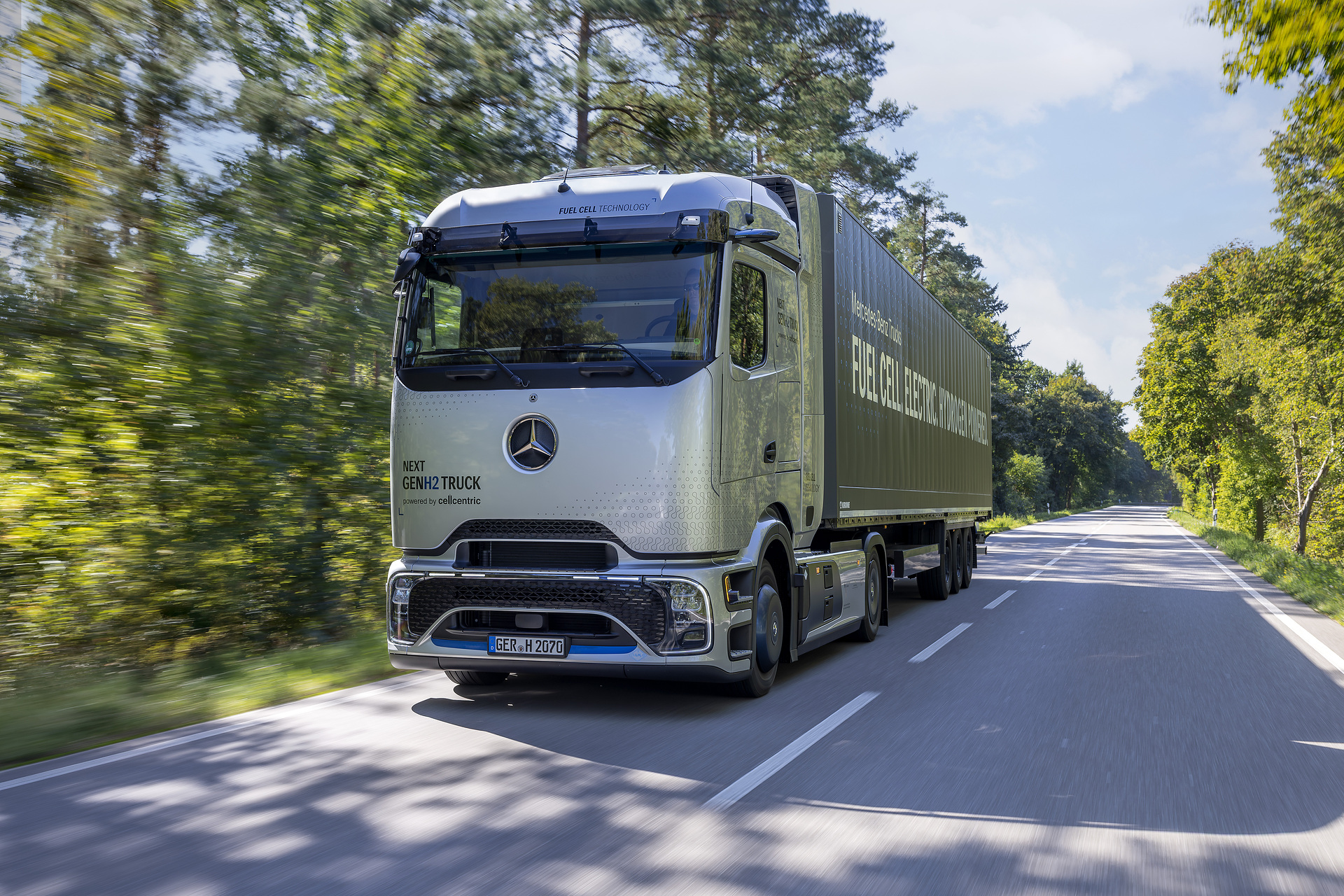
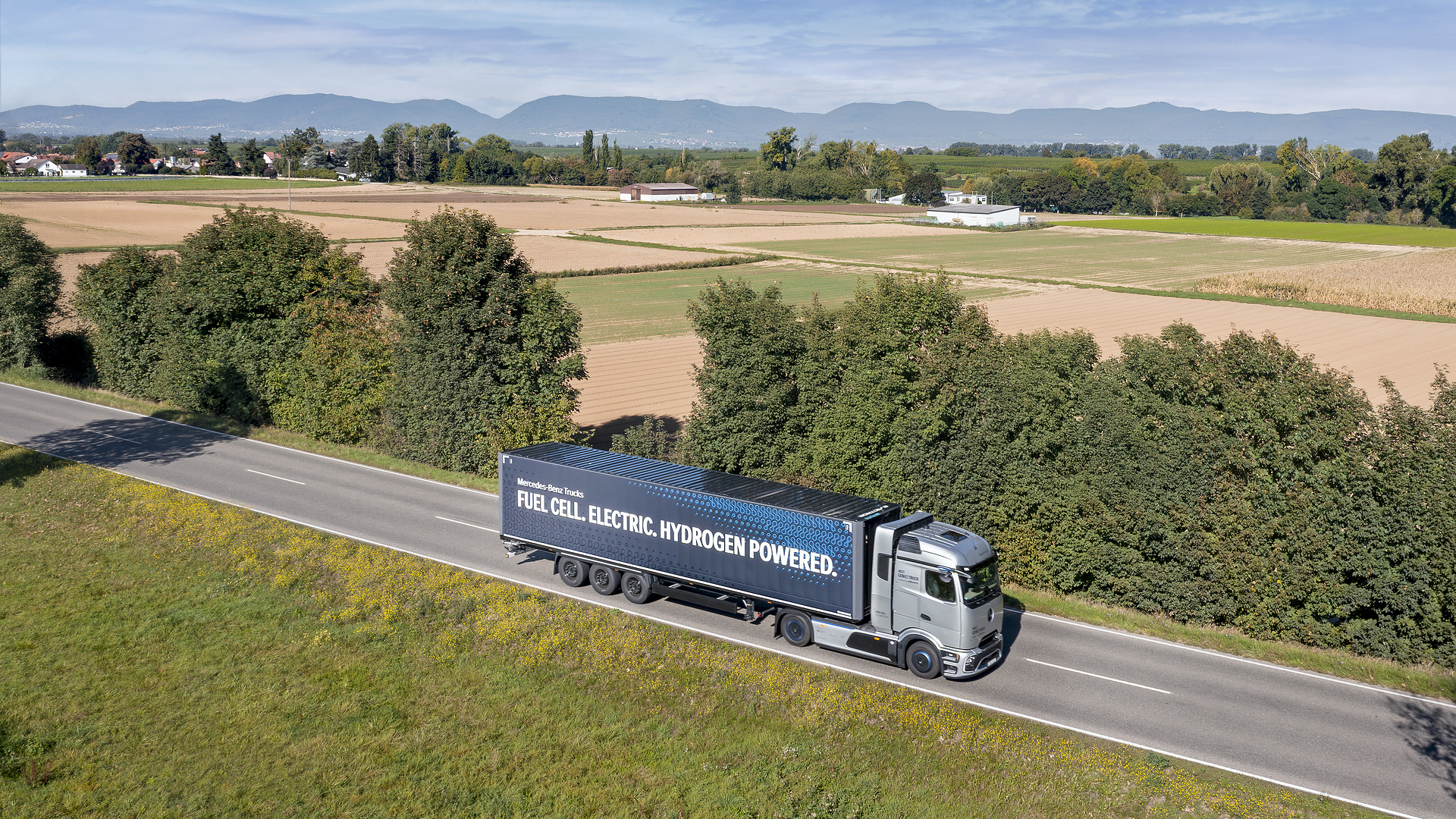
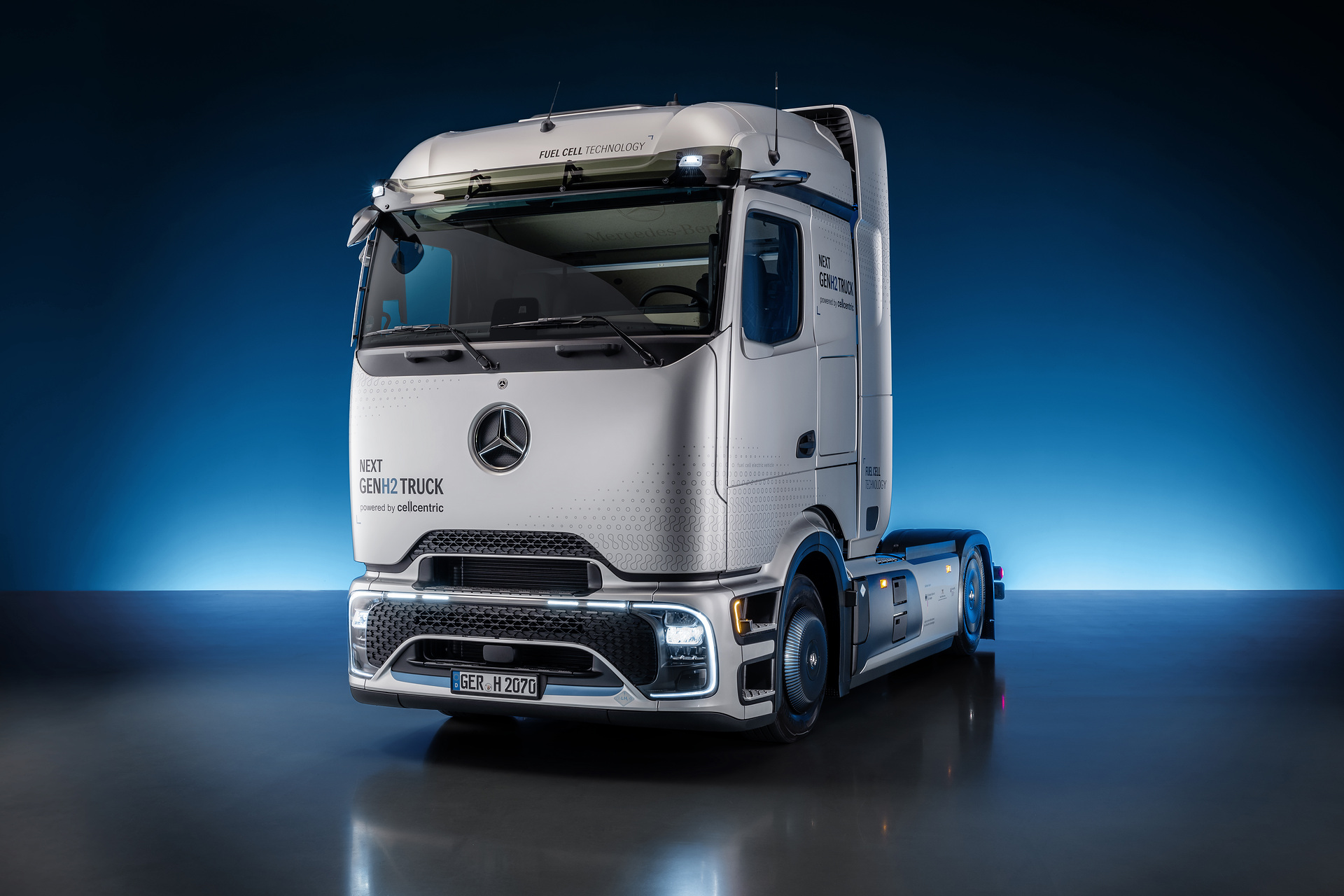
The Mercedes-Benz NextGenH2 Truck marks the next development step toward hydrogen-based truck transportation As part of a limited small-series production, 100 vehicles are set to be deployed in customer operations from the end of 2026 onwards Proven components such as the cellcentric fuel cell and liquid hydrogen technology have been carried over from the first-generation Mercedes-Benz GenH2 Truck and further developed,…
- The Mercedes-Benz NextGenH2 Truck marks the next development step toward hydrogen-based truck transportation
- As part of a limited small-series production, 100 vehicles are set to be deployed in customer operations from the end of 2026 onwards
- Proven components such as the cellcentric fuel cell and liquid hydrogen technology have been carried over from the first-generation Mercedes-Benz GenH2 Truck and further developed, with innovative technical safety solutions, and more compact packaging enhancing customer value through broader compatibility with trailers
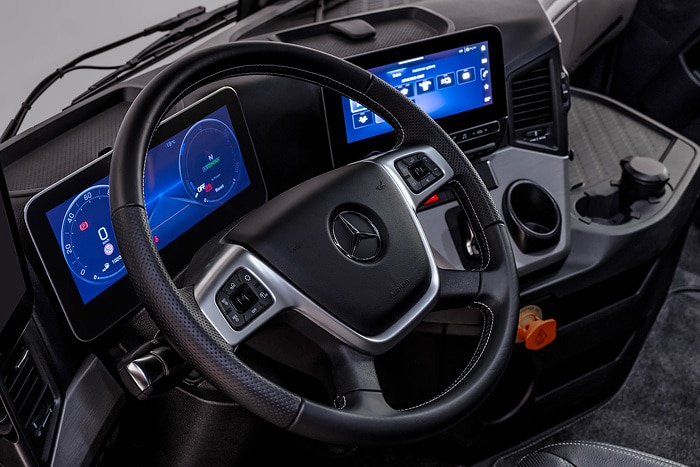
- New in the NextGenH2 Truck: key series components from the battery-electric Mercedes-Benz eActros 600 like the integrated e-axle, aerodynamically optimized ProCabin, Multimedia Cockpit Interactive 2, and latest safety assistance systems
- Achim Puchert, CEO Mercedes-Benz Trucks: “In addition to battery-electric solutions, hydrogen-based drives are crucial for the sustainable transformation of our industry. With the NextGenH2 Truck, we are taking the next technological step in fuel cell trucks. Together with our customers, we aim to introduce a small series with high range and near production ready technology into daily transport operations from the end of 2026.”
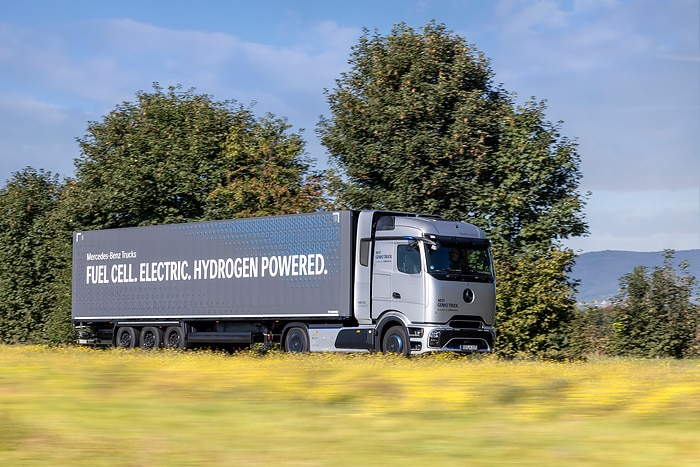
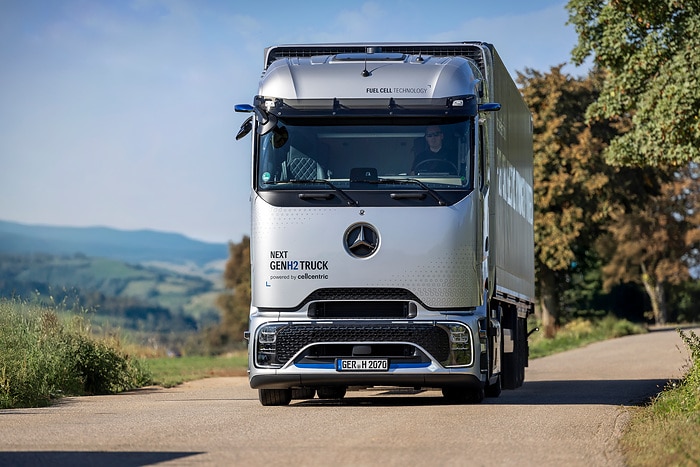
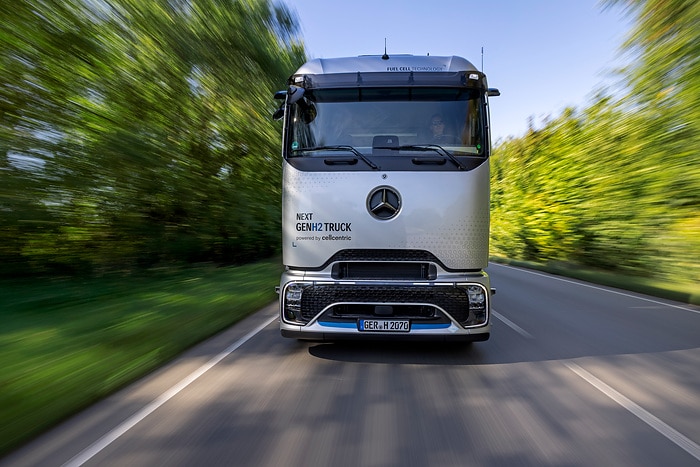
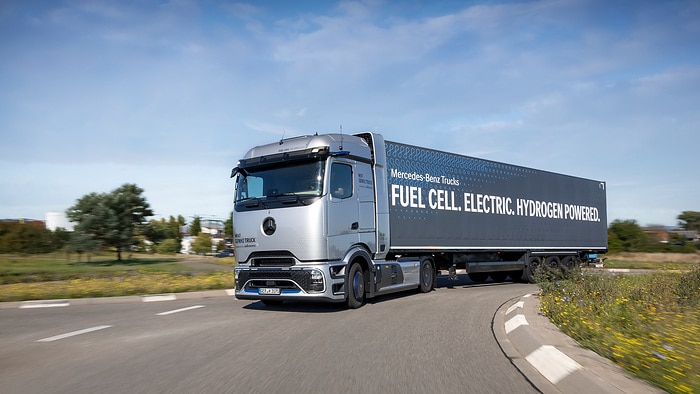
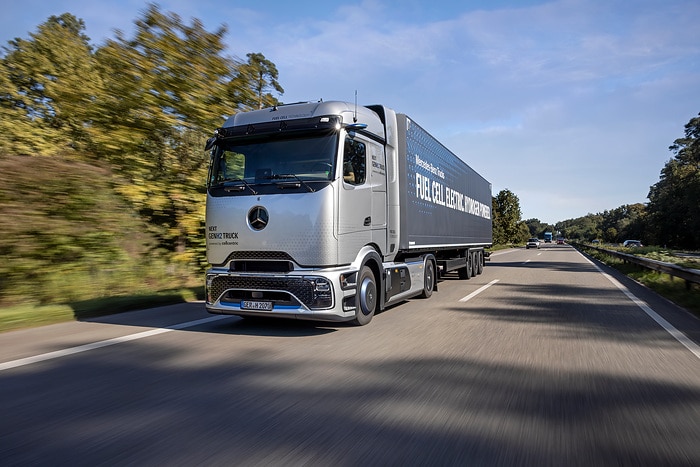
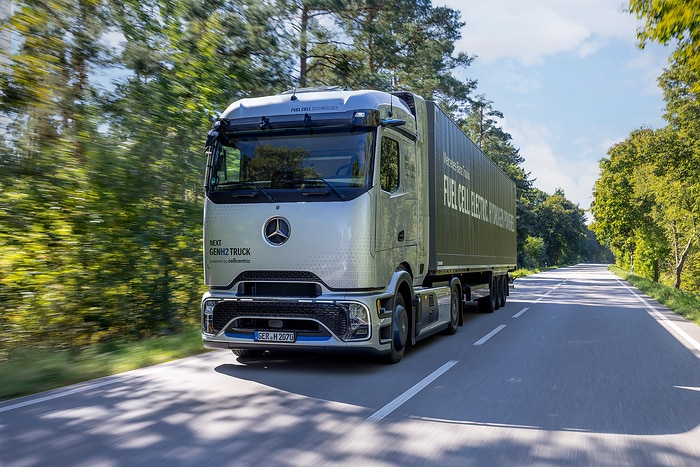
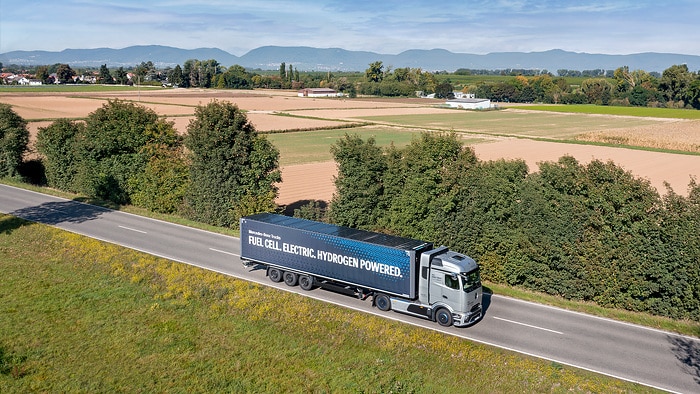
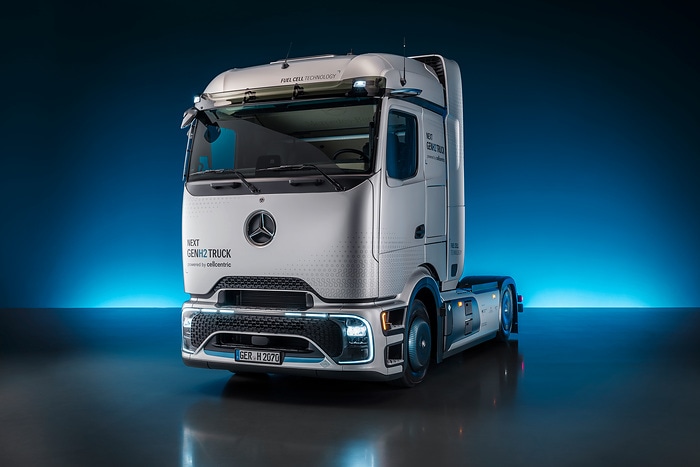
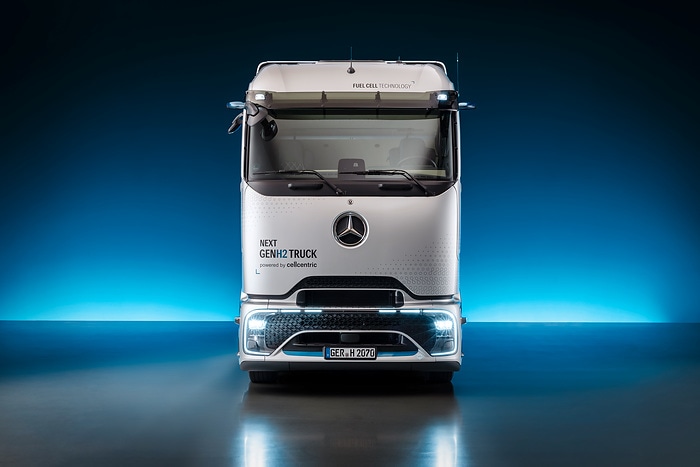
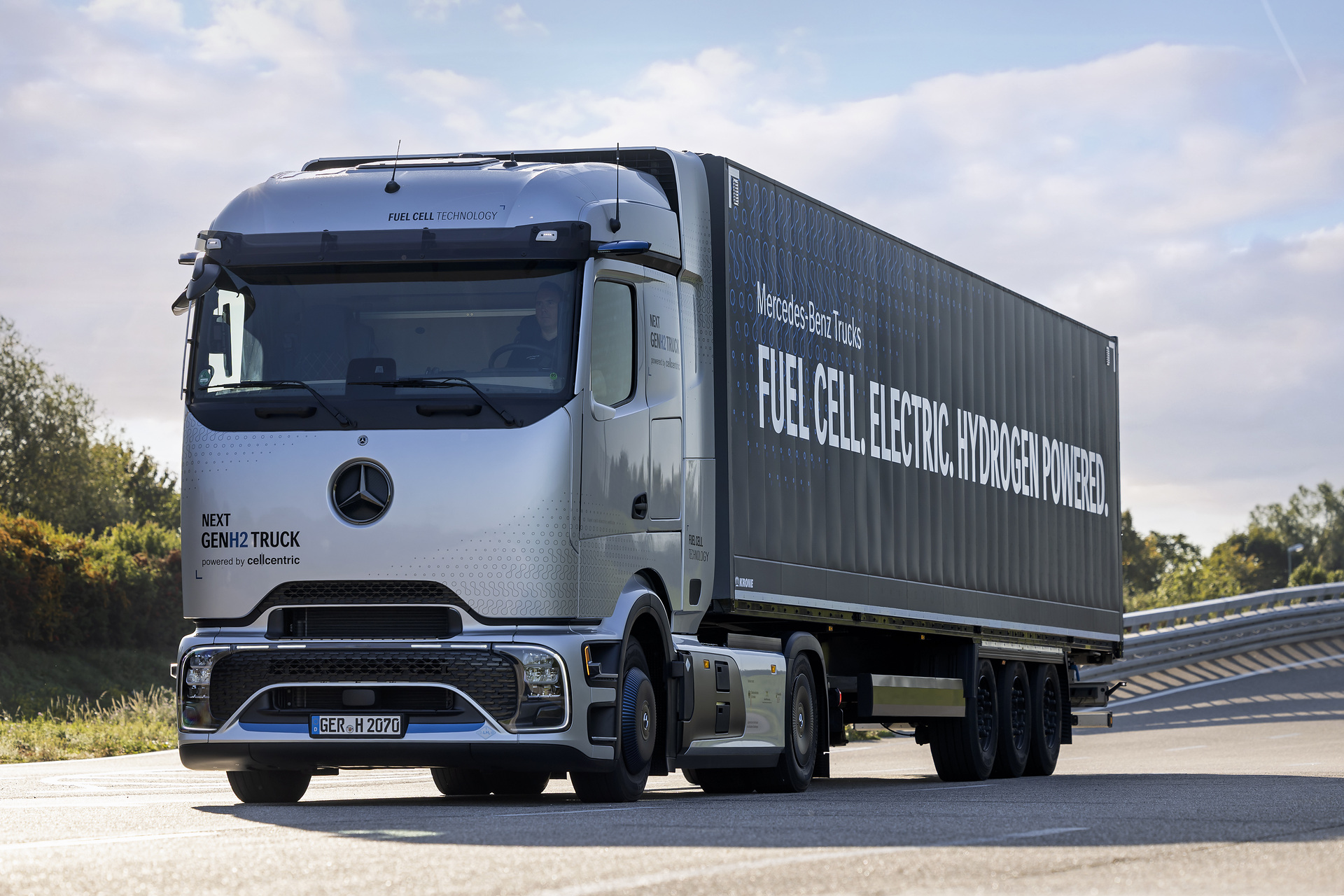
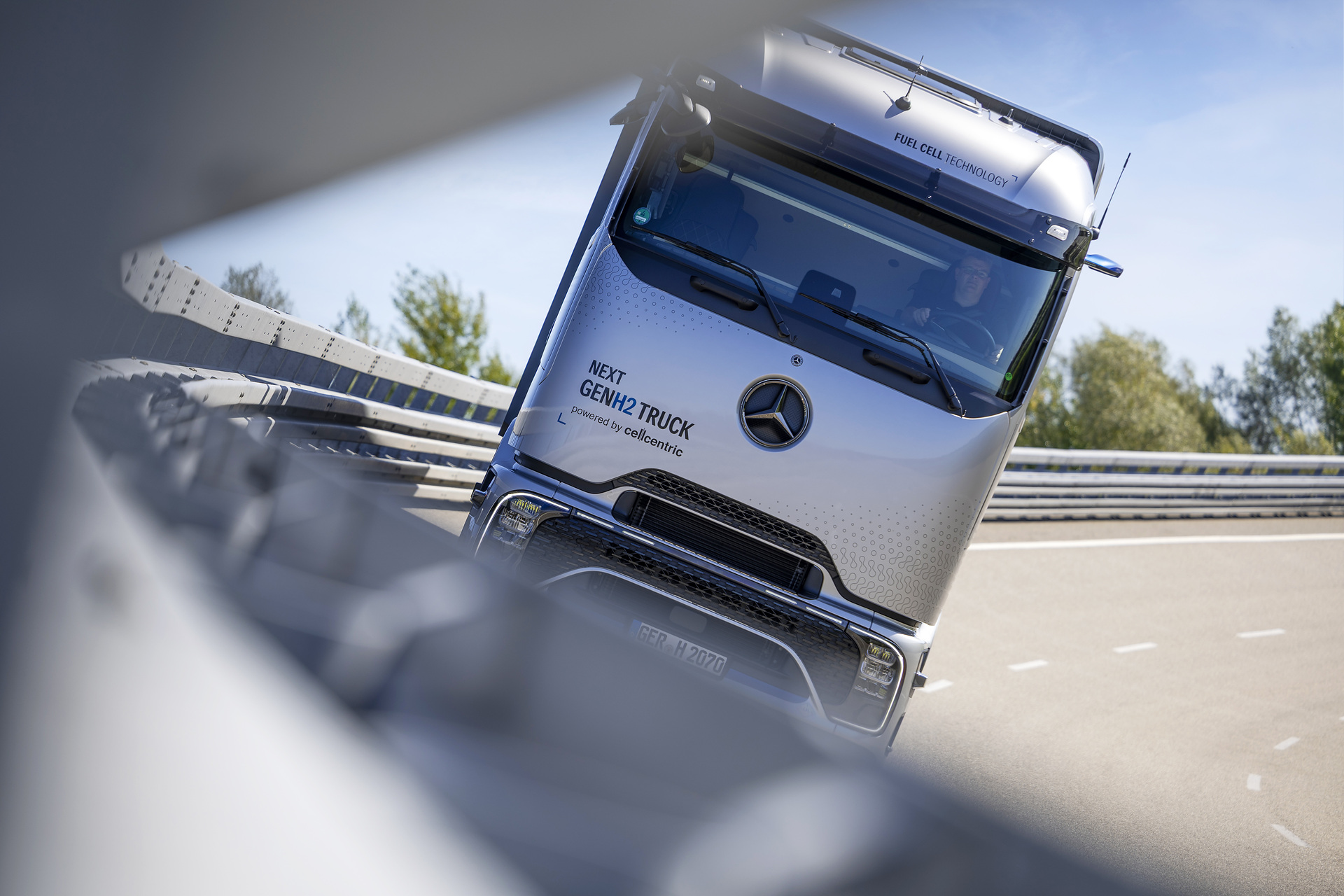
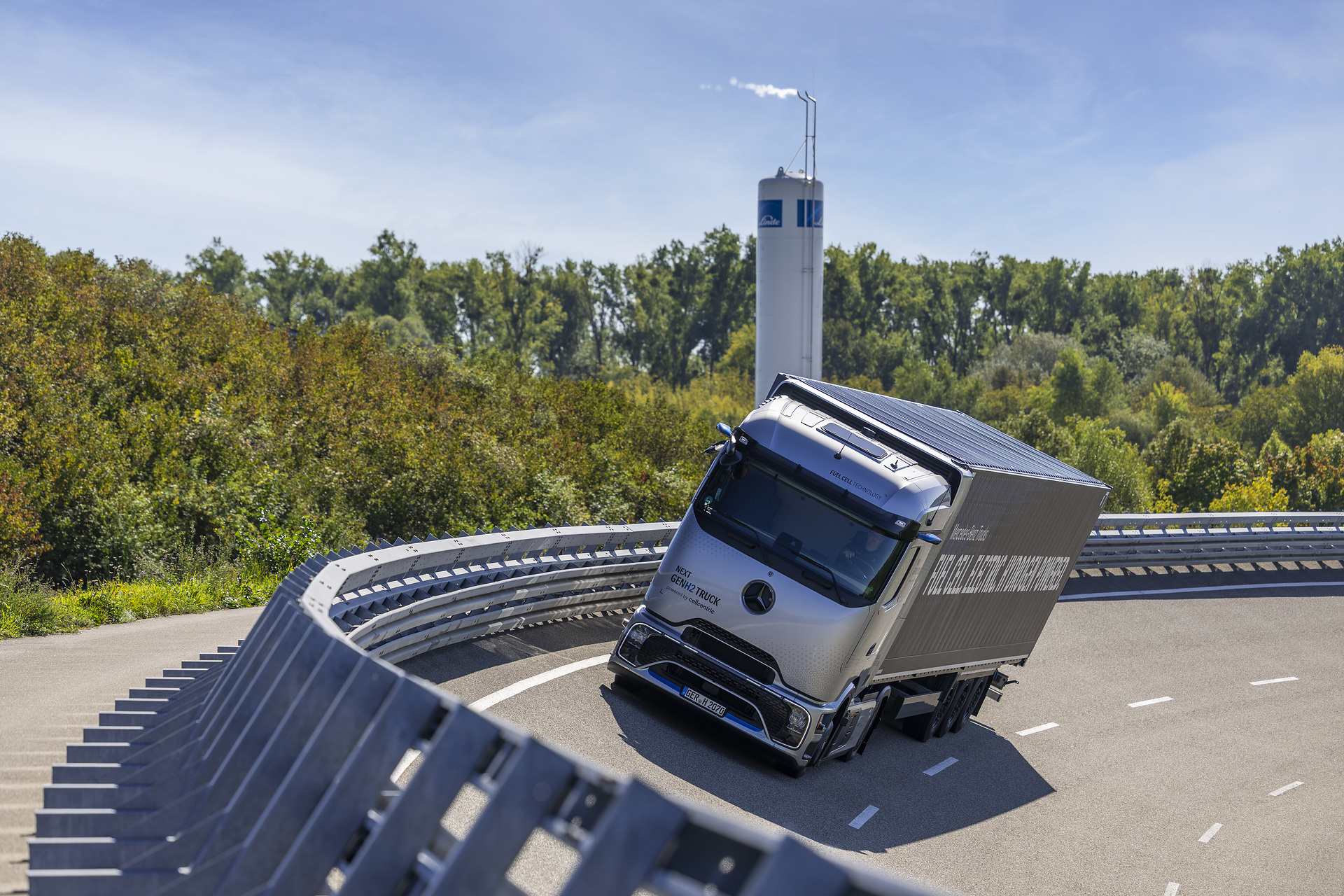
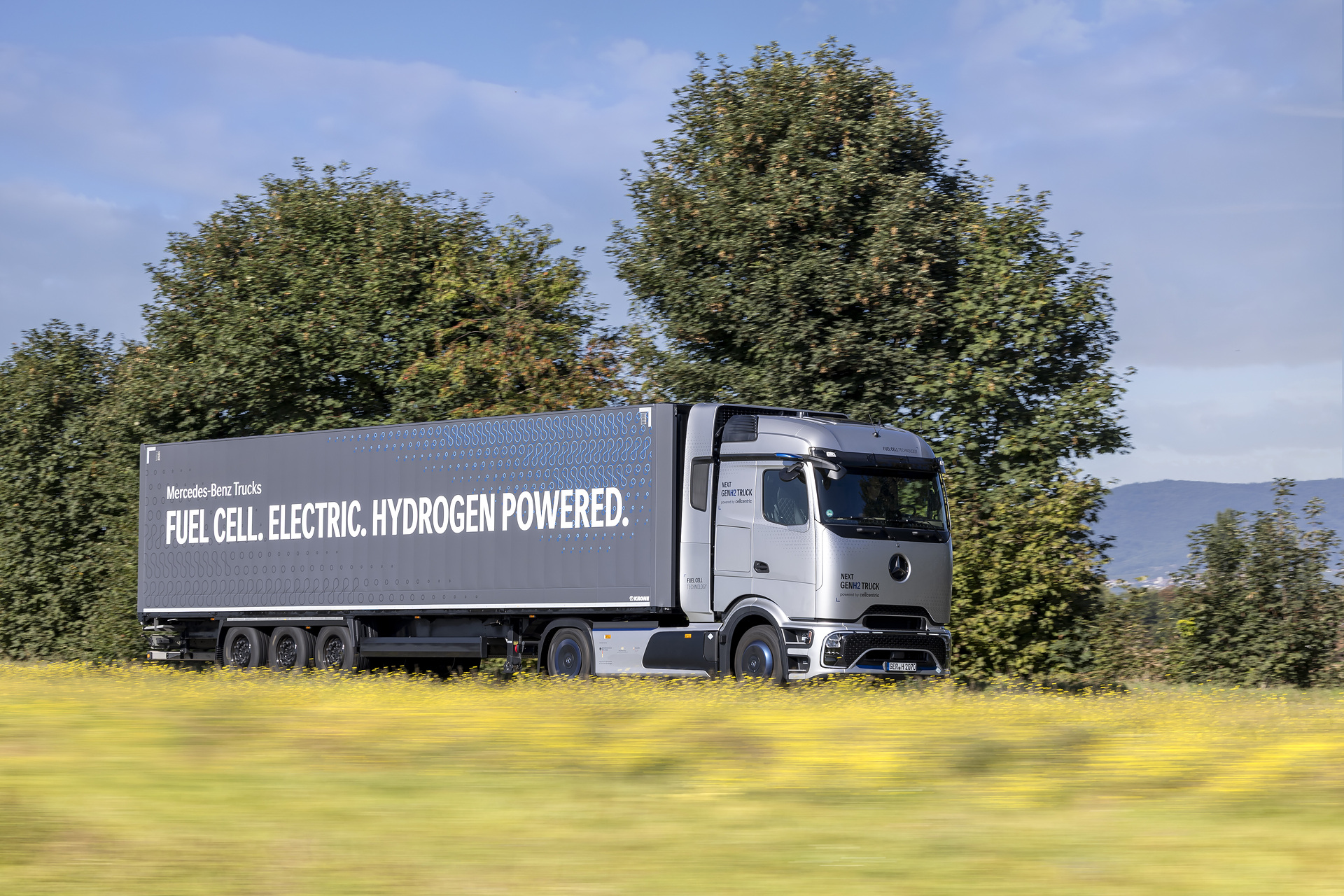
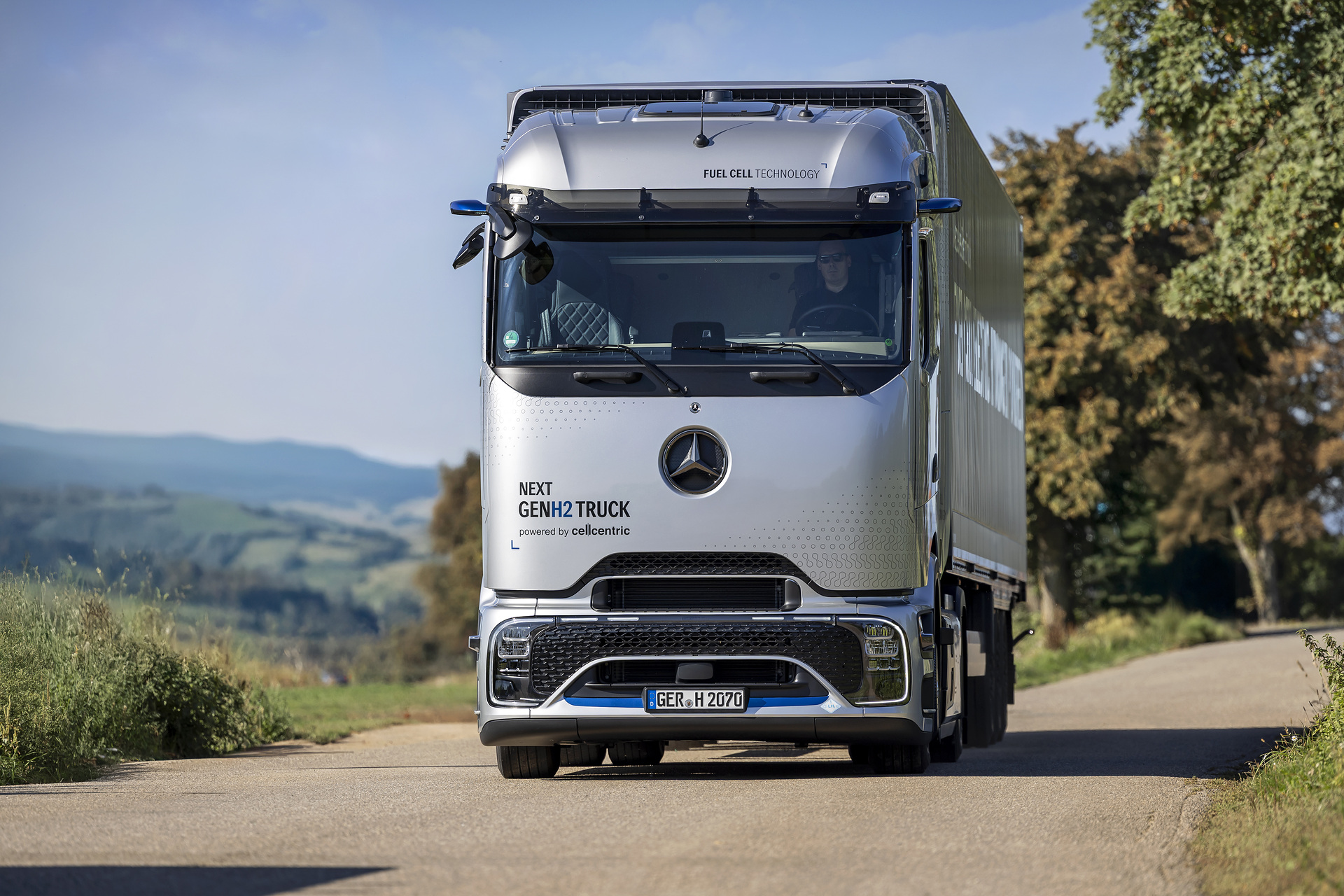
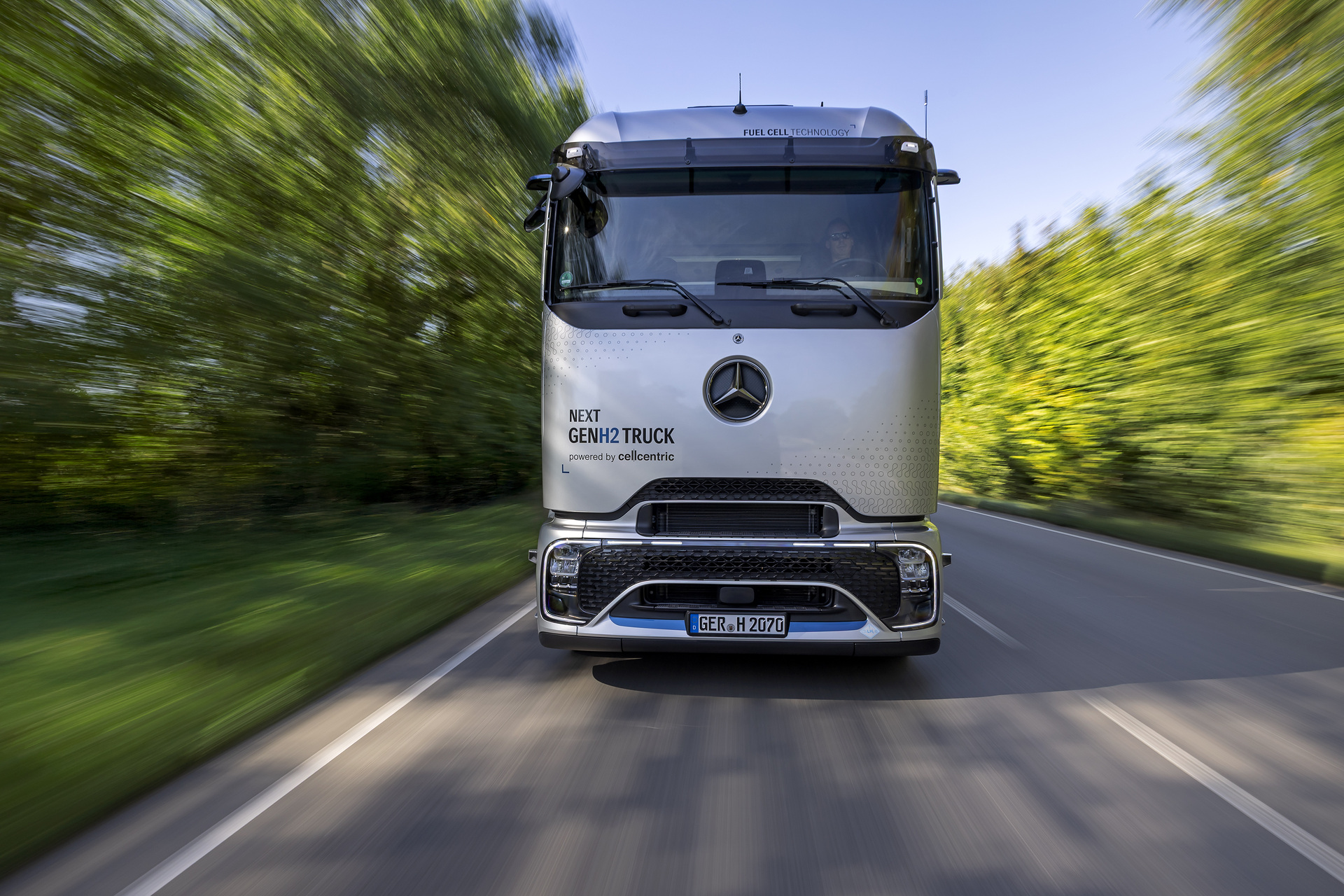
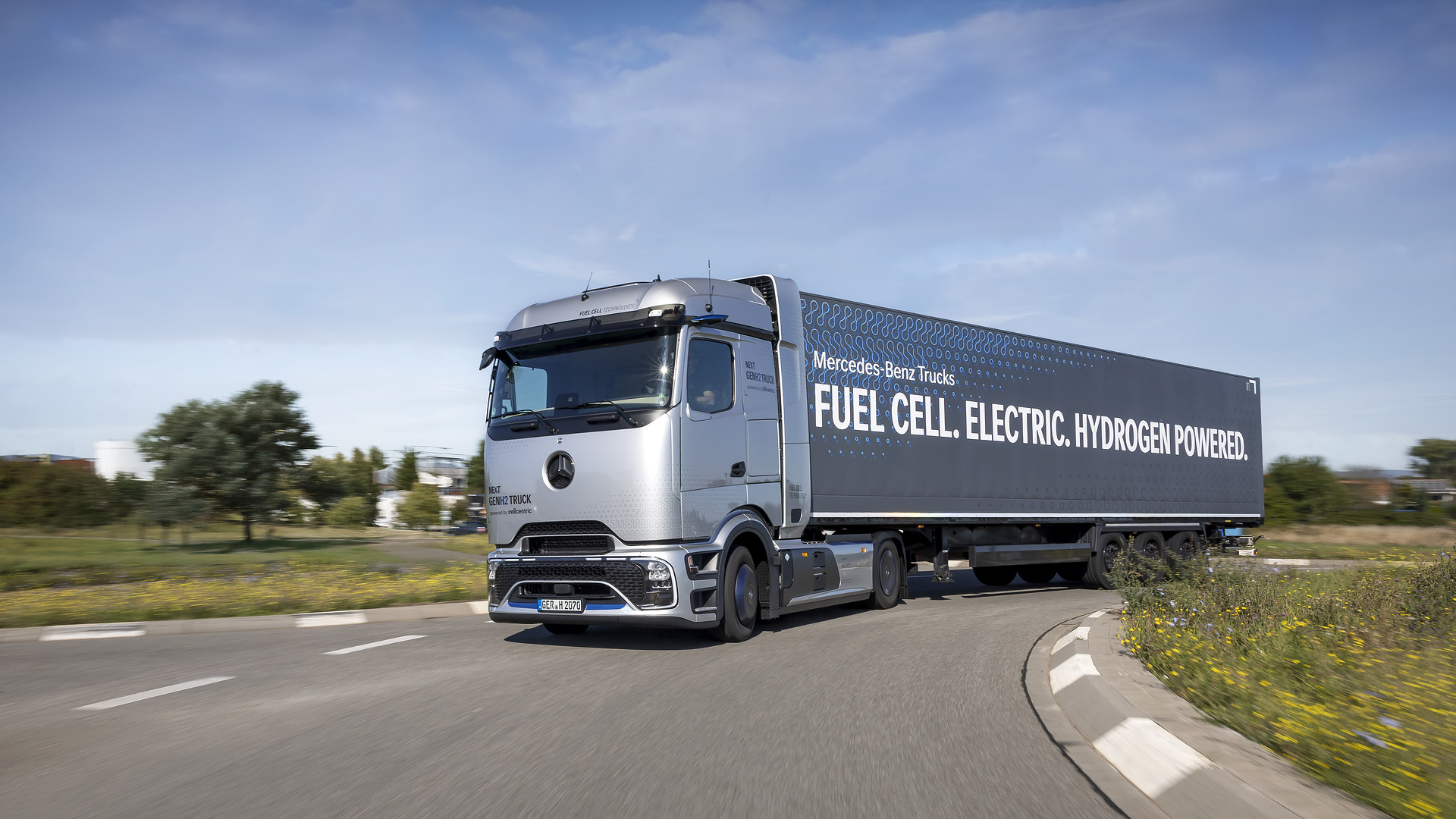
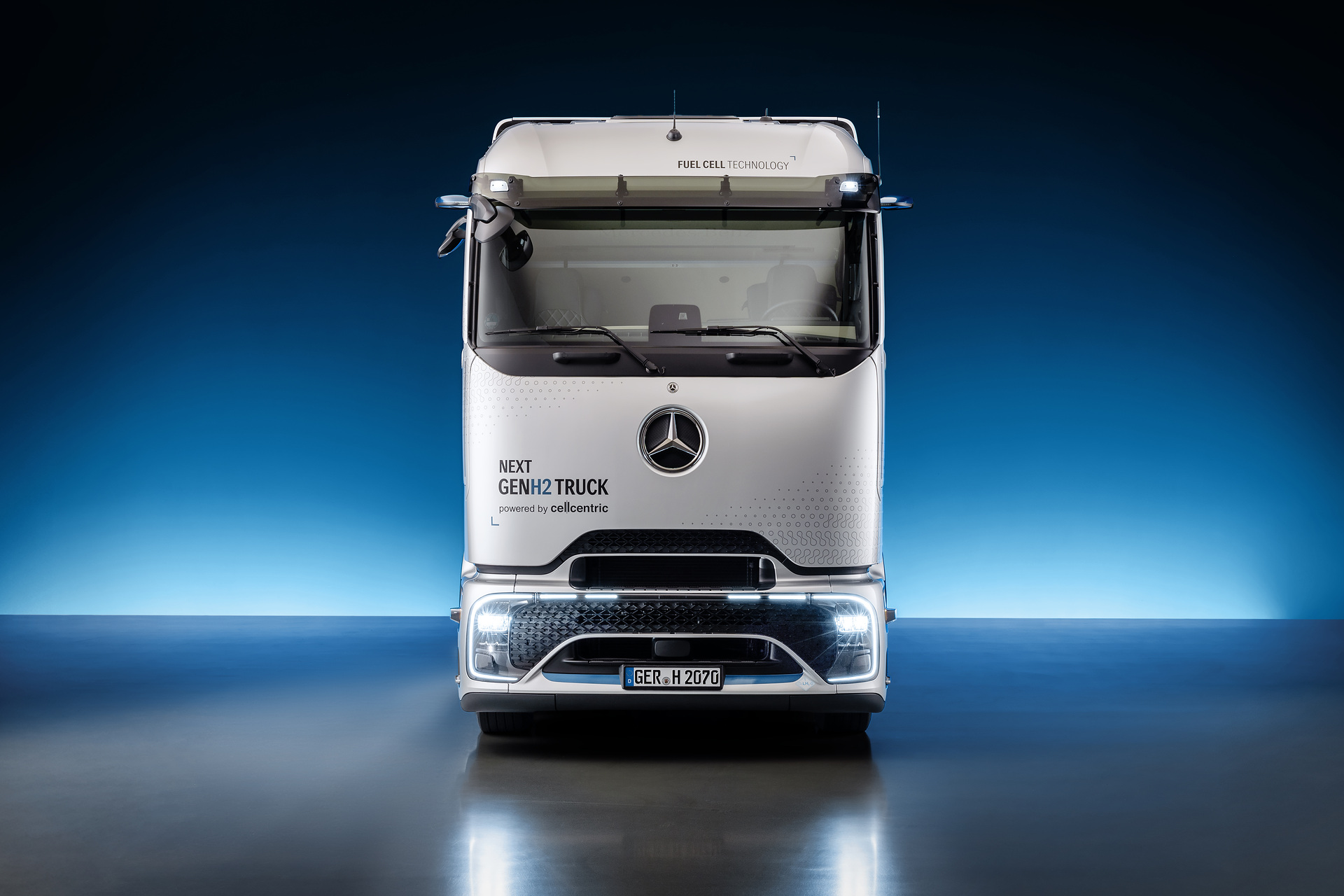
Leinfelden-Echterdingen, Germany — Following the development and successful testing program with prototypes of its first-generation fuel cell trucks, Daimler Truck presents the Mercedes-Benz NextGenH2 Truck. The fuel cell truck represents another development milestone for Daimler Truck on the path to sustainable transportation powered by hydrogen. In a small-series production run at the Mercedes-Benz plant in Wörth, 100 units of these further developed semi-trailer tractors will be manufactured and deployed with various customers from the end of 2026 onwards.
Achim Puchert, CEO Mercedes-Benz Trucks: “In addition to battery-electric solutions, hydrogen-based drives are crucial for the sustainable transformation of our industry. With the NextGenH2 Truck, we are taking the next technological step in fuel cell trucks. Together with our customers, we aim to introduce the small series with high range and near production-ready technology into daily transport operations from the end of 2026.”
The engineering team retained the proven strengths of the first-generation Mercedes-Benz GenH2 Truck in the development of the new model. Liquid hydrogen enables ranges well over 1,000 kilometers on a single tank filling at full load. The proven cellcentric BZA150 fuel cell converts hydrogen into electrical energy on board.
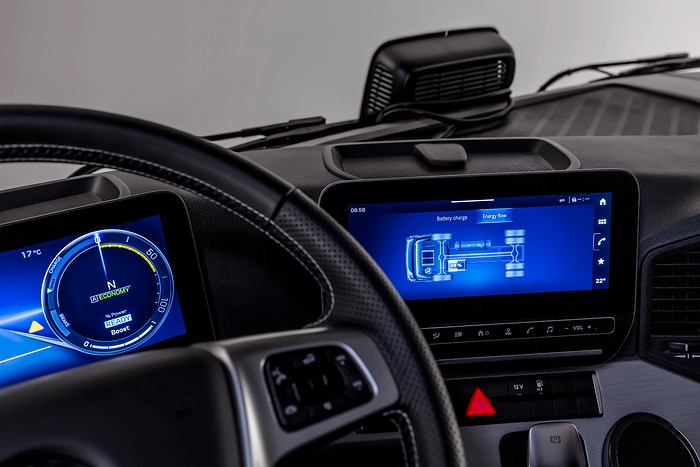
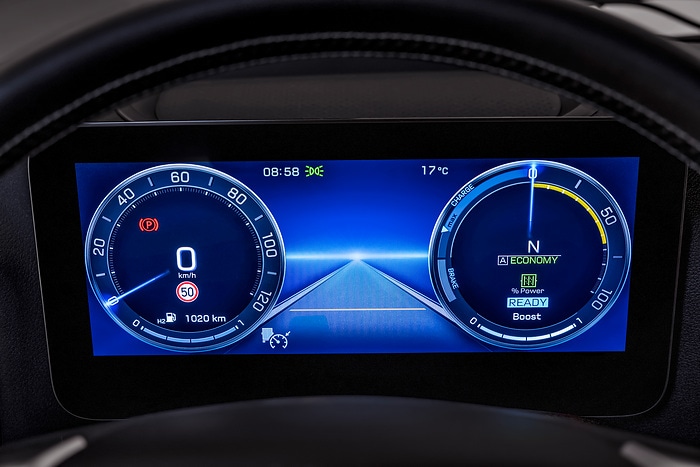
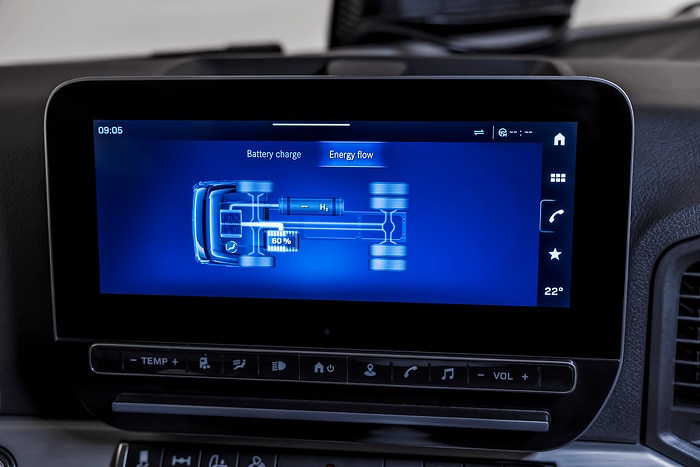
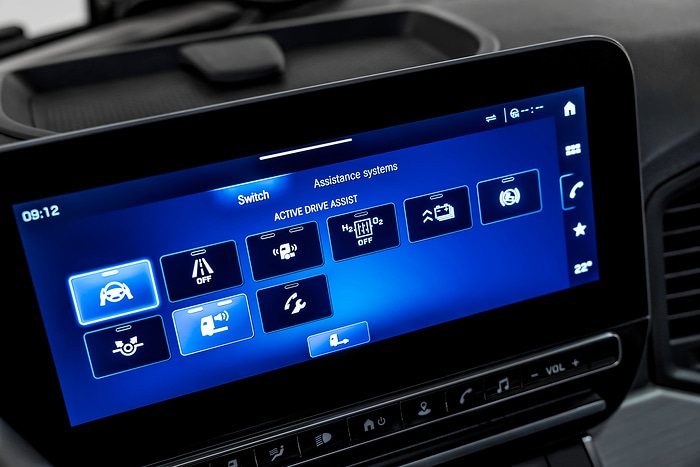
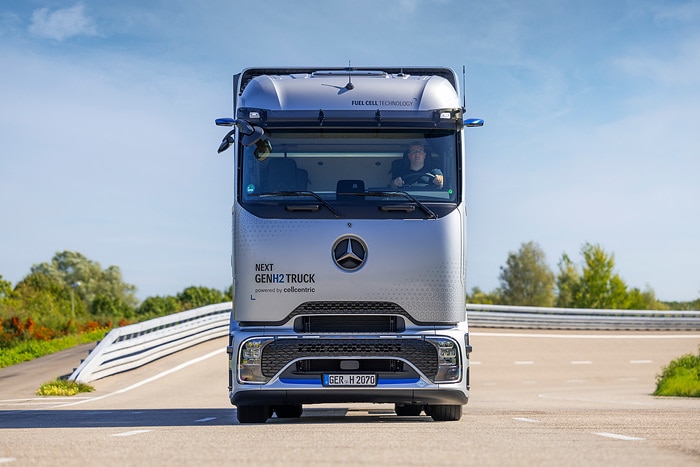
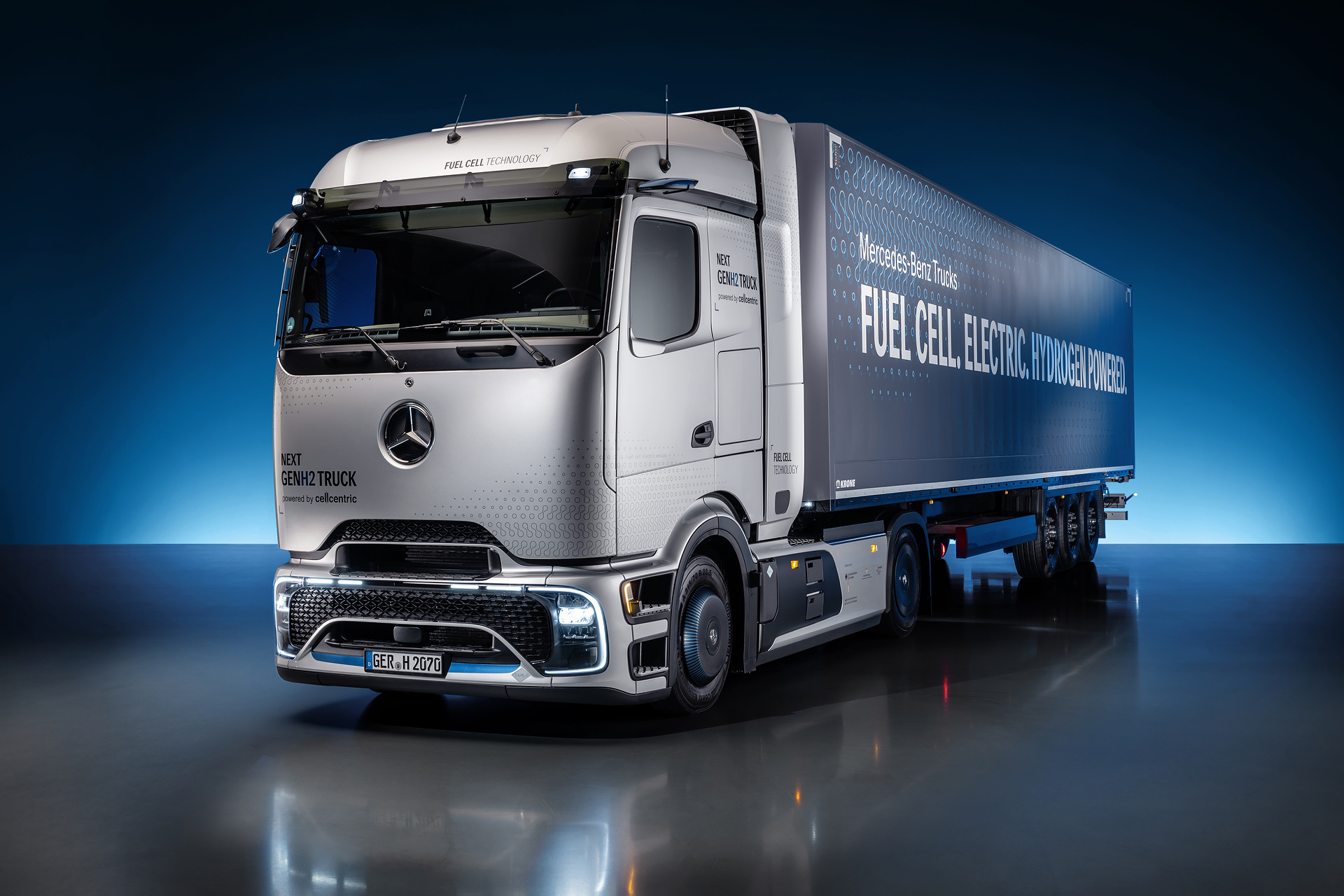
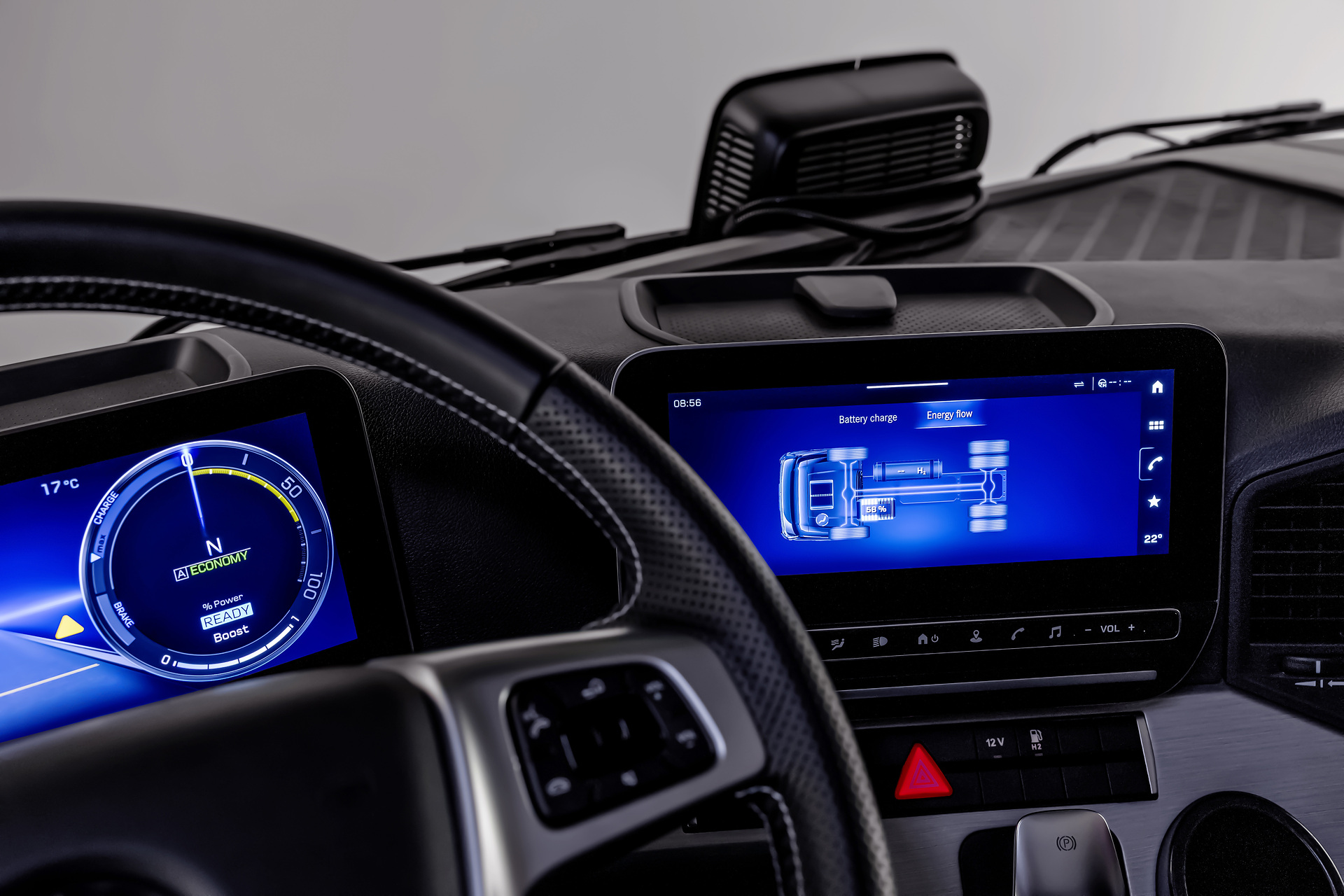
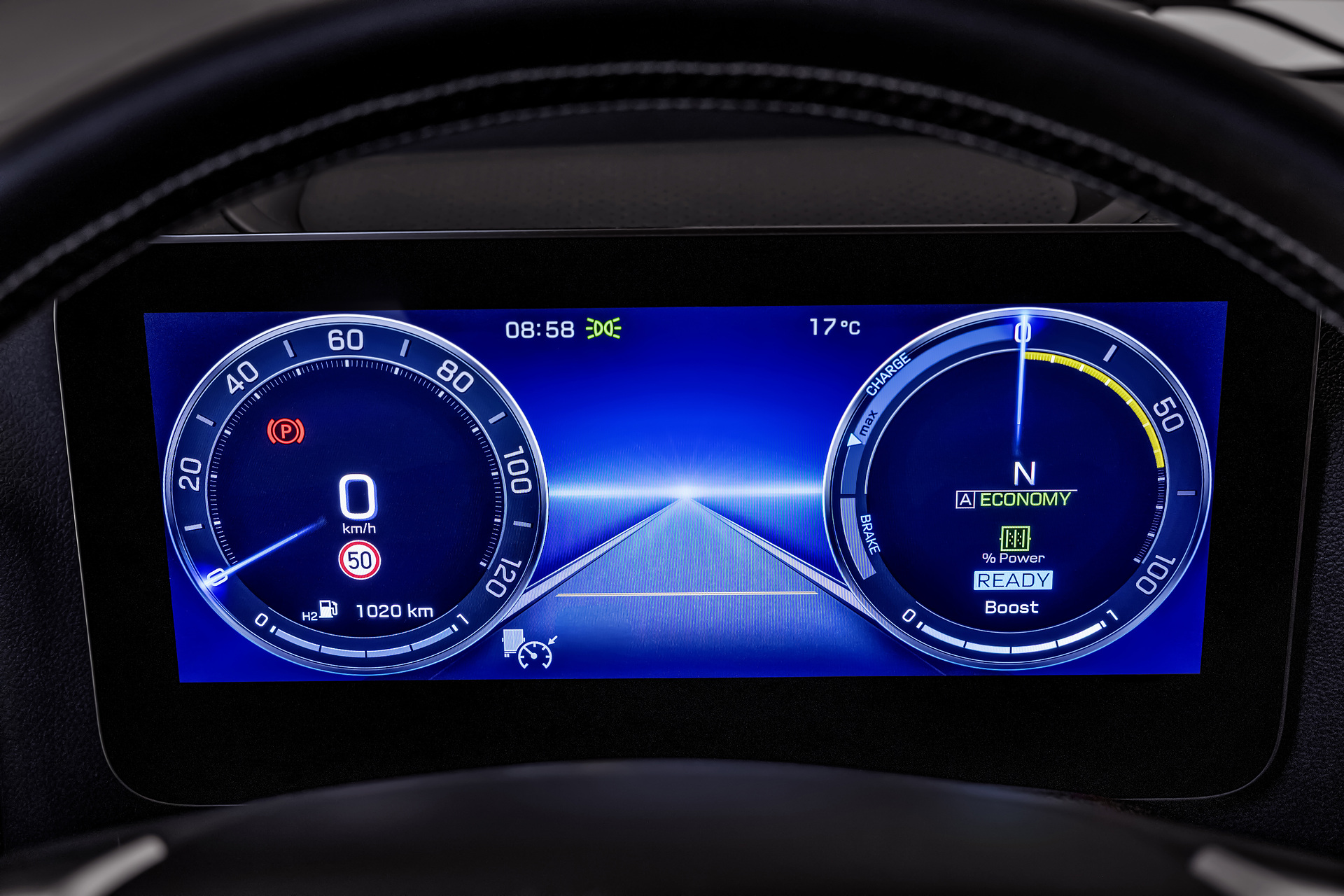
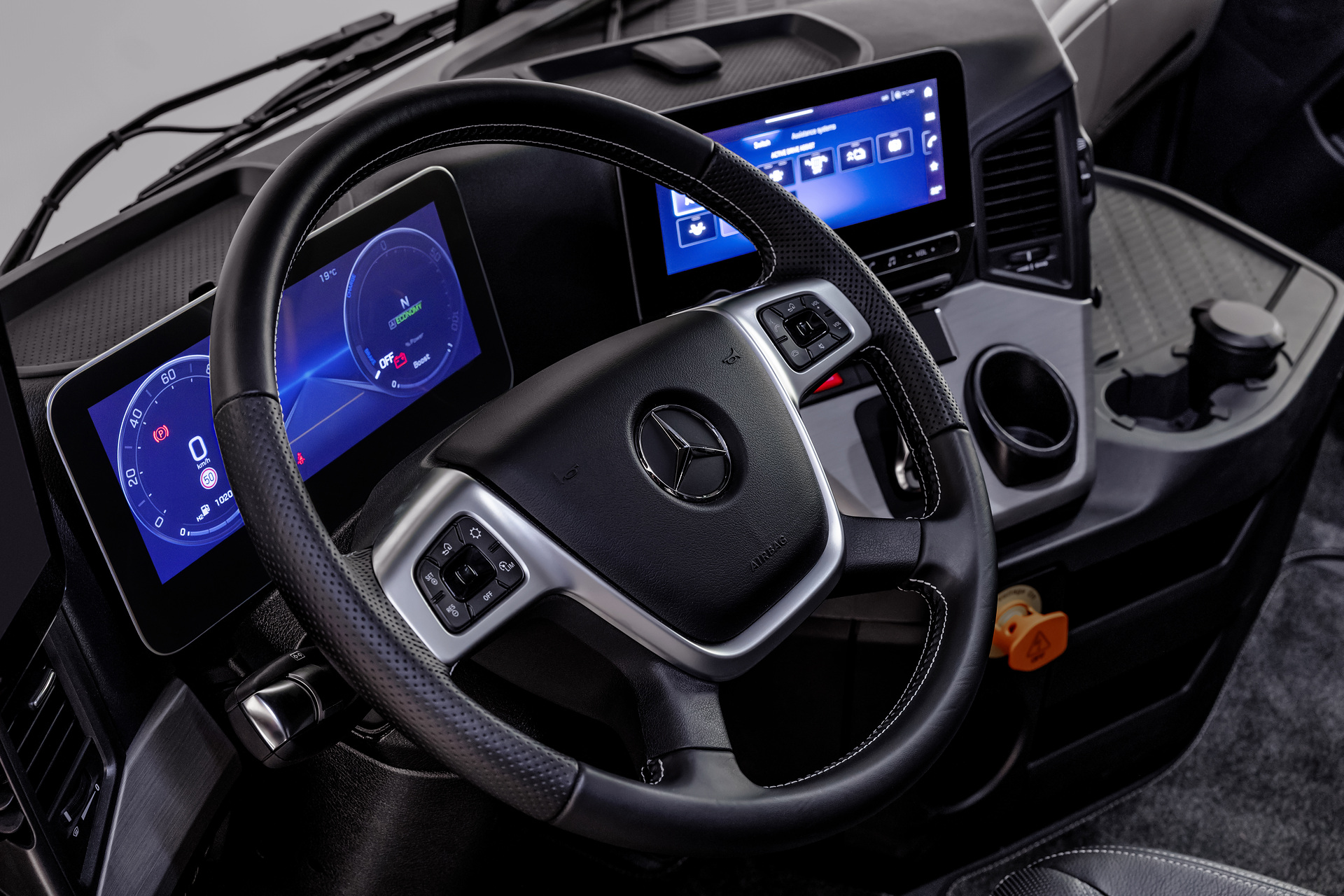
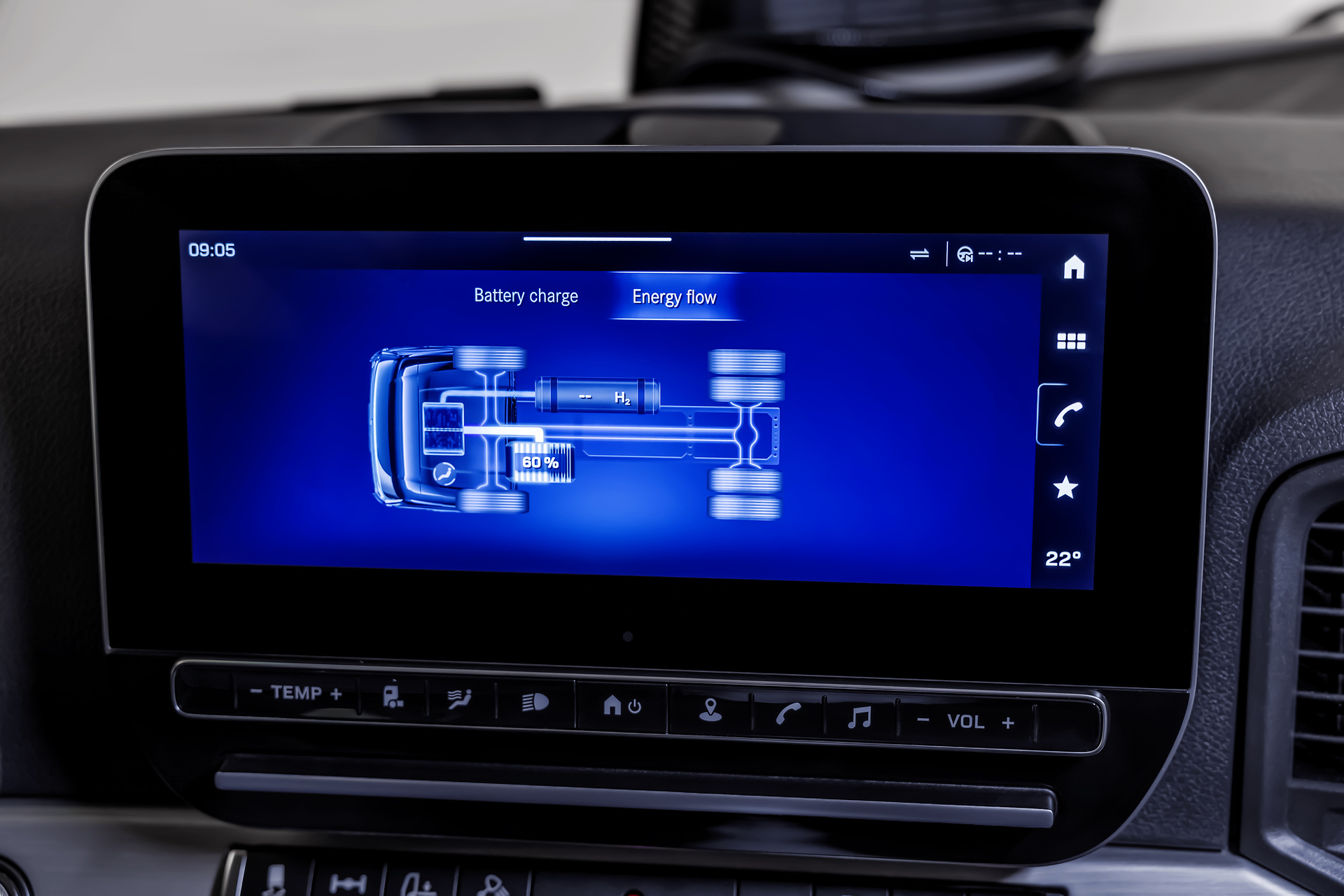
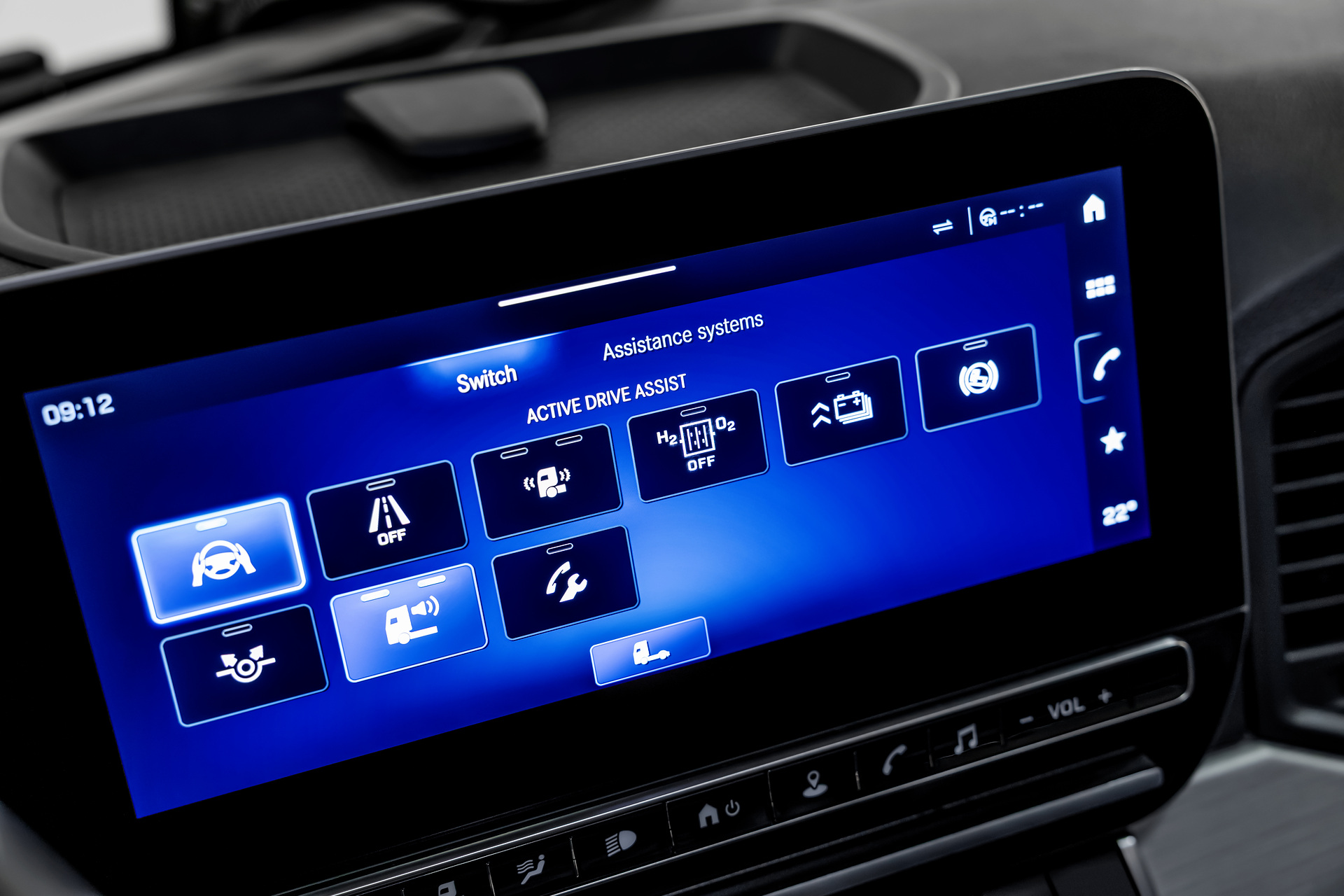
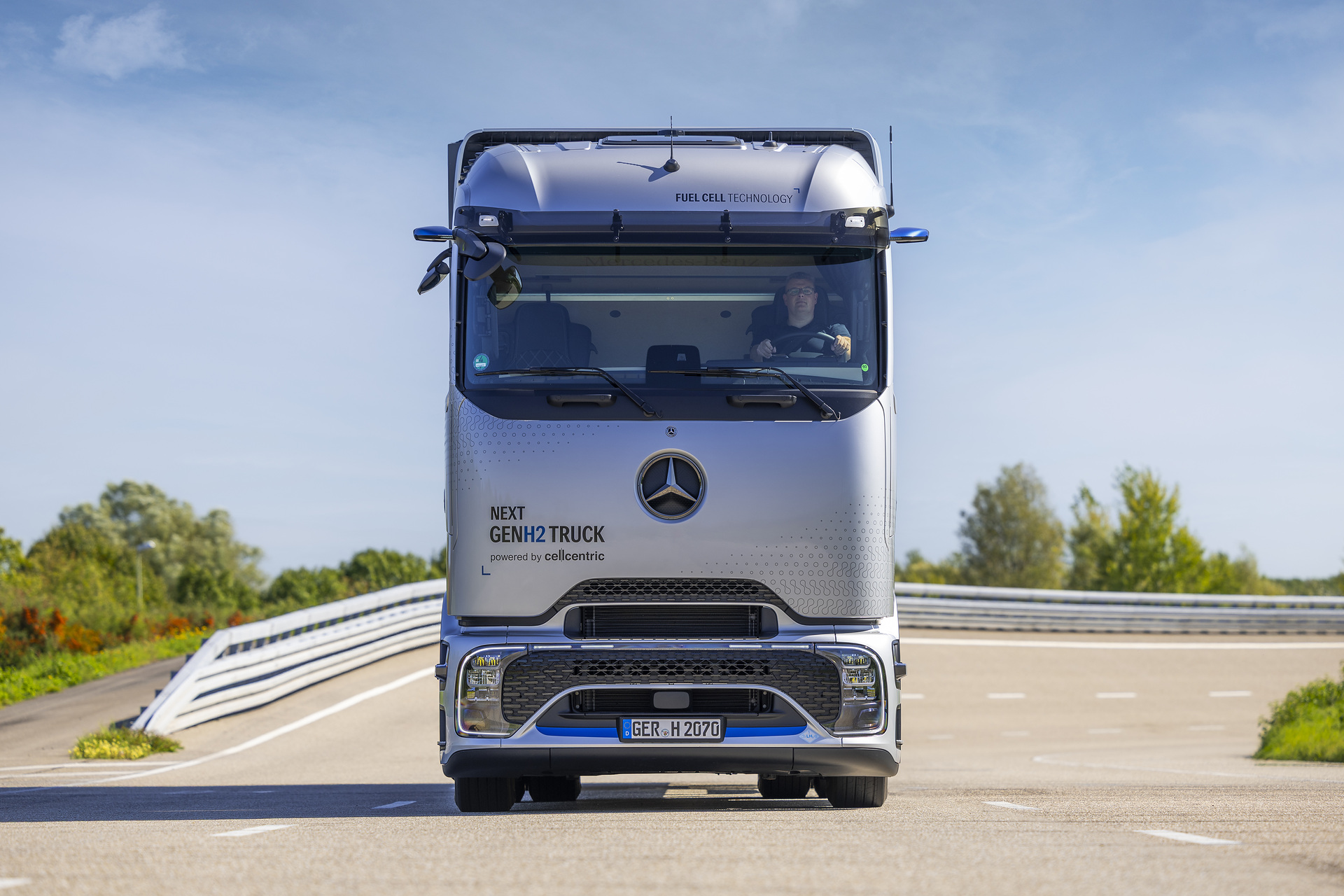
Key upgrades include proven series components from the battery-electric Mercedes-Benz eActros 600, such as the latest generation of the integrated e-axle, the aerodynamically optimized ProCabin, the modern Multimedia Cockpit Interactive 2, and cutting-edge safety and assistance systems based on the current E/E architecture. Like its predecessor, the Mercedes-Benz NextGenH2 Truck is particularly suited for highly flexible and demanding long-haul applications.
Liquid Hydrogen Enables Ranges Well Over 1,000 Kilometers
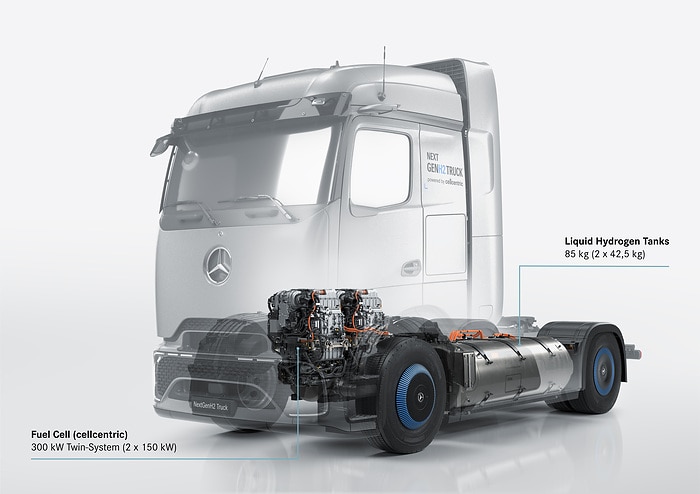
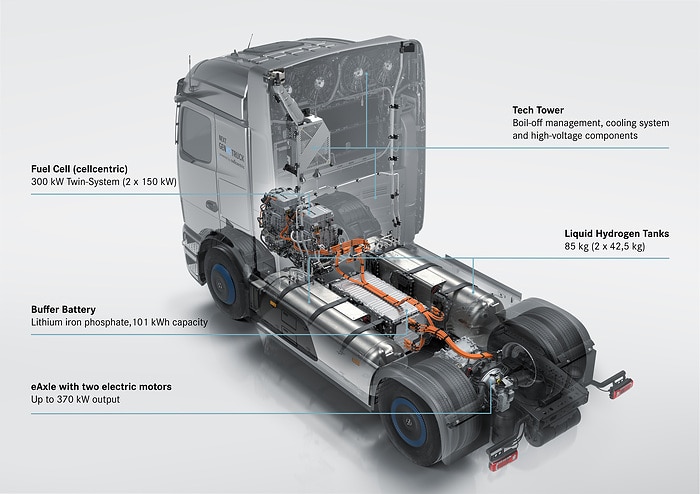
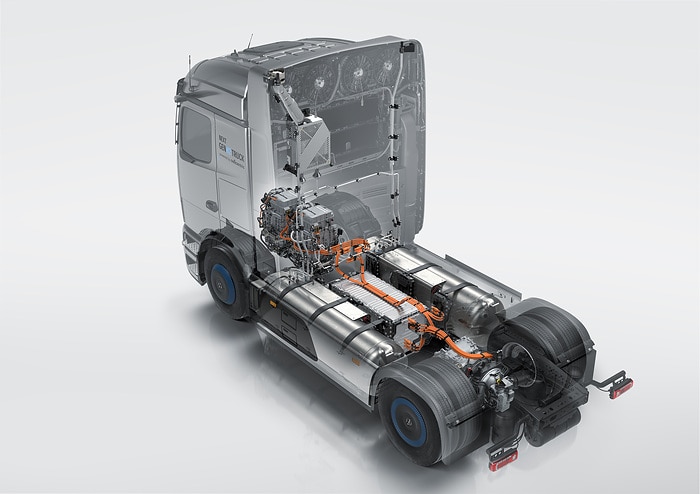
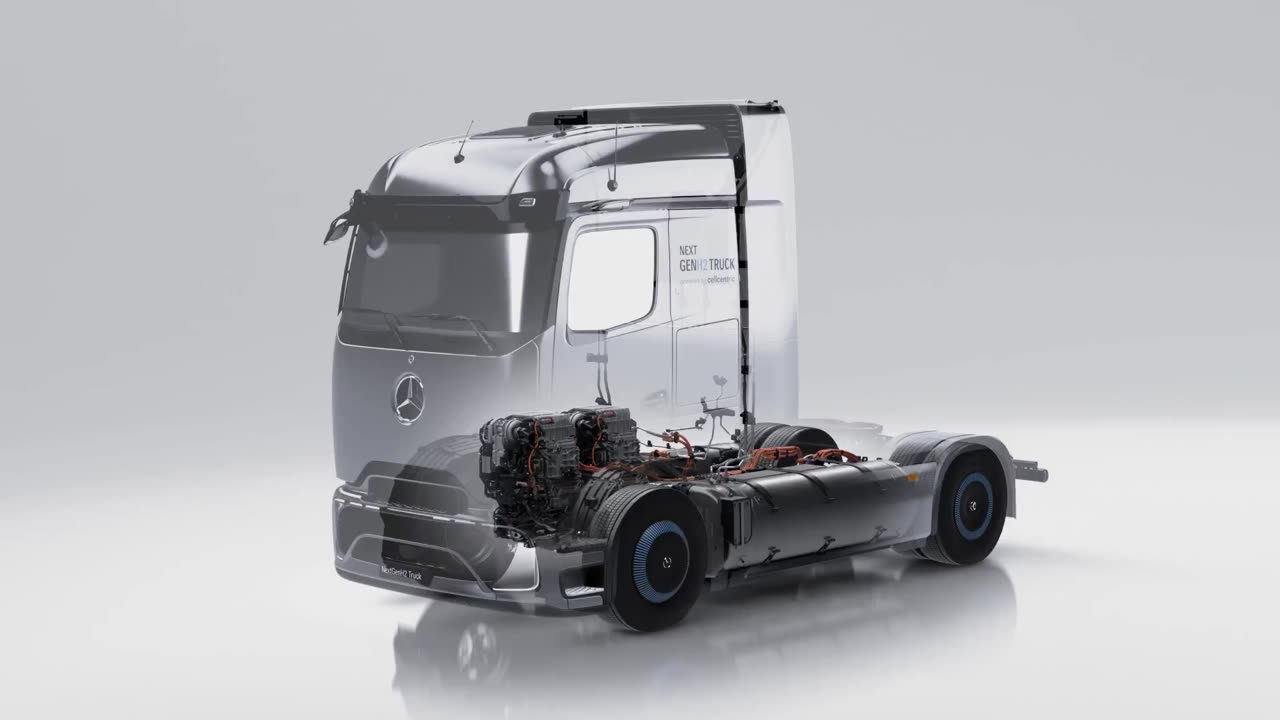
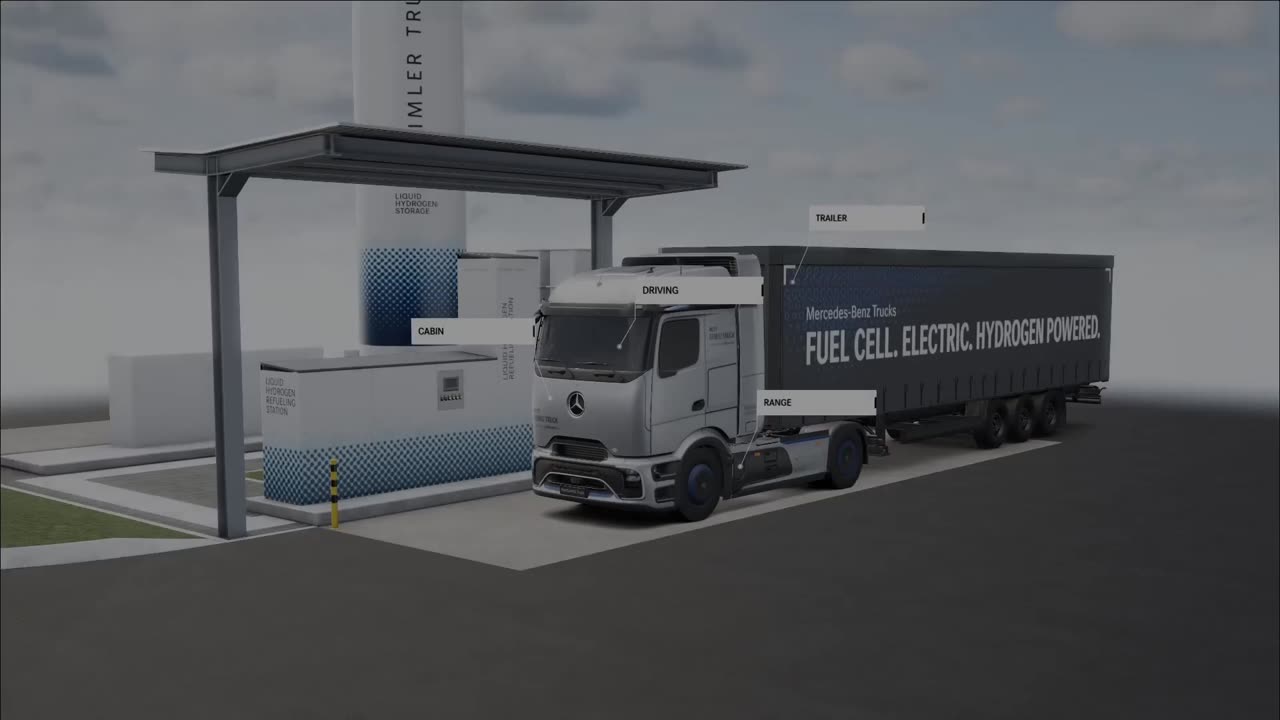
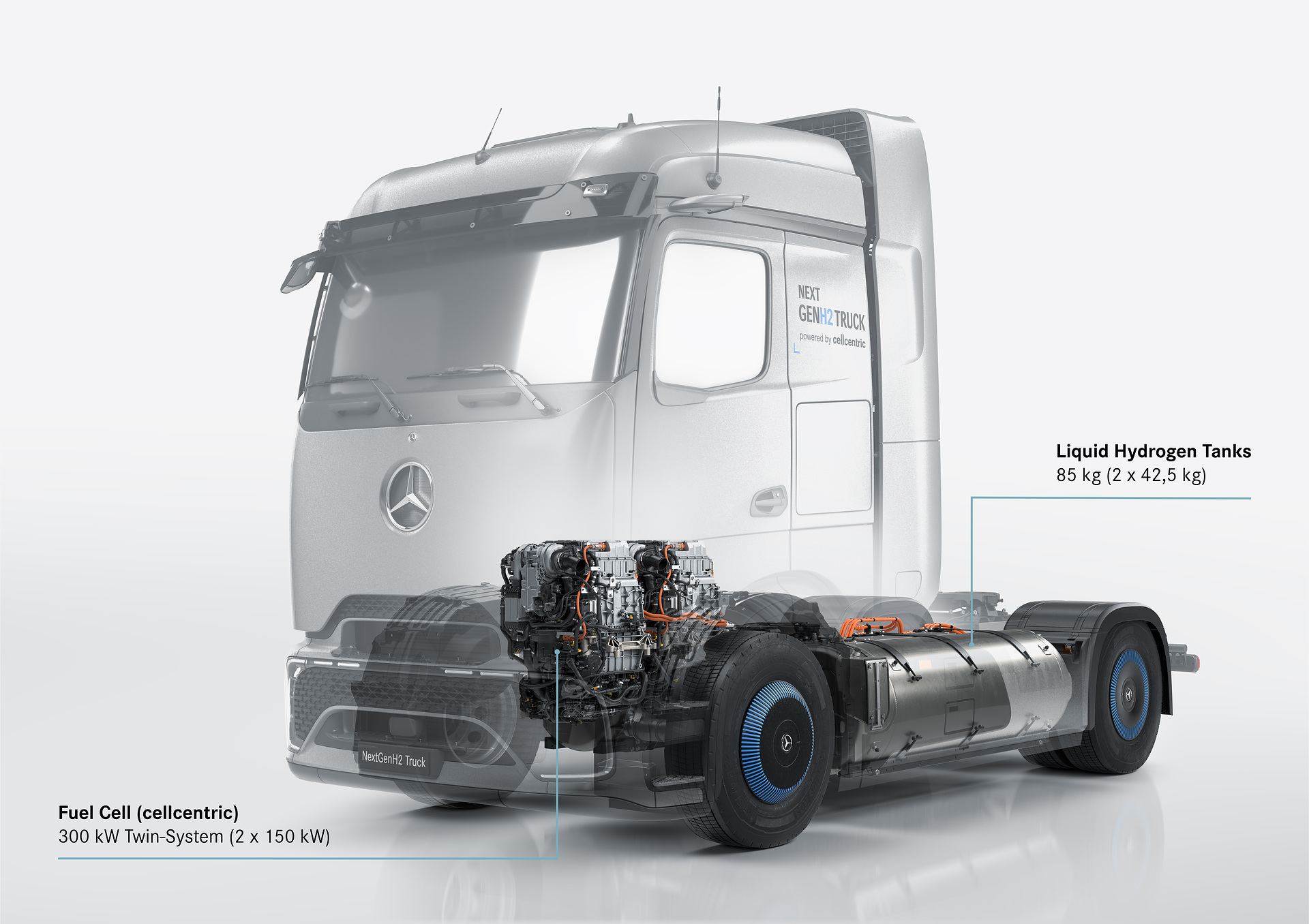
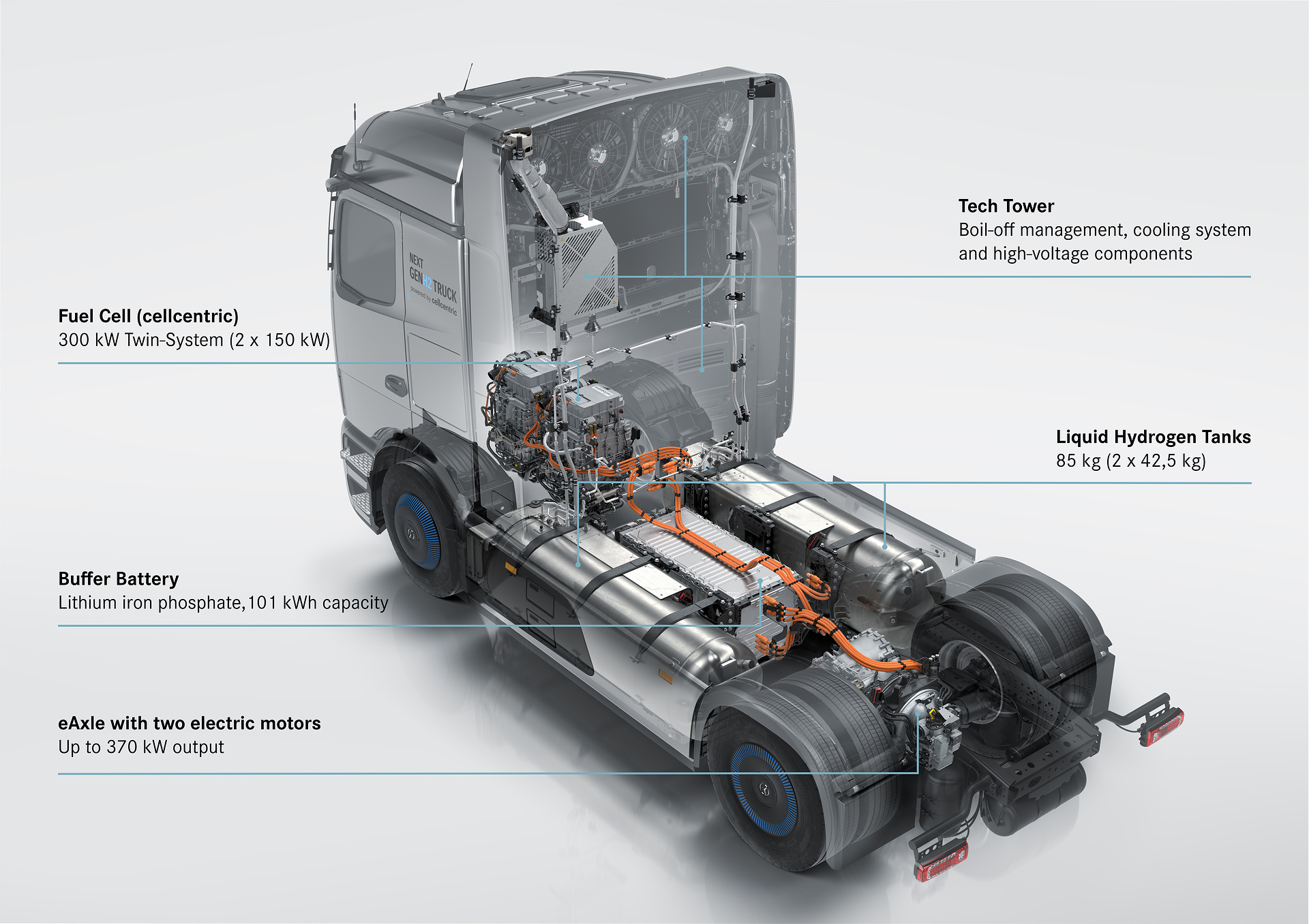
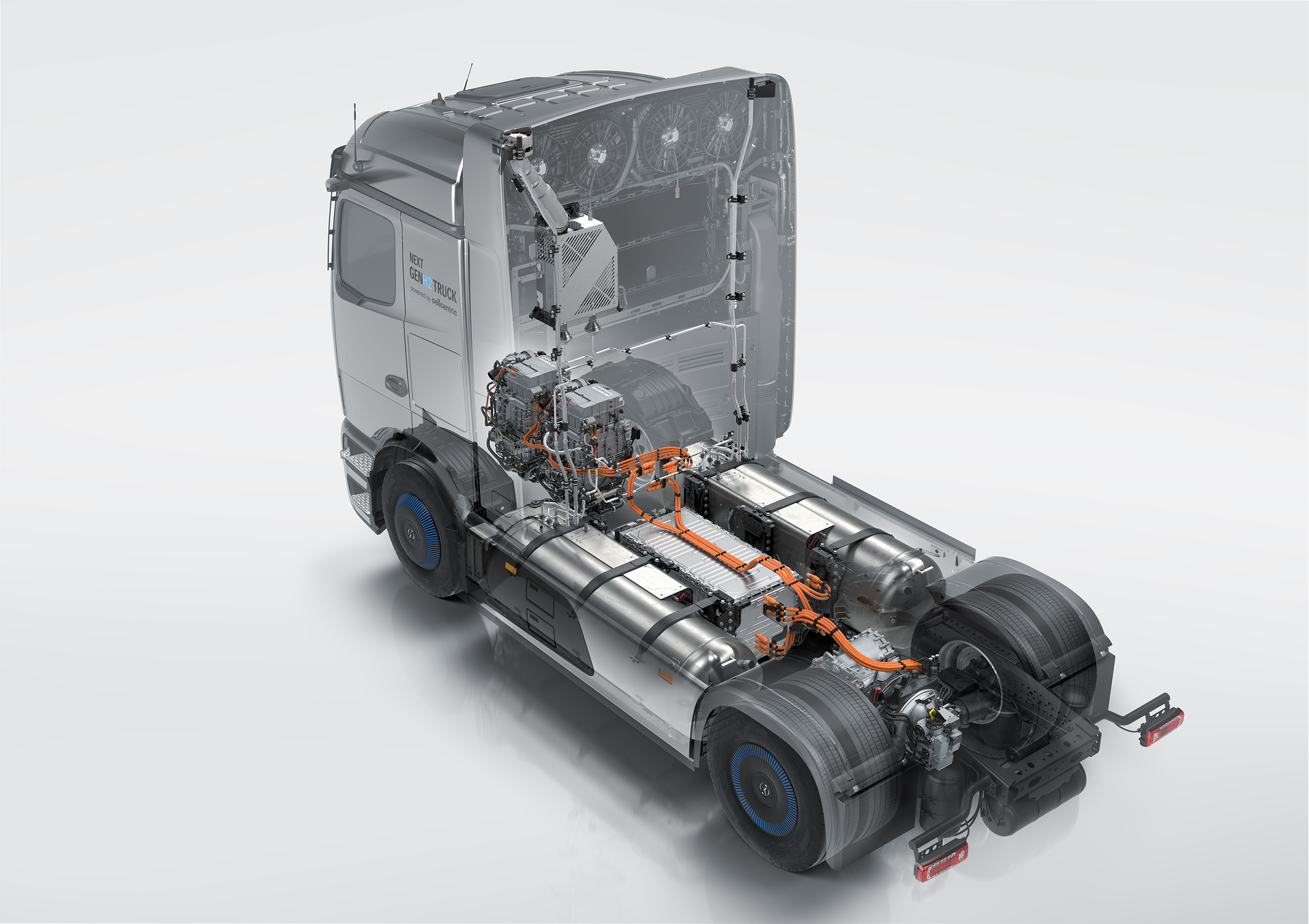
In the development of hydrogen-based drives, Daimler Truck prefers the use of liquid hydrogen. At -253 degrees Celsius, liquid hydrogen has a significantly higher energy density compared to gaseous hydrogen, allowing more hydrogen to be stored, substantially increasing range and delivering performance comparable to conventional diesel trucks. The capacity of the two liquid hydrogen tanks has been increased compared to the first generation of the Mercedes-Benz GenH2 Truck, so that a total of up to 85 kg of hydrogen can now be filled. Refueling is possible from both sides as both tanks are connected. Using the sLH2 refueling standard developed by Daimler Truck and Linde, the truck can be filled with liquid hydrogen within 10–15 minutes — as safe, fast, and simple as refueling today’s diesel trucks.
Transporting liquid hydrogen requires less logistical effort, and liquid hydrogen tanks offer cost and weight advantages over gaseous high-pressure tanks. These benefits enable higher payloads, making deployments comparable with today’s diesel trucks. Daimler Truck successfully demonstrated this at the end of 2023 during the #HydrogenRecordRun, when a Mercedes-Benz GenH2 Truck with a gross combined vehicle weight of around 40 tonnes covered 1,047 km on a single filling of liquid hydrogen.
Reliable and Efficient Fuel Cell Technology
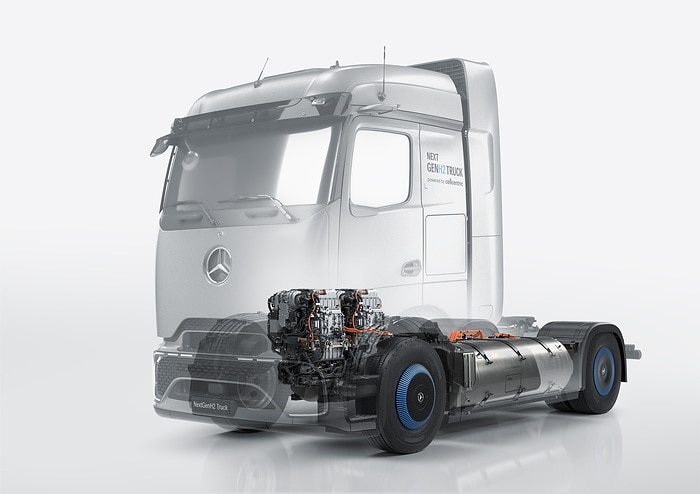
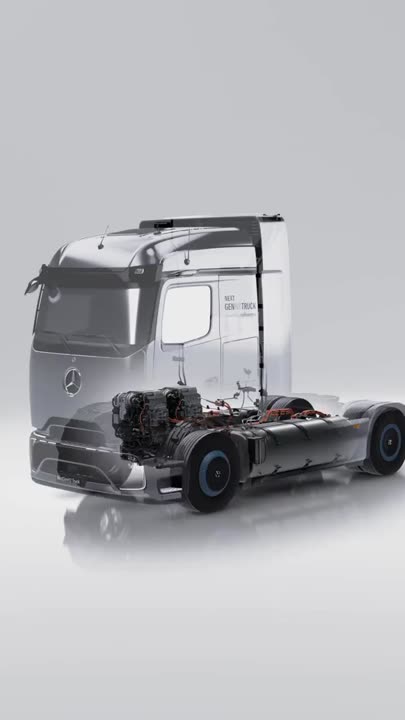
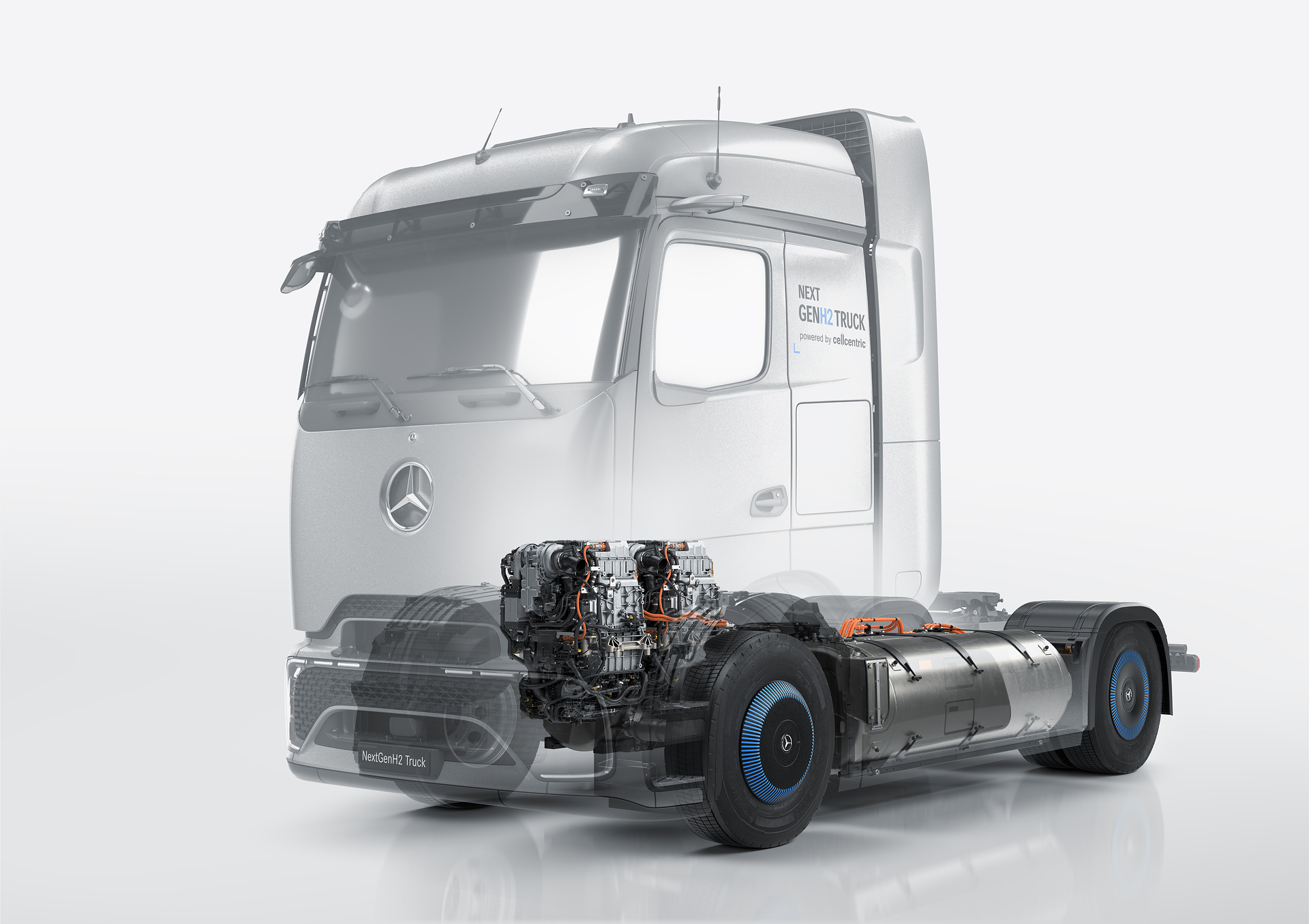
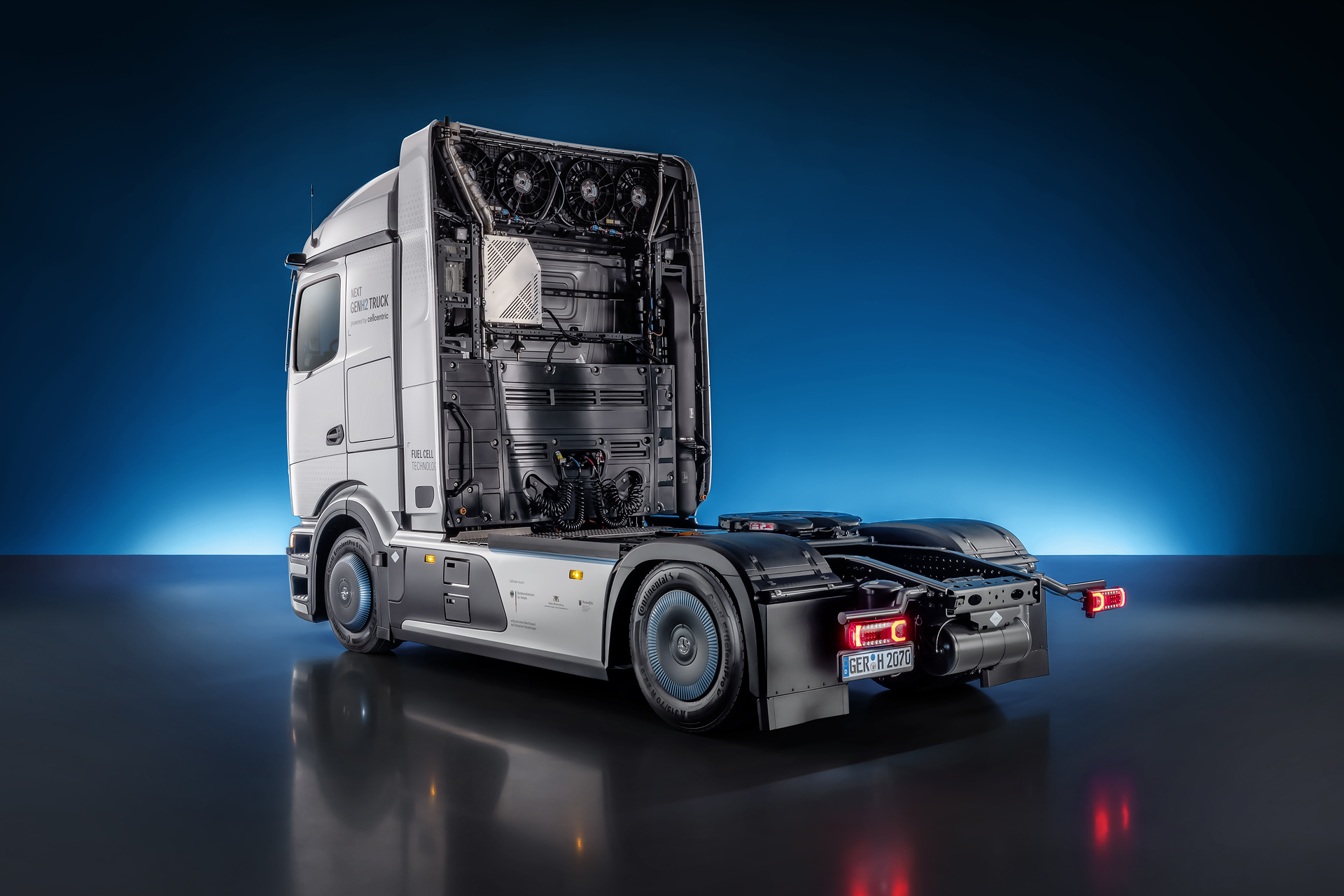
The BZA150 fuel cell from cellcentric — a joint venture between Daimler Truck and Volvo Group — remains the heart of the NextGenH2 Truck’s drive system. Two fuel cell units operate as a twin system with a total system output of 300 kW (150 kW each) and are space-savingly integrated in the engine compartment beneath the cab. Over years of intensive testing, the hydrogen-powered drive concept has impressed with its reliability and efficiency under real-world conditions. In early customer trials with the Mercedes-Benz GenH2 Truck, hydrogen consumption, for example, averaged between 5.6 kg/100 km and 8 kg/100 km, with gross combined vehicle weights ranging between 16 and 34 tonnes.
In operation, the fuel cell generates electrical energy through the reaction between hydrogen (H₂) and oxygen (O₂). Together with a buffer battery, this powers the electric motors integrated into the e-axle, delivering strong propulsion. The only emission from this process is pure water vapor.
Series Components Deliver a Technological Leap
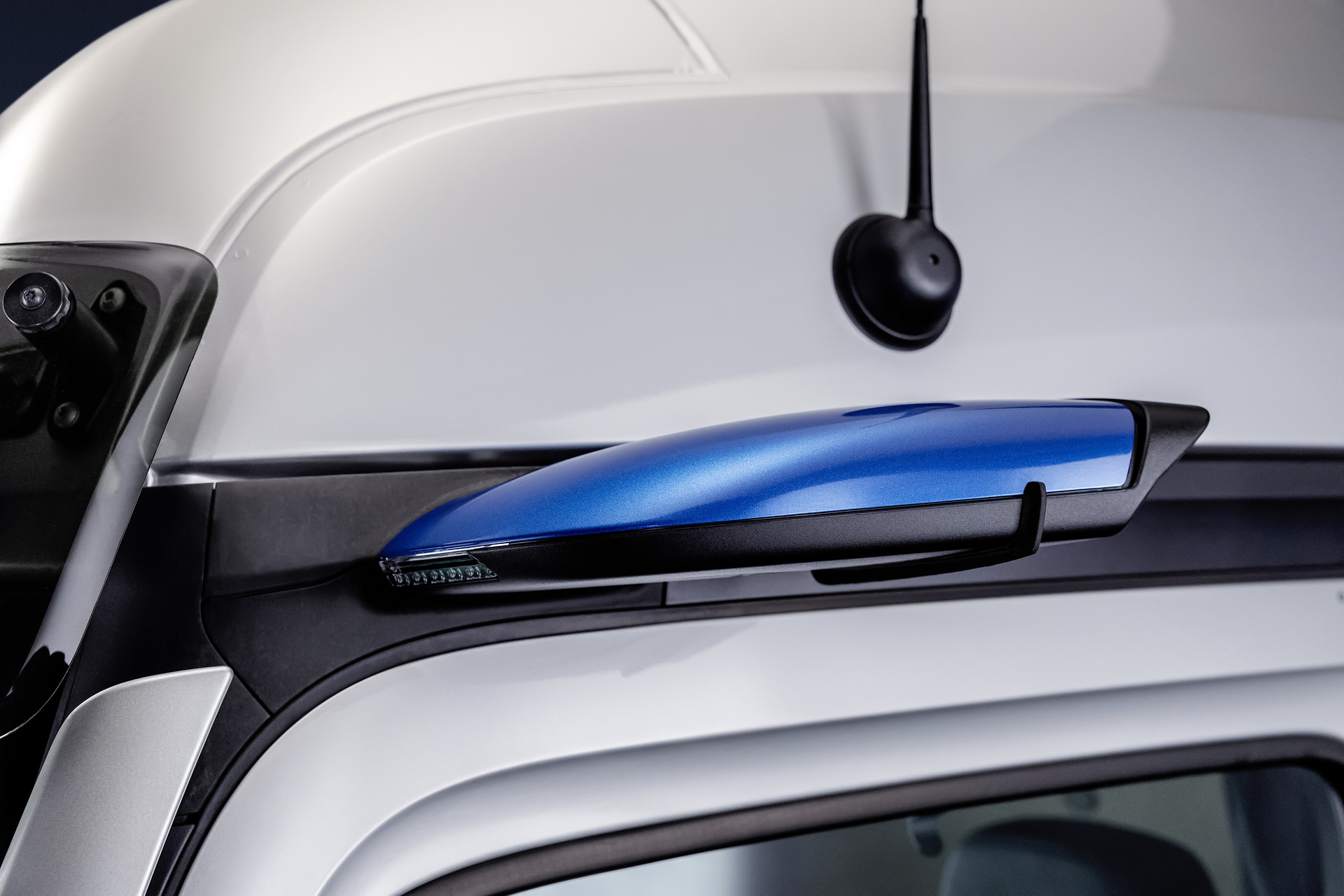
The Mercedes-Benz NextGenH2 Truck impresses through high technological maturity, thanks in part to the use of state-of-the-art components from Mercedes-Benz Trucks’ series production vehicles. This includes the ProCabin — which is already offered in the Mercedes-Benz Actros L and the battery-electric eActros 600 — now featured for the first time in a fuel cell truck. Thus, the NextGenH2 Truck benefits from a nine percent improvement [1] in the drag coefficient compared to the previous cab.
The NextGenH2 Truck offers a high-level driving experience, on par with its battery-electric counterpart, the eActros 600. Dynamic power delivery thanks to instantly available high torque, smooth and comfortable handling, and low in-cabin and exterior noise are well-known advantages that the fuel cell truck, as an electrically powered vehicle using hydrogen as its energy source, can fully exploit. Even in demanding driving situations such as steep gradients or high payloads, the truck delivers up to 340 kW in Economy Mode and up to 370 kW in Power Mode.
At the heart of the energy storage system is a high-voltage battery developed by Daimler Truck with an installed capacity of 101 kWh [2]. This lithium-iron-phosphate (LFP) battery serves as a buffer for the fuel cell and stores energy during recuperation. The NextGenH2 Truck uses the same efficient in-house-developed electric drive axle as used in the eActros 600, with a 4-speed transmission (including two reverse gears) for optimal power delivery at all times.
Together, these components enable highly efficient energy recuperation when driving downhill or during braking, feeding regenerated electricity directly back into the buffer battery — noticeably extending overall range and improving consumption.
The high-voltage components and the latest E/E architecture are also carried over from the Mercedes-Benz eActros 600. Thus, the NextGenH2 Truck features the latest advanced safety systems such as Active Brake Assist 6, Front Guard Assist, and Active Sideguard Assist 2, as well as compliance with current cybersecurity standards.
Innovative Solutions Enhance Customer Usability
Customer trials of the Mercedes-Benz GenH2 Truck provided valuable feedback for Daimler Truck’s development team, directly influencing improvements in the NextGenH2 Truck and further increasing customer benefit.
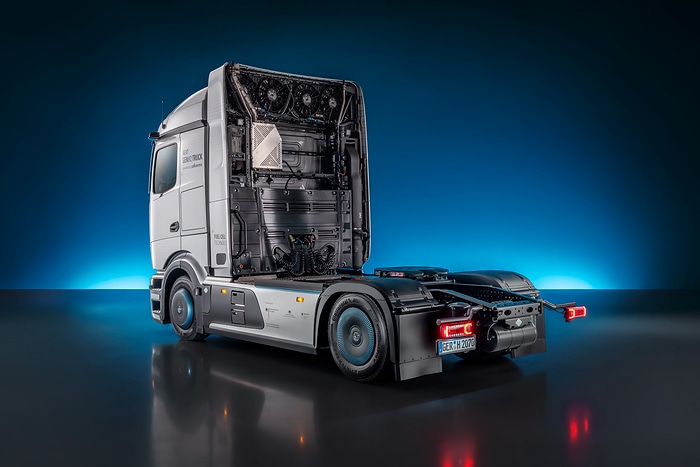
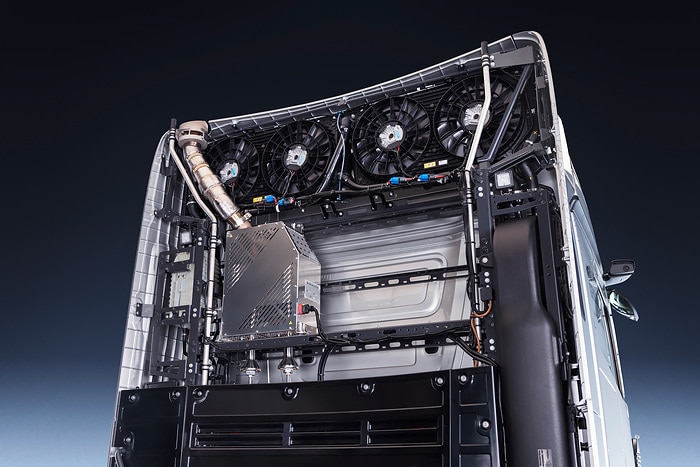
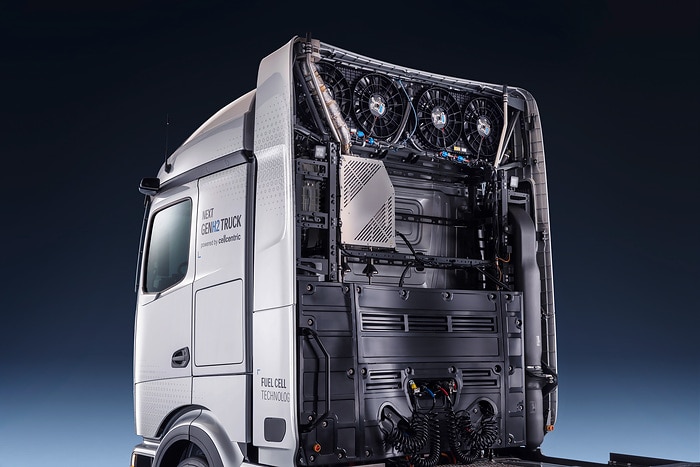
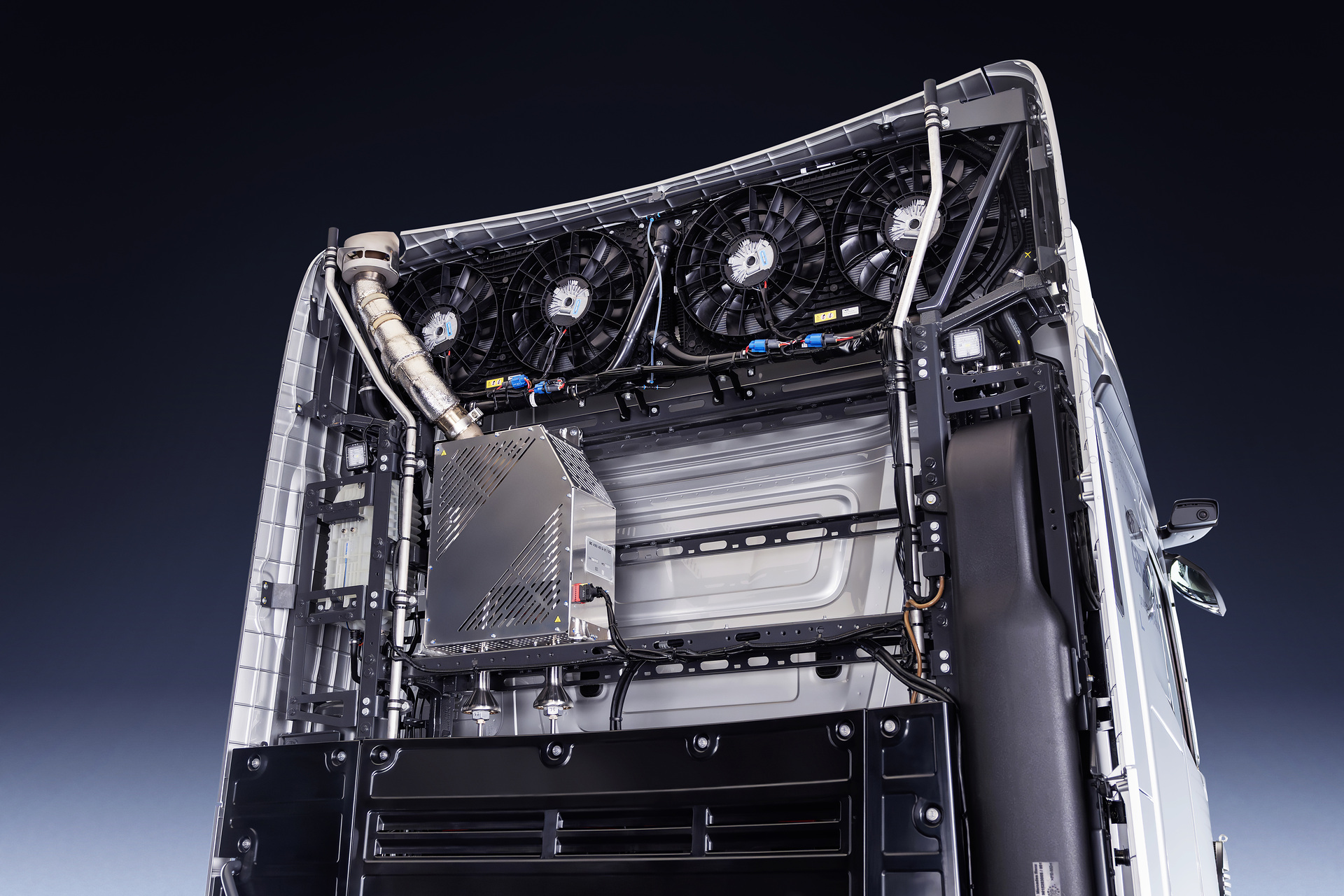
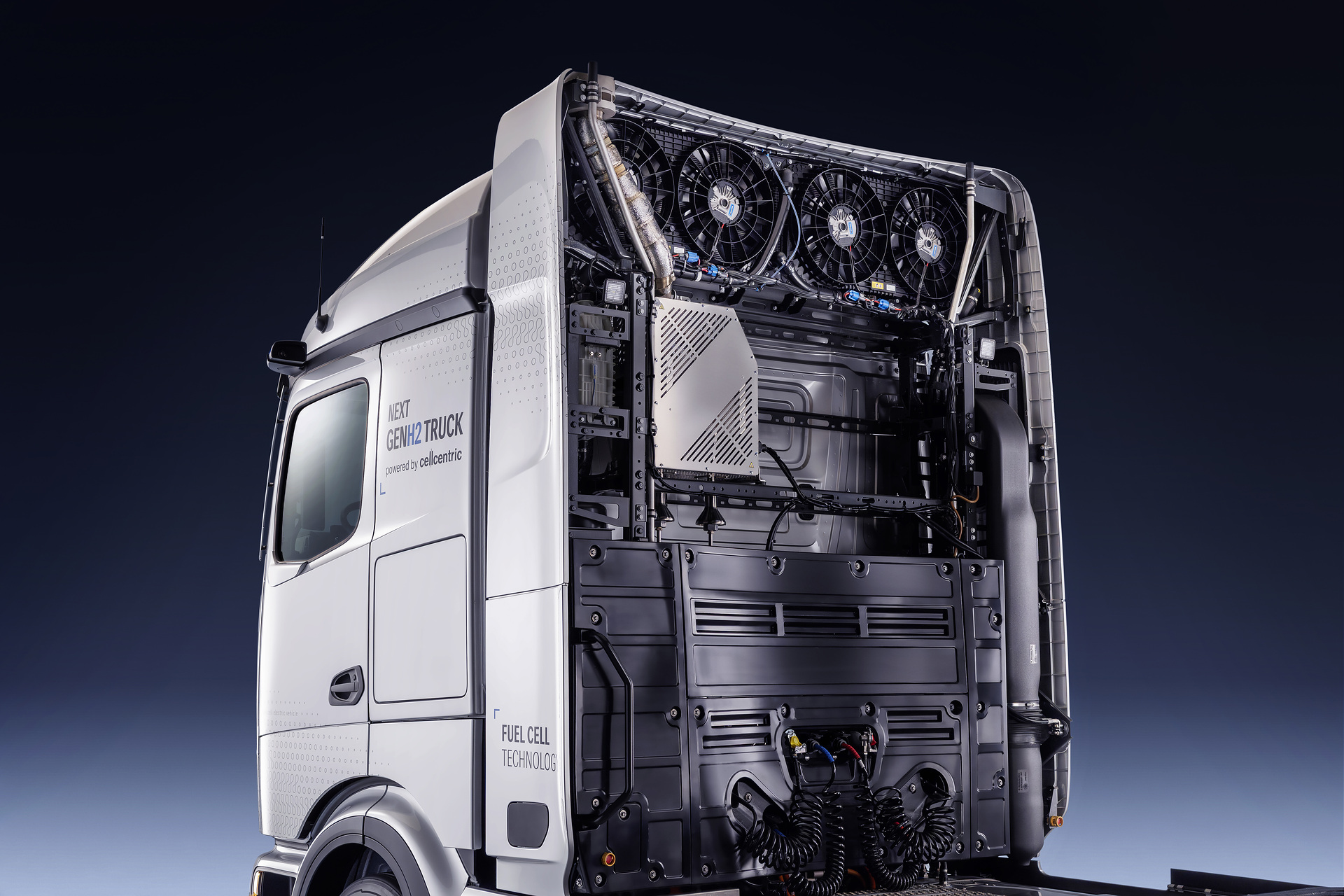
Thanks to an innovative and space-saving arrangement of components in the Tech Tower behind the cab, this area is now significantly more compact. As a result, the wheelbase has been shortened by 150 mm compared to the previous model to 4,000 mm. This increases customer flexibility by enabling compatibility with various trailer combinations and a wide range of standard trailers within EU length regulations.
The Tech Tower also houses a new boil-off management system that meets all regulatory requirements for handling hydrogen, including parking the vehicle in enclosed spaces. An integrated cooling system ensures consistently stable operating conditions even at very high ambient temperatures or demanding terrain.
A new sensor system, which responds to the highly unlikely event of hydrogen leakage, now allows overnight stays in the truck’s two standard beds fitted in the cab. This increases comfort and flexible usability of the truck, especially for long-haul drivers on multi-day assignments.
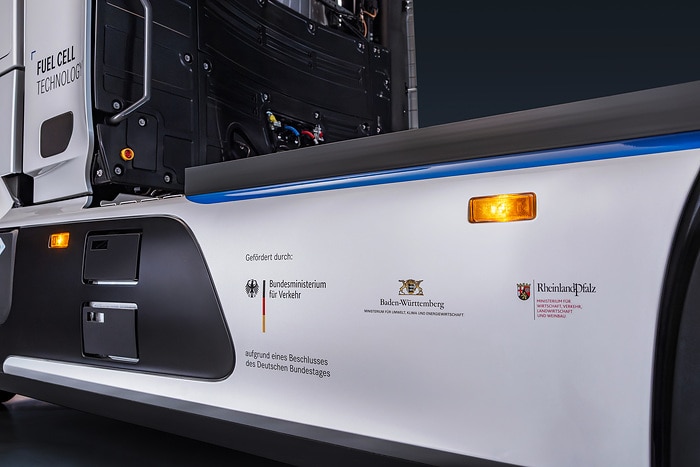
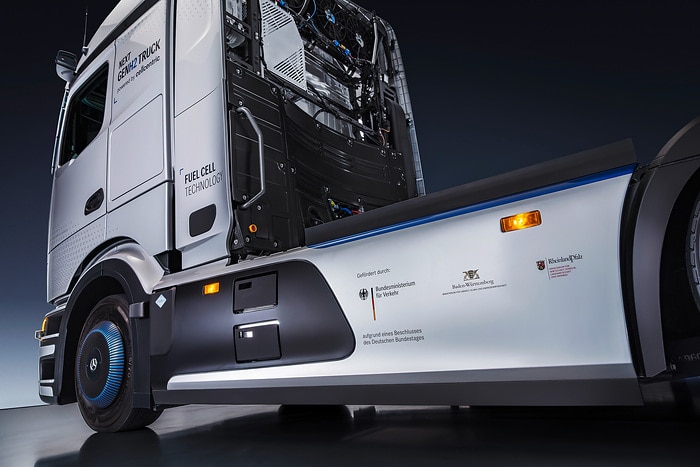
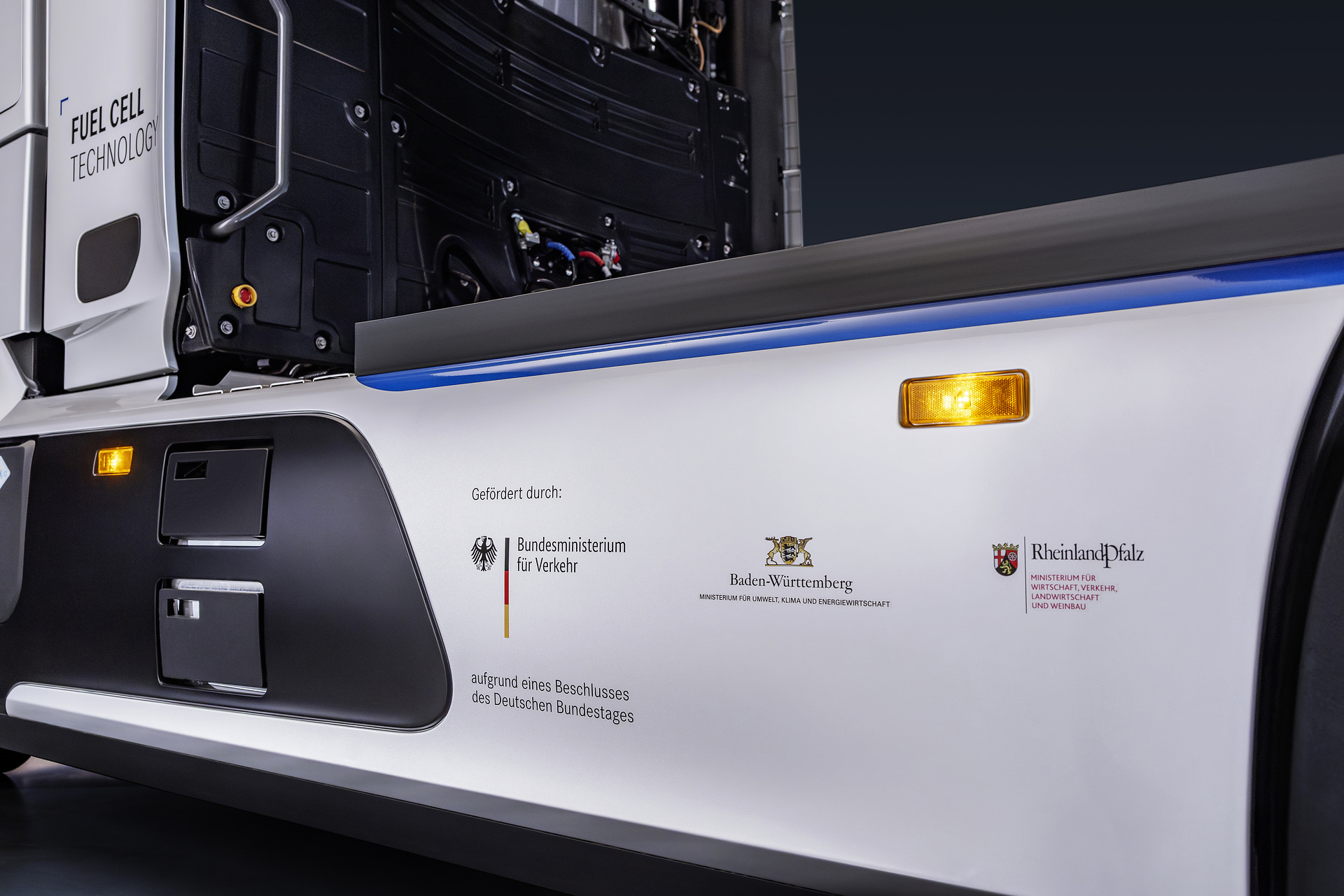
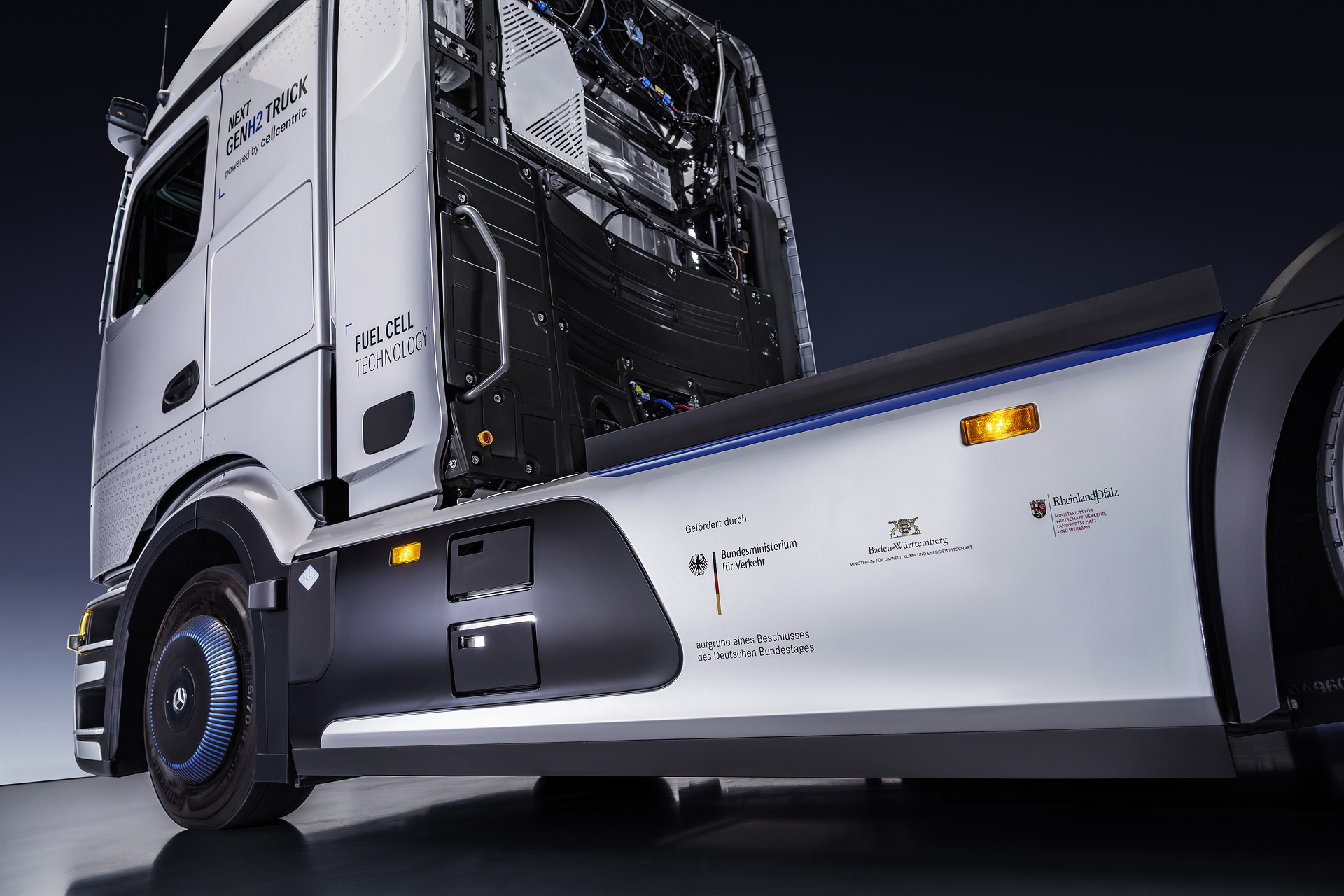
Additionally, a newly designed side panel with integrated crash elements provides improved protection of the liquid hydrogen tanks in the event of an accident. The aerodynamically improved panel features practical tread plates, improving both safety and accessibility while reducing aerodynamic drag.
Testing and Funding of the NextGenH2 Truck
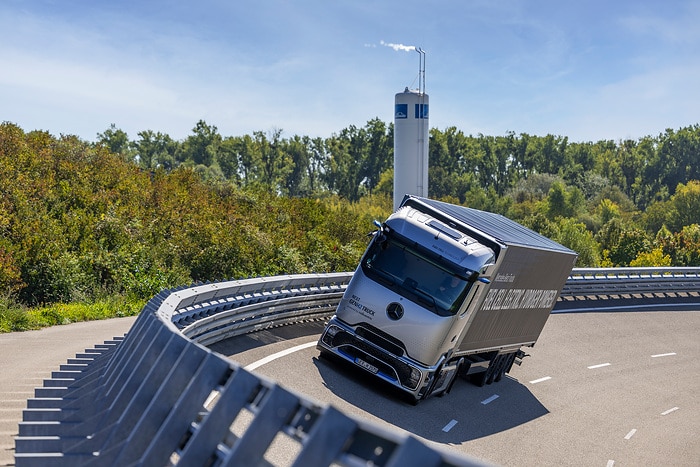
Last year, Daimler Truck tested prototypes of the Mercedes-Benz NextGenH2 Truck under extreme conditions in the Swiss Alps — both during winter and summer trials — ensuring reliability under demanding operational scenarios. Insights gained from these tests are being incorporated directly into further development.
The development, production, and practical deployment of the NextGenH2 Trucks scheduled from the end of 2026 is supported by the German Federal Ministry of Transport (BMV) and the federal states of Rhineland-Palatinate and Baden-Württemberg with in total €226 million. Series production of fuel cell trucks is targeted for the early 2030s.
[1] Customer-oriented application in long-haul transport (highway driving, standard semi-trailer, 40 tons), value determined through simulation.
[2] Nominal capacity of a new battery, based on internally defined parameters.
Download
Daimler Truck presents Mercedes-Benz NextGenH2 Truck with small-series production planned from end of 2026
The Mercedes-Benz NextGenH2 Truck marks the next development step toward hydrogen-based truck transportation As part of a limited small-series production, 100 vehicles are set to be deployed in customer operations from the end of 2026 onwards Proven components such as the cellcentric fuel cell and liquid hydrogen technology have been carried over from the first-generation Mercedes-Benz GenH2 Truck and further developed,…
Article assets
Download
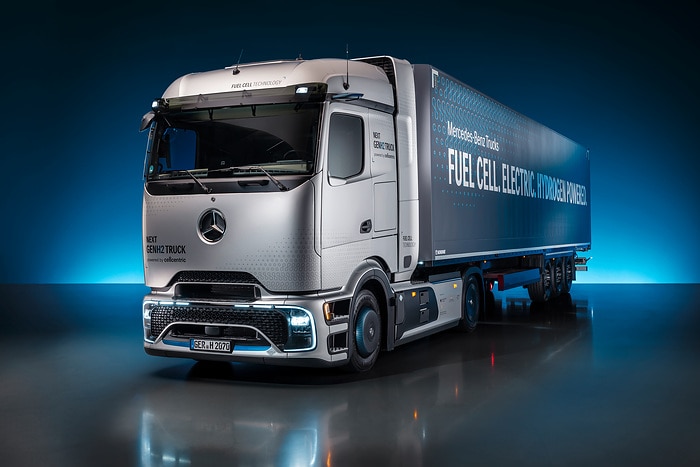
Daimler Truck presents Mercedes-Benz NextGenH2 Truck with small-series production planned from end of 2026

Download
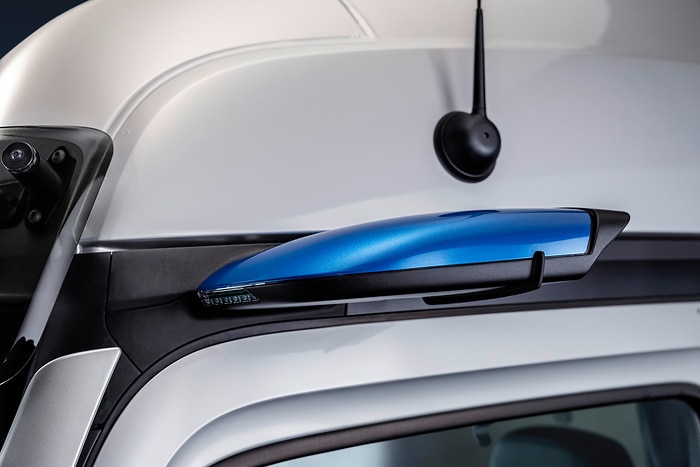
Daimler Truck presents Mercedes-Benz NextGenH2 Truck with small-series production planned from end of 2026
Download
Daimler Truck presents Mercedes-Benz NextGenH2 Truck with small-series production planned from end of 2026
Download
Daimler Truck presents Mercedes-Benz NextGenH2 Truck with small-series production planned from end of 2026
Download
Daimler Truck presents Mercedes-Benz NextGenH2 Truck with small-series production planned from end of 2026
Download
Daimler Truck presents Mercedes-Benz NextGenH2 Truck with small-series production planned from end of 2026
Download
Daimler Truck presents Mercedes-Benz NextGenH2 Truck with small-series production planned from end of 2026
Download
Daimler Truck presents Mercedes-Benz NextGenH2 Truck with small-series production planned from end of 2026
Download
Daimler Truck presents Mercedes-Benz NextGenH2 Truck with small-series production planned from end of 2026
Download
Daimler Truck presents Mercedes-Benz NextGenH2 Truck with small-series production planned from end of 2026
Download
Daimler Truck presents Mercedes-Benz NextGenH2 Truck with small-series production planned from end of 2026
Download
Daimler Truck presents Mercedes-Benz NextGenH2 Truck with small-series production planned from end of 2026
Download
Daimler Truck presents Mercedes-Benz NextGenH2 Truck with small-series production planned from end of 2026
Download
Daimler Truck presents Mercedes-Benz NextGenH2 Truck with small-series production planned from end of 2026
Download
Daimler Truck presents Mercedes-Benz NextGenH2 Truck with small-series production planned from end of 2026
Download
Daimler Truck presents Mercedes-Benz NextGenH2 Truck with small-series production planned from end of 2026
Download
Daimler Truck presents Mercedes-Benz NextGenH2 Truck with small-series production planned from end of 2026
Download
Daimler Truck presents Mercedes-Benz NextGenH2 Truck with small-series production planned from end of 2026
Download
Daimler Truck presents Mercedes-Benz NextGenH2 Truck with small-series production planned from end of 2026
Download
Daimler Truck presents Mercedes-Benz NextGenH2 Truck with small-series production planned from end of 2026
Download
Daimler Truck presents Mercedes-Benz NextGenH2 Truck with small-series production planned from end of 2026
Download
Daimler Truck presents Mercedes-Benz NextGenH2 Truck with small-series production planned from end of 2026
Download
Daimler Truck presents Mercedes-Benz NextGenH2 Truck with small-series production planned from end of 2026
Download
Daimler Truck presents Mercedes-Benz NextGenH2 Truck with small-series production planned from end of 2026
Download
Daimler Truck presents Mercedes-Benz NextGenH2 Truck with small-series production planned from end of 2026
Download
Daimler Truck presents Mercedes-Benz NextGenH2 Truck with small-series production planned from end of 2026
Download
Daimler Truck presents Mercedes-Benz NextGenH2 Truck with small-series production planned from end of 2026
Download
Daimler Truck presents Mercedes-Benz NextGenH2 Truck with small-series production planned from end of 2026
Download
Daimler Truck presents Mercedes-Benz NextGenH2 Truck with small-series production planned from end of 2026
Download
Daimler Truck presents Mercedes-Benz NextGenH2 Truck with small-series production planned from end of 2026
Download
Daimler Truck presents Mercedes-Benz NextGenH2 Truck with small-series production planned from end of 2026
Download
Daimler Truck presents Mercedes-Benz NextGenH2 Truck with small-series production planned from end of 2026
Download
Daimler Truck presents Mercedes-Benz NextGenH2 Truck with small-series production planned from end of 2026
Download
Daimler Truck presents Mercedes-Benz NextGenH2 Truck with small-series production planned from end of 2026
Download
Daimler Truck presents Mercedes-Benz NextGenH2 Truck with small-series production planned from end of 2026
Download
Daimler Truck presents Mercedes-Benz NextGenH2 Truck with small-series production planned from end of 2026
Daimler Truck presents Mercedes-Benz NextGenH2 Truck with small-series production planned from end of 2026
Daimler Truck presents Mercedes-Benz NextGenH2 Truck with small-series production planned from end of 2026
Daimler Truck presents Mercedes-Benz NextGenH2 Truck with small-series production planned from end of 2026
Daimler Truck presents Mercedes-Benz NextGenH2 Truck with small-series production planned from end of 2026
Daimler Truck presents Mercedes-Benz NextGenH2 Truck with small-series production planned from end of 2026
Daimler Truck presents Mercedes-Benz NextGenH2 Truck with small-series production planned from end of 2026
Daimler Truck presents Mercedes-Benz NextGenH2 Truck with small-series production planned from end of 2026
Daimler Truck presents Mercedes-Benz NextGenH2 Truck with small-series production planned from end of 2026
Daimler Truck presents Mercedes-Benz NextGenH2 Truck with small-series production planned from end of 2026
Daimler Truck presents Mercedes-Benz NextGenH2 Truck with small-series production planned from end of 2026
Daimler Truck presents Mercedes-Benz NextGenH2 Truck with small-series production planned from end of 2026
Daimler Truck presents Mercedes-Benz NextGenH2 Truck with small-series production planned from end of 2026
Daimler Truck presents Mercedes-Benz NextGenH2 Truck with small-series production planned from end of 2026
Daimler Truck presents Mercedes-Benz NextGenH2 Truck with small-series production planned from end of 2026
Daimler Truck presents Mercedes-Benz NextGenH2 Truck with small-series production planned from end of 2026
Daimler Truck presents Mercedes-Benz NextGenH2 Truck with small-series production planned from end of 2026
Daimler Truck presents Mercedes-Benz NextGenH2 Truck with small-series production planned from end of 2026
Daimler Truck presents Mercedes-Benz NextGenH2 Truck with small-series production planned from end of 2026
Daimler Truck presents Mercedes-Benz NextGenH2 Truck with small-series production planned from end of 2026
Daimler Truck presents Mercedes-Benz NextGenH2 Truck with small-series production planned from end of 2026
Daimler Truck presents Mercedes-Benz NextGenH2 Truck with small-series production planned from end of 2026
Daimler Truck presents Mercedes-Benz NextGenH2 Truck with small-series production planned from end of 2026
Daimler Truck presents Mercedes-Benz NextGenH2 Truck with small-series production planned from end of 2026
Daimler Truck presents Mercedes-Benz NextGenH2 Truck with small-series production planned from end of 2026
Daimler Truck presents Mercedes-Benz NextGenH2 Truck with small-series production planned from end of 2026
Daimler Truck presents Mercedes-Benz NextGenH2 Truck with small-series production planned from end of 2026
Daimler Truck presents Mercedes-Benz NextGenH2 Truck with small-series production planned from end of 2026
Daimler Truck presents Mercedes-Benz NextGenH2 Truck with small-series production planned from end of 2026
Daimler Truck presents Mercedes-Benz NextGenH2 Truck with small-series production planned from end of 2026
Daimler Truck presents Mercedes-Benz NextGenH2 Truck with small-series production planned from end of 2026
Daimler Truck presents Mercedes-Benz NextGenH2 Truck with small-series production planned from end of 2026
Daimler Truck presents Mercedes-Benz NextGenH2 Truck with small-series production planned from end of 2026
Daimler Truck presents Mercedes-Benz NextGenH2 Truck with small-series production planned from end of 2026
Daimler Truck presents Mercedes-Benz NextGenH2 Truck with small-series production planned from end of 2026
Daimler Truck presents Mercedes-Benz NextGenH2 Truck with small-series production planned from end of 2026
Daimler Truck presents Mercedes-Benz NextGenH2 Truck with small-series production planned from end of 2026
Mercedes-Benz NextGenH2 Truck

Paul Mandaiker
Social Media, Influencer Management & Audio Visual Communications
paul.mandaiker@daimlertruck.com
+49 176 30999267